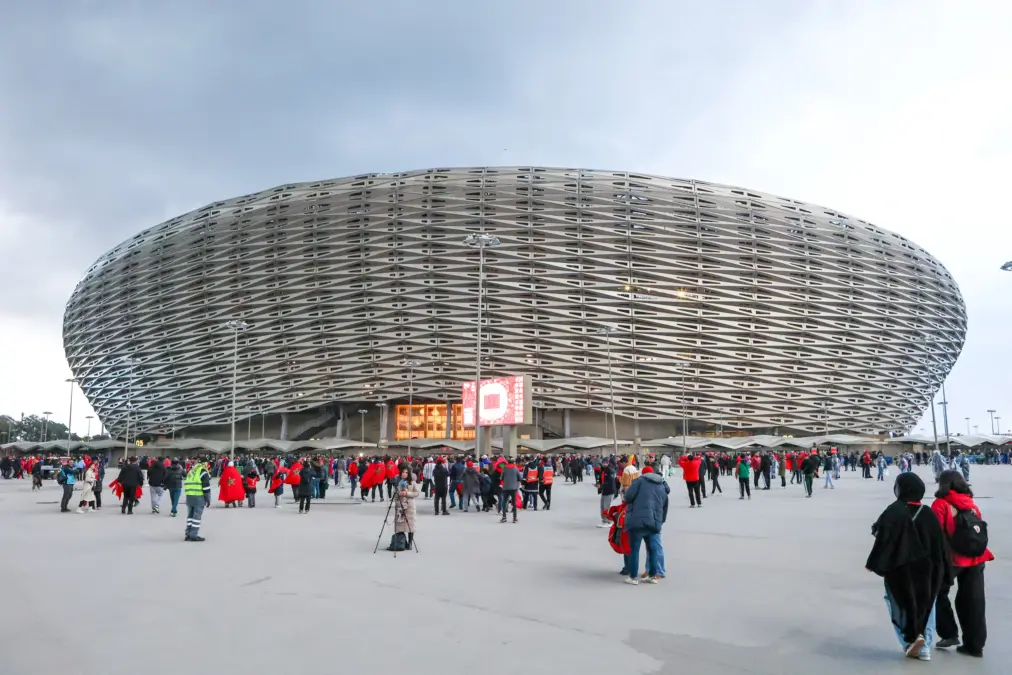
The Women’s Africa Cup of Nations 2026 final between Cameroon and Malawi will be played at Stade Moulay El Hassan in Rabat, after Morocco’s elimination removed the main reason for considering the much larger Stade Prince Moulay Abdellah.
CAF had not officially confirmed the venue in the days leading up to Sunday’s final. Its tournament schedule, published on the organisation’s official website and social media channels, continued to list both Rabat stadiums as possible locations for the match.
The final had been poised to take place either at Stade Prince Moulay Abdellah, which can accommodate 69,500 spectators, or at Stade Moulay El Hassan, whose capacity is 22,000.
The larger stadium hosted the final of the men’s Africa Cup of Nations in January and was regarded as the preferred option if the host nation reached the championship match. Stade Moulay El Hassan, meanwhile, had already staged six games during the women’s tournament, including Morocco’s matches through to the semi-finals.
It is unusual for the venue of a continental final to remain uncertain so close to the match. In this case, the decision was driven less by operational concerns than by Morocco’s progress in the competition.
Had Morocco reached the final, the match was expected to be moved to Stade Prince Moulay Abdellah. The venue would have offered the home supporters a significantly larger setting, while also giving organisers the chance to maximise attendance, atmosphere and revenue.
However, Cameroon defeated Morocco in the semi-final, winning 3-1 on penalties after a 0-0 draw. That result left a Cameroon-Malawi final without the host nation and meant Stade Moulay El Hassan became the more practical choice. The two finalists were the sides to announce the venue.
Stade Moulay El Hassan is a newly built urban sports complex constructed on the historic site of Fath Union Sport (FUS). It opened in November 2025 after the former stadium was demolished and rebuilt entirely to meet the standards required of tournament venues.
The ground hosted group-stage matches and a last-16 tie at the men’s Africa Cup of Nations earlier this year. Although smaller than Stade Prince Moulay Abdellah, it has already been used extensively during the current women’s competition.
Stade Prince Moulay Abdellah, by contrast, is one of Morocco’s major sporting landmarks. It opened in September 2025 with room for 69,500 people, making it the second-largest stadium at the men’s Africa Cup of Nations, behind the venue in Tangier. It then staged the men’s final in January.
The stadium was built as part of Morocco’s preparations to co-host the 2030 FIFA World Cup and reflects the country’s ambitions on the international football stage.
CAF’s decision to keep both venues available until late in the tournament allowed it to avoid committing prematurely. Selecting the smaller ground before Morocco’s semi-final would have risked appearing to “snober” the host nation, while choosing a 69,500-capacity stadium for a final without Morocco could have resulted in a visibly sparse crowd.
Morocco’s matches had generally struggled to fill Stade Moulay El Hassan. Fewer than 19,000 spectators attended the semi-final, while matches involving other nations were often played in a notably subdued atmosphere.
Keeping both options open was therefore a pragmatic organisational measure, giving CAF flexibility while the host country’s position in the competition remained undecided.
-
 Ghana’s Black Maidens ready to take on Norway as Joe Nana Adarkwa targets winning World Cup start Oct 18, 2026
 -
Lamine Yamal hailed as world’s best player after Barcelona win Oct 17, 2026
-
Malawi thrash Seychelles 10-1 to seal third beach soccer AFCON appearance Oct 17, 2026
-
Bafana Bafana set for November double-header against Kenya in 2027 AFCON qualifiers Oct 17, 2026




-
AFCON 2025: Fixtures, Results, Scores and Standings Jan 18, 2026
-
Match hero Taiwo Awoniyi reflects on team effort after Chelsea triumph May 5, 2026
-
Leadership and long-term vision key to rescuing Zamalek and inspiring Egyptian football – Hany Abou Rida Nov 5, 2025
-
South African giants Orlando Pirates set to lose influential forward Monnapule Saleng Mar 19, 2025




-
Real Betis v Barcelona: kick-off time, TV details and match preview Oct 16, 2026
-
Morocco to face New Zealand as FIFA U-17 Women’s World Cup kicks off in Rabat Oct 16, 2026
-
Roma v Real Madrid: home side tipped to score first in Champions League clash Oct 12, 2026
-
Atletico Madrid v Manchester United: probable line-ups for Champions League clash Oct 12, 2026