Moroccan youngster Ibrahim Fayek opts for Netherlands amid growing dual-nationality battle
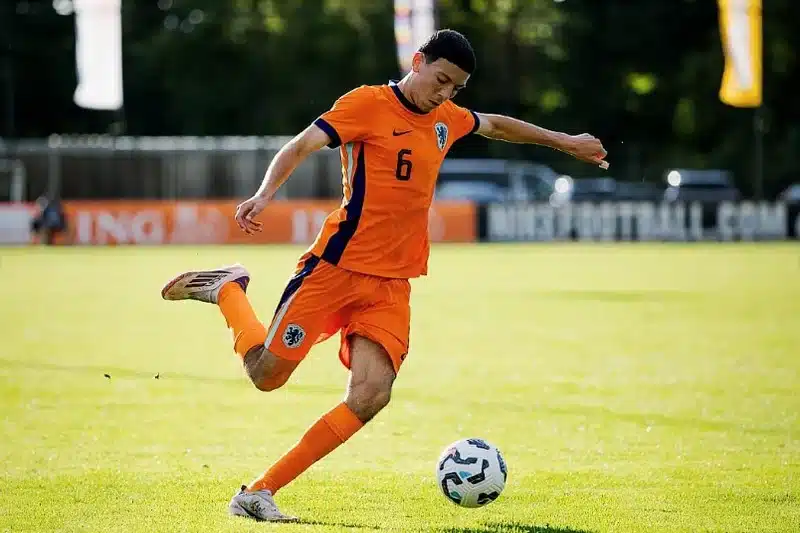
Feyenoord Rotterdam midfielder Ibrahim Fayek has decided to represent the Netherlands at youth international level, reigniting the debate over the growing competition between Morocco and the Dutch national team for players of Moroccan descent.
Fayek, who previously represented Morocco in the youth ranks, announced his decision through his official Instagram account, explaining that he had carefully considered his international future before choosing to continue with the Netherlands.
The young midfielder said both Morocco and the Netherlands hold a special place in his heart and revealed that he discussed the decision extensively with his family before reaching an agreement with both sides.
He also expressed his appreciation for his time with the Moroccan national team, describing the experience as valuable and praising the people and opportunities he encountered during his spell with the Atlas Cubs.
However, after weighing up his options, Faiq said he was convinced that representing the Netherlands was the right decision for his career and insisted that it was a choice he would not regret.
The Feyenoord youngster was previously part of Morocco’s squad at the 2026 U-17 Africa Cup of Nations in May, making his subsequent decision to switch allegiance particularly notable.
Fayek’s choice has once again highlighted the strong connection between Moroccan-origin players and Dutch football. Over the years, the Netherlands has benefited significantly from the large pool of players of Moroccan heritage who have emerged through its academies and youth development system.
The Moroccan presence in Dutch football, however, extends beyond the playing field. Moroccan professionals have increasingly become involved in coaching, player development and technical roles within Dutch clubs and academies.
One of the prominent figures in this area is Moroccan coach Adil Ramzi, whose involvement in Dutch football has further demonstrated the expanding role of Moroccan professionals in the country’s football ecosystem.
The growing influence of Moroccan coaches and technical staff could also prove important in the development of young players of Moroccan descent, particularly as Dutch clubs continue to identify and develop talents from diverse backgrounds.
Fayek’s decision therefore adds another dimension to the long-running competition between Morocco and the Netherlands for dual-nationality players. Both countries have increasingly sought to secure the services of talented youngsters who are eligible to represent either nation.
The Feyenoord midfielder is among a growing number of young players whose international futures have become a subject of interest as both federations attempt to retain promising talents within their respective systems.
In seeking clarification over Faiq’s decision, reports indicate that Dutch journalist Jasper de Boer contacted the Royal Netherlands Football Association (KNVB). The federation’s national-team media officer, Samuel Breez, confirmed that Faiq falls within the youth or U-21 category and advised that inquiries concerning players at that level should be directed to the relevant department by email.
Fayek’s decision ultimately underlines the increasingly fierce battle for dual-nationality talent, particularly at youth level, where Morocco and the Netherlands continue to compete for the next generation of players capable of making an impact on the international stage.
-
 Himad Abdelli opens up on tough start at Marseille, credits Bruno Genesio for rebuilding his confidence Oct 14, 2026
 -
CAF announces increase in annual funding for member associations to $700,000 Oct 14, 2026
-
Senegal defender Moussa Niakhaté set to return for Lyon against Crystal Palace Oct 14, 2026
-
Five young players could miss Morocco’s AFCON qualifiers to boost Olympic squad Oct 14, 2026



-
AFCON 2025: Fixtures, Results, Scores and Standings Jan 18, 2026
-
Match hero Taiwo Awoniyi reflects on team effort after Chelsea triumph May 5, 2026
-
Leadership and long-term vision key to rescuing Zamalek and inspiring Egyptian football – Hany Abou Rida Nov 5, 2025
-
South African giants Orlando Pirates set to lose influential forward Monnapule Saleng Mar 19, 2025




-
Roma v Real Madrid: home side tipped to score first in Champions League clash Oct 12, 2026
-
Atletico Madrid v Manchester United: probable line-ups for Champions League clash Oct 12, 2026
-
Real Madrid fitness update: Valverde a doubt for Villarreal as Kylian Mbappe returns Oct 8, 2026
-
Arsenal backed to edge out Lille in Champions League clash Oct 11, 2026