
Moroccan clubs secure landmark quarterfinals spot in CAF Champions League and Confederation Cup
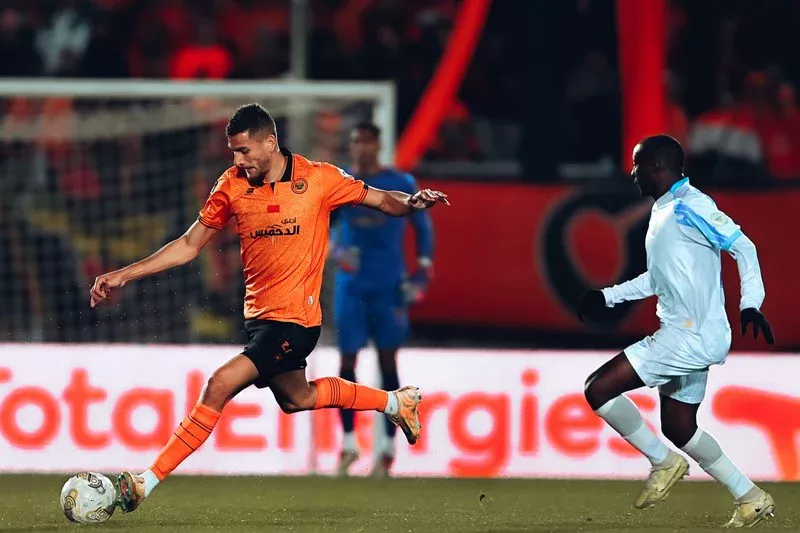
Moroccan football continues to assert its dominance on the continental stage, with clubs achieving remarkable results in both the CAF Champions League and CAF Confederation Cup. A perfect record in the group stages has seen Morocco’s representatives’ secure quarterfinal spots, highlighting the depth, consistency, and competitiveness of the nation’s club football.
FAR Rabat: Mental Strength and Renewed Ambitions
In the CAF Champions League, FAR Rabat finished second in Group B with 9 points, narrowly behind Egyptian giants Al Ahly, who topped the group with 10 points.
The military team showcased their resilience in Cairo, earning a hard-fought draw against Al Ahly in the final group match — a result that felt like a victory. FAR Rabat’s ability to perform under pressure signals that the team has regained composure at crucial moments, reaffirming its ambition to challenge for continental glory despite a few inconsistencies during the group stage.
RS Berkane: Experience as a Launchpad
RS Berkane completed the CAF Champions League group stage in second place in Group A, finishing with 10 points behind Pyramids FC (16 points).
With several CAF Confederation Cup titles under their belt, RS Berkane brings experience and tactical maturity to the knockout rounds. Under the guidance of coach Moine Chaabani and led by top scorer Oussama Melloui, the team is well-positioned to make a deep run in the Champions League, leveraging its continental know-how as a key advantage.
Olympique Safi: Historic First Continental Run
In the CAF Confederation Cup, Olympique Safi made history by reaching the quarterfinals in their very first continental campaign. Guided by young coach Zakaria Aboub, the club has defied expectations, demonstrating ambition and maturity beyond its years. Olympique Safi’s impressive run represents one of the most significant achievements in the club’s history.
Wydad Athletic Club: Affirming African Supremacy
Wydad Athletic Club, long considered a powerhouse of African football, dominated their group, finishing with 15 points. Their success was built on collective play, tactical cohesion, clinical attacking, and the depth of an experienced squad.
The club’s performance signals a clear intent to compete for the CAF Confederation Cup title and continue adding to its decorated continental history.
Across all four clubs, one common thread emerges: ambition, discipline, and the drive to achieve continental success. Moroccan football is clearly on the rise, with its clubs proving that they are capable of competing at the highest levels of African competition.
Popular News


-
AFCON 2025: Fixtures, Results, Scores and Standings
Jan 18, 2026 -

Leadership and long-term vision key to rescuing Zamalek and inspiring Egyptian football – Hany Abou Rida
Nov 5, 2025 -

South African giants Orlando Pirates set to lose influential forward Monnapule Saleng
Mar 19, 2025 -

Full schedule for 2025 Africa Cup of Nations in Morocco confirmed
Feb 12, 2025
-
Morocco vs Ecuador Friendly: Where and How to Watch
Mar 26, 2026 -

Morocco vs. Ecuador: Match details, key talking points and where to watch
Mar 27, 2026 -

Chile overturn deficit to defeat Cape Verde in FIFA Series clash
Mar 27, 2026 -
Where and how to watch Saudi Arabia vs Egypt friendly ahead of 2026 World Cup
Mar 26, 2026


