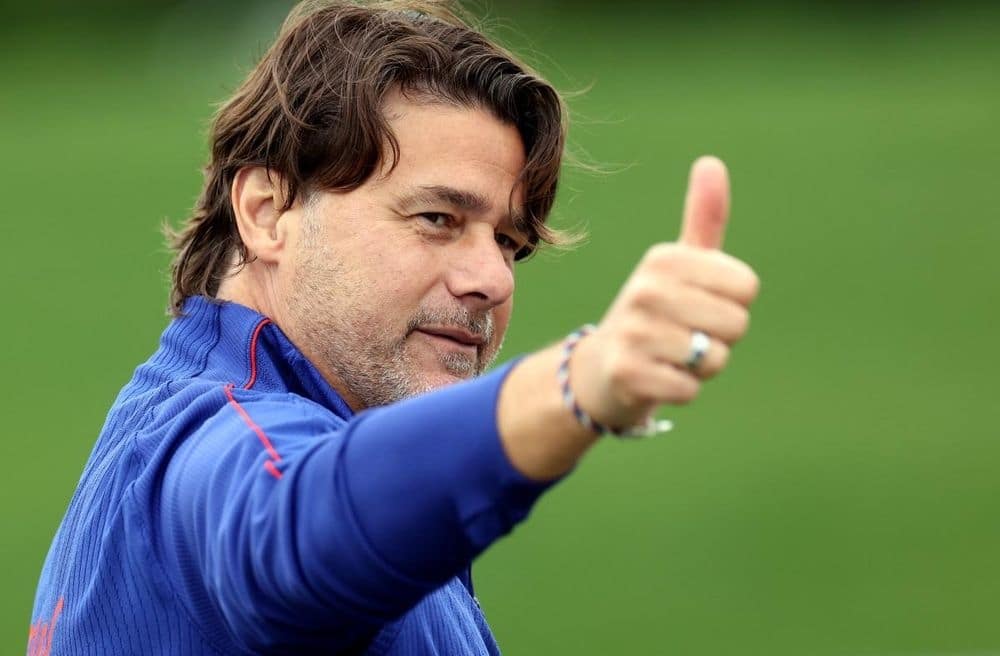
Mauricio Pochettino is set to become Manchester United’s next manager, with the troubled Premier League club preparing to replace Michael Carrick after their worst start to a season in 40 years.
The Argentine reportedly reached a verbal agreement on Wednesday, a move that would bring his two-year spell as US coach to an end. United have changed manager 11 times, including caretakers, since Alex Ferguson’s retirement in 2013 and have not won the league since.
The club now require a manager capable of providing direction and stability to an expensive but fragmented squad, while rebuilding the confidence of supporters who have become increasingly disillusioned.
Pochettino’s appeal is clear. He is known for developing young players, motivating teams and encouraging supporters to embrace an energetic, high-intensity style of football. During his career, he had his Southampton squad walk barefoot across hot coals, guided Tottenham Hotspur to a Uefa Champions League final and helped inspire the US to believe they could compete with anyone at last summer’s World Cup on home soil.
Before the Fifa World Cup, Pochettino regularly spoke about turning “expectation into energy” and creating “amazing energy between the fans and us”.
The US were eliminated in the last 16, but their campaign included a 4-1 victory over Paraguay in one of the tournament’s most impressive attacking performances. They also won their first knockout match since 2002.
“When you are free, you perform. When you feel happy, you perform … Pressure is a thing that, if you don’t deal perfectly with it, can be heavy,” Pochettino said.
A manager who trusts young players
United have endured intense pressure for much of the past decade, moving between a succession of managers, tactical systems and playing styles after dominating English football through large parts of the 1990s and 2000s.
Pochettino generally favours a 4-2-3-1 formation, with fast passing from the back and aggressive pressing when his side do not have the ball.
He has also been willing to give responsibility to emerging talent. In 2015, the year Harry Kane established himself as a major star at Tottenham and later became a Ballon d’Or winner, Pochettino told The Guardian: “If a player deserves to play, if they are 17, 18, 19 or 20, it’s the same for us.
“If they deserve to play and show character and maturity to be given the responsibility. But for that, you need to build the player.”
Kane said this week that Pochettino “had a big impact on my career and definitely my development”.
“At that stage of my career I needed his guidance and the way he pushed me, not just on the pitch but off the pitch as well, he was really, really helpful,” he added.
Pochettino selected 21-year-old Alex Freeman for the US starting team at the World Cup. Freeman impressed defensively and scored against Australia, while the manager has given 13 players their international debuts in recent friendlies.
Those qualities could appeal to United, who have high hopes for youngsters including Kobbie Mainoo, Leny Yoro and Shea Lacey.
A gamble for United
Pochettino’s record also carries risks. His stays at Paris Saint-Germain and Chelsea were comparatively short and less successful.
He reportedly became frustrated by the large personalities in a PSG squad featuring Neymar, Kylian Mbappe and Lionel Messi, while he struggled with the highly hands-on involvement of Chelsea’s billionaire owners. Similar challenges could await him in Manchester.
His lack of silverware remains another criticism. Pochettino has lost five finals, including the Uefa Champions League final with Tottenham, and his only league title came with PSG.
His most celebrated period, when he was admired by Tottenham’s players and supporters despite never leading them to a major trophy, now lies almost a decade in the past.
“Pochettino himself is like a walking vision of better times and diminished powers,” wrote The Guardian’s Barney Ronay.
By appointing the 54-year-old, United would be betting that the manager and club can both recapture something from the past.
-
 U23 AFCON qualifiers: Othmane Maamma misses Morocco’s clash against Ethiopia due to flu Nov 12, 2026
-
South Africa’s Relebohile Mofokeng tops Europa League creative charts Nov 12, 2026
-
Real Madrid refuse to give up pursuit of Franco-Nigerian star Michael Olise Nov 12, 2026
-
Benin face Central African Republic in crucial 2027 Africa Cup of Nations qualifier Nov 12, 2026



-
AFCON 2025: Fixtures, Results, Scores and Standings Jan 18, 2026
-
Match hero Taiwo Awoniyi reflects on team effort after Chelsea triumph May 5, 2026
-
Leadership and long-term vision key to rescuing Zamalek and inspiring Egyptian football – Hany Abou Rida Nov 5, 2025
-
South African giants Orlando Pirates set to lose influential forward Monnapule Saleng Mar 19, 2025




-
Manchester United host Aston Villa as both sides seek a Premier League lift Nov 6, 2026
-
Ali Maher names first Egypt squad for 2027 Africa Cup of Nations qualifiers Nov 9, 2026
-
Atletico Madrid host Barcelona in Liga summit clash with history at stake Nov 6, 2026
-
Nottingham Forest v Manchester City: City Ground hosts clash at opposite ends of the table Nov 6, 2026