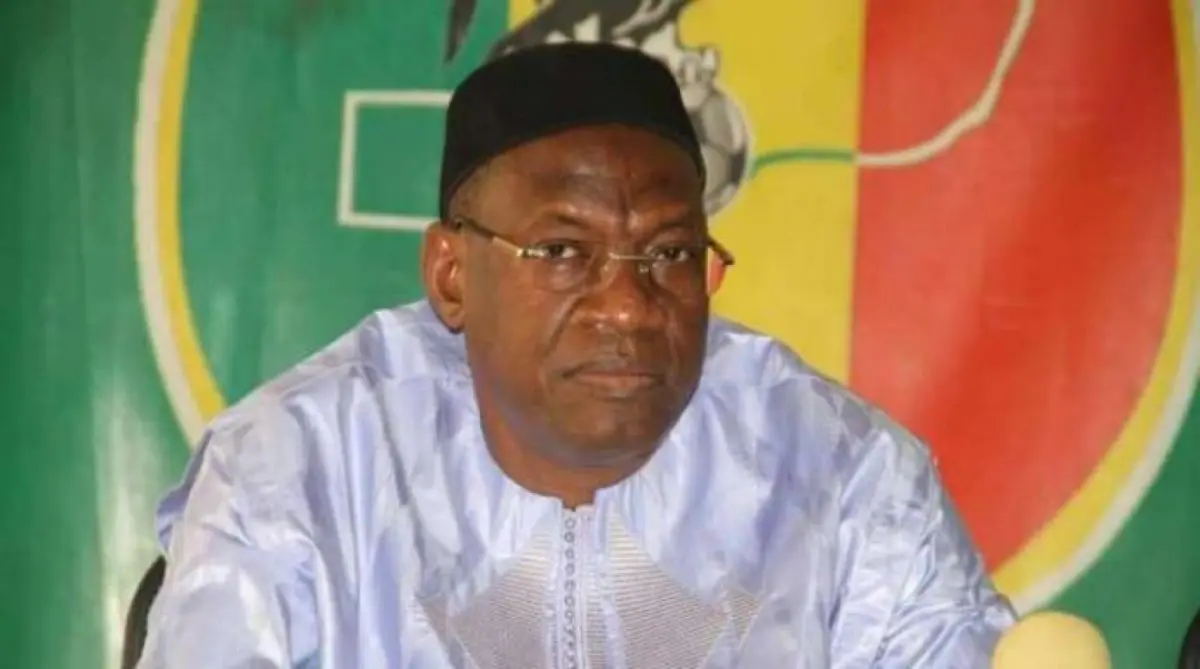
Tensions between the Malian Football Federation (FEMAFOOT) and the country’s Ministry of Sports have erupted into a public feud following the government’s decision to audit the federation’s finances, intensifying concerns over the management of Malian football.
The dispute centers around a state-ordered financial audit of public funds allocated to FEMAFOOT between 2020 and 2024.
The move comes after a series of financial irregularities surfaced in Mali’s sports sector, including FEMAFOOT’s recent reimbursement of 18 million CFA francs to the state.
But the federation has fiercely rejected the government’s scrutiny, labeling it an overreach of authority and a violation of its autonomy.
FEMAFOOT Denounces “Political Interference”
In a fiery press release, FEMAFOOT condemned the audit, accusing the Ministry of Sports of attempting to destabilize the federation for political motives.
The federation argues that the audit lacks legal standing, emphasizing that its primary funding comes from FIFA and the Confederation of African Football (CAF), not directly from the Malian government.
“Mr. Director, your game is clear, we see the hand of your principals, we know who you are working for,” the statement declared, directly criticizing the National Director of Sports and accusing him of manipulating the situation for hidden interests.
FEMAFOOT further described the audit as “an abuse of authority” and a “misuse of power,” claiming the ministry’s real intention is to install its allies within the federation.
Despite mounting pressure, FEMAFOOT insists it will proceed with its scheduled General Assembly on February 28, citing FIFA regulations that strictly prohibit government interference in national football federations.
A Divided Public Opinion
However, not everyone is buying FEMAFOOT’s defense. Former Malian international and football pundit Brahim Thiam voiced his frustration on social media, accusing the federation of using FIFA’s independence clause to avoid accountability.
“The skeletons are so big that they defy the Malian state. It’s up to you, rid us of these impostures,” Thiam posted on X, directly calling on Mali’s President, Colonel Assimi Goïta, to intervene.
Thiam’s comments reflect a broader sentiment among sections of the Malian public who suspect deep-seated corruption within the federation. Many believe FEMAFOOT’s resistance to the audit points to a fear of exposure rather than a defense of its autonomy.
FIFA’s Shadow Looms Over the Conflict
The escalating standoff places FIFA in a delicate position. The global governing body has a long-standing policy of opposing government interference in the affairs of its member associations, often threatening suspensions for countries that breach this rule.
If Mali’s Ministry of Sports pushes forward with the audit, FIFA could be forced to step in, potentially jeopardizing Mali’s participation in international competitions.
However, the Malian government maintains that it is within its rights. Citing a 2017 law that permits oversight of national sports federations, the Ministry argues that transparency and accountability must extend to all entities operating within the country, regardless of external affiliations.
The Battle for Control of Malian Football
At the heart of the dispute lies a critical question: who ultimately controls Malian football? The government sees itself as the guardian of public accountability, while FEMAFOOT insists on its independence, shielded by FIFA’s statutes.
The standoff also highlights the broader complexities between national governments and football federations across Africa. While federations often rely heavily on FIFA and CAF funding, many still depend on state resources for infrastructure and development, leading to inevitable friction over governance and oversight.
For now, the situation remains volatile. The fate of Malian football hangs in the balance as the federation and government head towards a potential legal and administrative showdown. Should FIFA step in, it could trigger sanctions against Mali, while inaction could further entrench concerns over financial mismanagement within FEMAFOOT.
As the clock ticks toward the General Assembly, the looming question persists: will Malian football emerge stronger from this conflict, or will it sink deeper into crisis?