
Lawyer of Moroccan defender Achraf Hakimi lifts lid on controversial rape case
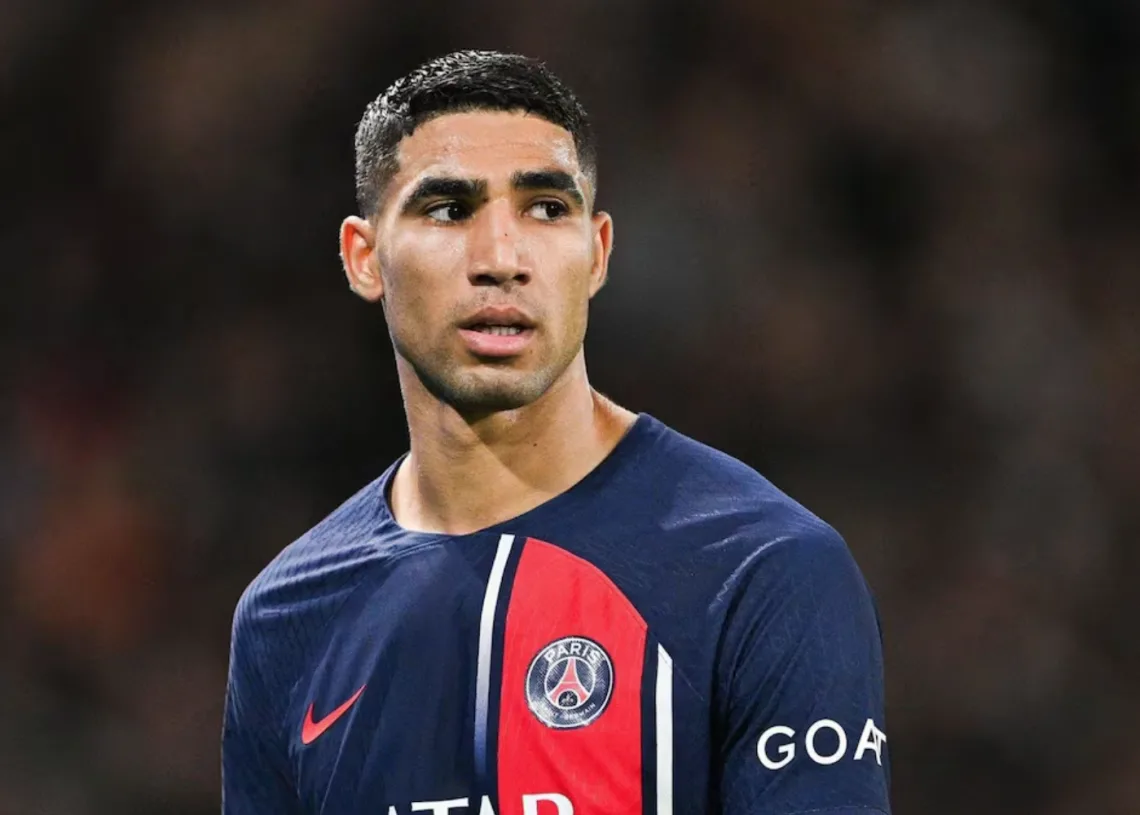
Moroccan defender Achraf Hakimi is facing allegations of rape, but his lawyer, Fanny Collin, has revealed what she describes as “shocking surprises” in the ongoing case.
The matter was referred to trial last Tuesday, drawing intense media scrutiny.
Speaking on BFM TV, Collin provided Hakimi’s version of events, explaining that the Moroccan international had been in contact with the woman via Instagram for three weeks to a month before their meeting.
“On several occasions, Achraf Hakimi suggested that they meet at a restaurant with friends, whether it was his friend or her friend, and she always refused. In the end, she arranged to meet at his house, where he suggested that they meet outside,” Collin said.
She added, “The woman introduced herself and they spent a full hour together without any tension. The evening ended, she left, he accompanied her to the door, and that was the end of it, nothing more, nothing less.”
Hakimi’s lawyer emphasised that her client has cooperated fully with the judicial process.
“Quite simply, Achraf Hakimi did not obstruct the course of justice in any way. He requested to be heard and confronted by this woman. He provided a DNA sample and gave his phone number. We believe that the complainant is the one who obstructed the course of justice. She refused all the available medical examinations, which would have confirmed her version of events, if it were true,” Collin said.
The lawyer also pointed to additional inconsistencies, noting that the complainant “refused to name a key witness, who was someone she had dinner with before going to Achraf Hakimi’s house, and before they exchanged several messages outlining plans to rob the football player.”
Collin continued, “These messages were not written by me or Hakimi… We were not the ones who tried to hide them from the judicial authorities. Nevertheless, she still refuses to hand over her mobile phone.”
She concluded by addressing the broader context of the case.
“I would like to point out that the indictment does not represent the entire case file… The expert, who decided that this woman is not prone to fabrication or obsession with myths, which are mental illnesses, added that this does not guarantee the truth of her statements,” she said.
Popular News




-

AFCON 2025: Fixtures, Results, Scores and Standings
Jan 18, 2026 -

South African giants Orlando Pirates set to lose influential forward Monnapule Saleng
Mar 19, 2025 -

Full schedule for 2025 Africa Cup of Nations in Morocco confirmed
Feb 12, 2025 -

Leadership and long-term vision key to rescuing Zamalek and inspiring Egyptian football – Hany Abou Rida
Nov 5, 2025
-

U17 AFCON: DR Congo Secures Qualification for UNIFFAC Tournament
Feb 24, 2026 -

Morocco federation in talks as Walid Regragui speculation intensifies
Feb 21, 2026 -

Manchester United set €30m price tag on Cameroon keeper Andre Onana
Feb 24, 2026 -

Senegalese striker Youssou Diouf dies after league match in Thiès
Feb 23, 2026