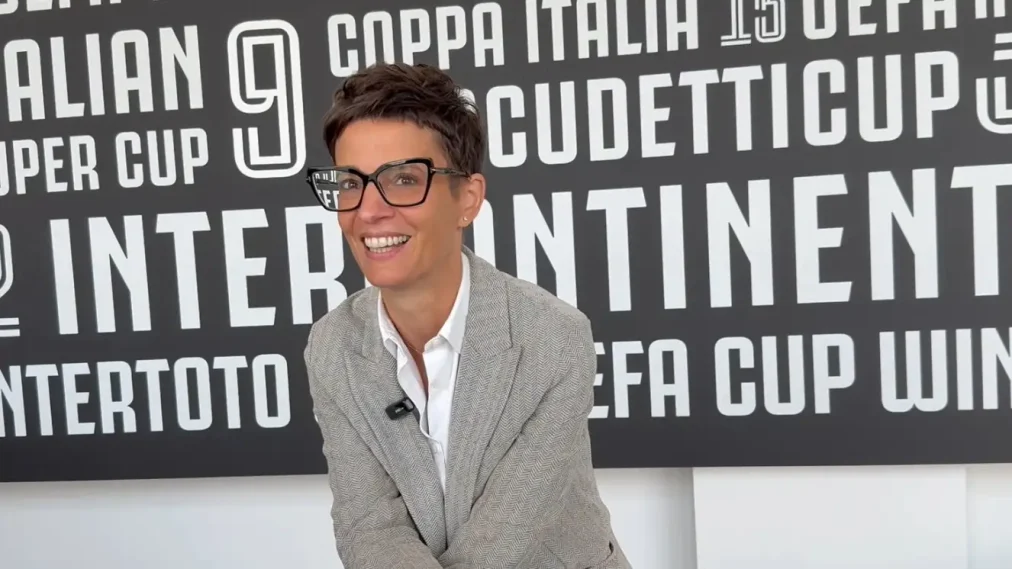
Behind Juventus’ football operation, Greta Bodino is leading a drive to make people, mental health and sustainability central to the Italian club’s identity away from the pitch.
As head of people, culture and sustainability, Bodino has helped turn ideas that once existed largely on paper into a wide-ranging programme covering staff welfare, inclusion and psychological support.
The work is built around the principle of “People First”, the club’s approach to the social element of its environmental, social and governance (ESG) strategy.
“People First is a fundamental pillar of our ESG sustainability strategy,” Bodino said. “If we focus specifically on the social dimension, this policy is the framework that governs everything we do, think about, aspire to and implement for the benefit of our people.”
Bodino took on responsibility for sustainability alongside her existing duties three seasons ago. She said the move allowed Juventus to combine its human resources focus on caring for people with a wider sustainability agenda based on values and behaviours promoted inside and outside the club.
“It was a beautiful and essential combination,” she said. “I am passionate about this area because People First means using the energy, will and enthusiasm of our employees to create a story that does not remain internal, but also reaches the outside world. That gives it even greater credibility.”
Mental health and ‘Team Strength’
One of Juventus’ most prominent projects is “Power Stories”, an initiative launched in 2023 to challenge the stigma surrounding mental health in sport and football.
The project began as a podcast featuring the club’s players, players from the women’s team and members of the coaching staff. It has since developed, reaching a high point this year with the stories of three Juventus supporters. At the same time, the club introduced an internal mental health programme for employees.
“I still get goosebumps whenever I remember it,” Bodino said of the supporters’ stories. “It was an exceptional event and perhaps one of the best things we have achieved since I joined the club.”
The accompanying documentary uses the phrase “Team Strength”, a term Bodino said referred to empowerment and mental resilience.
“The aim is to give people new tools to look after their mental health, themselves and their wellbeing,” she said.
Juventus’ approach was recognised with the Sustainable Game award in London. Bodino said the honour was displayed in her office and represented more than international recognition.
“We were selected without applying and without being nominated by ourselves,” she said. “The organising committee chose us from among major clubs and organisations such as Manchester City and Barcelona.”
She added that the real pride came from the award recognising a process that had been under way for years, combining the internal momentum created by employees with initiatives aimed at supporters and the wider community.
Another part of that work is the Positive Impact Centre, a voluntary committee made up of employees who choose to take part in the company’s social responsibility projects.
“The most important thing is that these initiatives are not managed by me, my team or the company’s management,” Bodino said.
“The employees themselves created the committee and lead initiatives that we might not otherwise have thought of. It is one of our many tools, but it was not imposed by management. It comes from the free will of our people.”
Support from recruitment to daily life
Bodino said Juventus’ focus on participation and wellbeing begins with recruitment, where the club aims to be as transparent and fair as possible. It is increasingly publishing vacant positions publicly, something she described as a source of pride.
After a candidate is appointed, they begin a detailed induction programme covering their first weeks at the club. It includes introductory meetings, visits to the facilities and opportunities to meet the people with whom they will work.
Juventus also runs a talent management programme for employees identified as having particular potential. Talents are selected roughly every two years for a specialised course involving assessments of strengths and development areas, alongside training and coaching chosen by the employee.
“The company does not impose the route,” Bodino said. “Each talent identifies the area in which they want to develop, and the programme ends with a mentoring pathway in which the employee chooses their own mentor.”
The club has also introduced artificial intelligence training for all employees. Bodino said Juventus believes AI can improve wellbeing by reducing the time and effort spent on tasks where the technology can provide assistance.
Other schemes include “Health Talks”, supported by the medical staff, covering women’s health, skincare, nutrition and sleep. Employees can also access the “Team Strength” programme and learn languages through an online platform, choosing the language, timing and method that suits them.
A lunchtime physical activity programme offers yoga, Pilates and functional training, while employees also have access to a gym.
Youth development and wider inclusion
Bodino described Juventus’ youth sector as “the spirit of the club”, across both the men’s and women’s teams.
This year, the club relaunched meetings under the J-Studium programme, an initiative established by previous leaders of the youth department. Olympic champion Federica Brignone was among the speakers invited to address participants.
A second strand focuses on combating gender discrimination. In May, Gino Cecchettin from the Cecchettin Foundation held two meetings with all staff working in the club’s youth sectors, which Bodino said were highly moving.
The Kyan app is another part of the Team Strength programme and was launched alongside the documentary about the three supporters.
Bodino first encountered the app more than a year ago at a corporate wellbeing event in Zurich. It allows users to complete a self-assessment covering areas including work, stress, sleep and other aspects of wellbeing.
The results generate recommendations, training content and daily tests. The app also allows users to book one-to-one sessions with psychologists and specialist coaches.
That means every Juventus employee can now access individual psychological support, a service that was previously available only to the club’s male and female players.
Bodino did not provide details of future projects but said she remained committed to responding to what employees asked of the club.
“I always say that I have the best job in the world, and I want to continue responding to everything our employees ask of us,” she said.
“I think the secret to success in this work is listening first. That is what we have tried to do over the years. What we have described in this interview is simply the result of listening, determination and a genuine desire to take these initiatives forward. We believe in them deeply and will continue working on them.”
-
 USM Alger to play both CAF Confederation Cup legs at home Oct 18, 2026
 -
Inter Milan assess Udinese goalkeeper Maduka Okoye as January target Oct 18, 2026
-
Brahim Diaz could leave Real Madrid in January as playing time dwindles Oct 18, 2026
-
Africa football news: Ibrahima Sory Bangoura extends KRC Genk contract to 2030 Oct 18, 2026



-
AFCON 2025: Fixtures, Results, Scores and Standings Jan 18, 2026
-
Match hero Taiwo Awoniyi reflects on team effort after Chelsea triumph May 5, 2026
-
Leadership and long-term vision key to rescuing Zamalek and inspiring Egyptian football – Hany Abou Rida Nov 5, 2025
-
South African giants Orlando Pirates set to lose influential forward Monnapule Saleng Mar 19, 2025




-
Real Betis v Barcelona: kick-off time, TV details and match preview Oct 16, 2026
-
Morocco to face New Zealand as FIFA U-17 Women’s World Cup kicks off in Rabat Oct 16, 2026
-
Roma v Real Madrid: home side tipped to score first in Champions League clash Oct 12, 2026
-
Atletico Madrid v Manchester United: probable line-ups for Champions League clash Oct 12, 2026