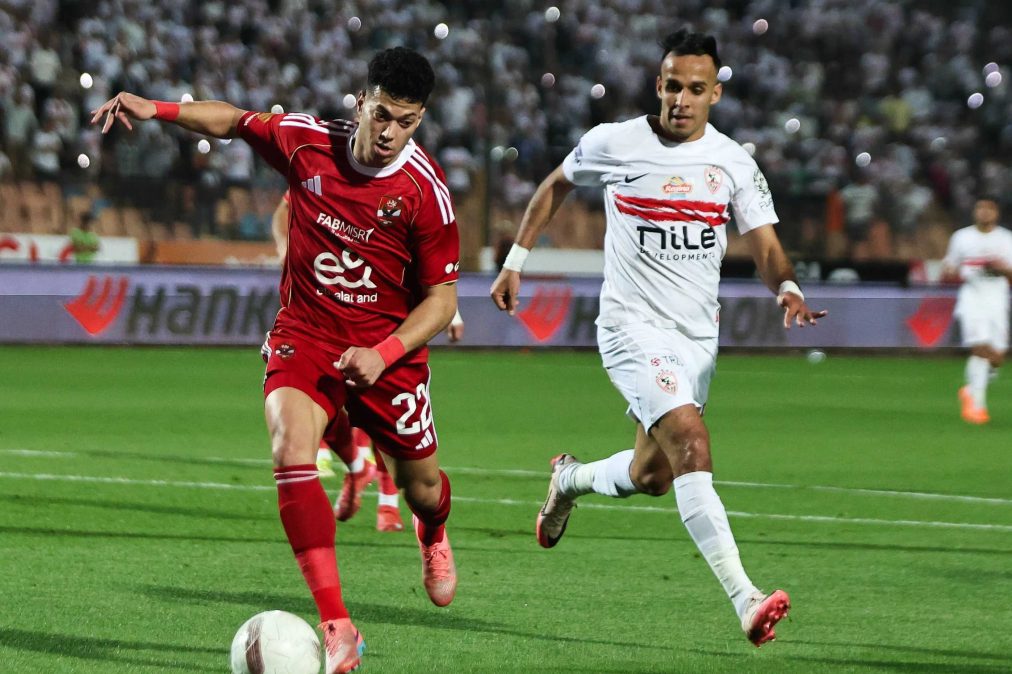
Jose Peseiro says he would have achieved “great success” had he stayed at Al Ahly, while describing the departure of Ahmed Sayed “Zizo” as a decisive factor in Zamalek’s defeat by Stellenbosch and the end of his own spell at the club.
The Portuguese coach, now managing AlUla in the Saudi First Division, spent time with both Egyptian giants during short spells. He led Al Ahly from October 2015 to January 2016 before leaving to take charge of Porto, then returned to Egypt almost a decade later to manage Zamalek between February and May 2025.
Peseiro also has experience with Sporting Lisbon, Braga and Porto, and managed Nigeria, guiding them to the final of the 2023 Africa Cup of Nations.
He said AlUla’s ambition extended beyond winning promotion to the Saudi Pro League, although immediate results remained essential.
“In modern football, especially in Saudi Arabia, there is no time without results,” he said. “AlUla’s project is ambitious and goes beyond the pitch to include culture and organisation. Our focus is on organisation and efficiency.”
AlUla came close to promotion last season, but were deducted three administrative points despite collecting enough points on the field to secure it.
“It was a very unfair decision,” Peseiro said. “With the management and organisational structure we have, and the quality of our squad, we have complete confidence in winning the title this season.”
He believes AlUla can eventually challenge for the Saudi Pro League title and said that was why he accepted the challenge of working in the second tier.
“We do not want to be a team that promises a lot and then disappears. We want stability. The road requires patience, but the organisation I see here is first class.”
Asked which player he would sign to become the face of the project if given an unlimited budget and complete freedom, Peseiro backed his current squad.
“I am very happy with the players who make up my team. We have already made our choices. From that moment, our players are the best,” he said.
Al Ahly and Zamalek
Peseiro identified a sharp institutional contrast between the two Cairo clubs. Al Ahly, he said, had greater stability and a clearer decision-making structure, allowing its operations to run more smoothly. Zamalek, by contrast, was driven by intense emotion and passion, creating a more changeable environment.
“It was an honour to coach the two biggest clubs in Africa,” he said.
Peseiro believes his time at Al Ahly ended too soon. “I have said several times that I should not have left Al Ahly when Porto invited me to become their manager,” he said. “I would have achieved great success. We had a wonderful team and, in my opinion, the best team in Africa at that time.”
At Zamalek, he said several circumstances disrupted his work, although he led the club to the Egyptian Cup final, which they later won. He admitted feeling disappointed that he was not in charge for the final.
Peseiro attributed Al Ahly’s dominance in the CAF Champions League, compared with Zamalek’s struggles, to continuity. He said continental success required a structure that protected the coach’s work and preserved squad stability.
Regarding Zizo’s move from Zamalek to Al Ahly, Peseiro said the switch between Egypt’s biggest rivals created enormous psychological pressure.
“Zizo is a very professional and gifted player, but sporting performance is fundamentally connected to psychological state,” he said. “When mental stability is affected, it eventually shows in a player’s performance.”
Peseiro added that Zizo’s departure on the eve of Zamalek’s CAF Confederation Cup quarter-final against Stellenbosch had a decisive effect on the result and on his own career at the club.
-
 AFCON 2027 qualifiers: Beating Lesotho was not easy – Morocco goalkeeper Yassine Bounou Sep 29, 2026
 -
AFCON 2027 Qualifiers: ‘One of those days everything went wrong’ – Carlos Queiroz on Gambia defeat Sep 29, 2026
-
This didn’t start against Gambia – Carlos Queiroz warns Ghana must address AFCON qualifying crisis Sep 29, 2026
-
AFCON 2027 qualifiers: Ghana defeat to Gambia very terrible, says Carlos Queiroz Sep 29, 2026



-
AFCON 2025: Fixtures, Results, Scores and Standings Jan 18, 2026
-
Leadership and long-term vision key to rescuing Zamalek and inspiring Egyptian football – Hany Abou Rida Nov 5, 2025
-
Match hero Taiwo Awoniyi reflects on team effort after Chelsea triumph May 5, 2026
-
South African giants Orlando Pirates set to lose influential forward Monnapule Saleng Mar 19, 2025




-
AFCON 2027 qualifiers: Algeria, Morocco and Nigeria among winners on opening matchday Sep 26, 2026
-
AFCON 2027 Qualifiers: McCarthy warns South Africa to expect tough test against Eritrea Sep 29, 2026
-
South Sudan vs Egypt: Where to watch AFCON 2027 qualifier Sep 29, 2026
-
AFCON 2027 qualifiers: Burkina Faso held by Benin in Group F Sep 25, 2026