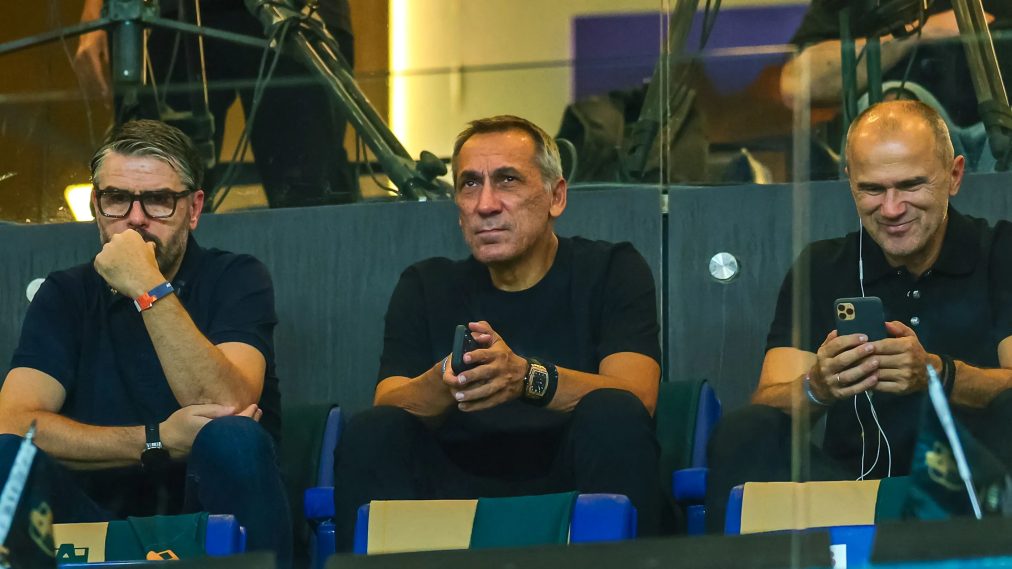
Georgios Donis has guided Saudi Arabia to the Gulf Cup 27 title, ending a 23-year wait for the trophy after a 2-0 victory over the United Arab Emirates in the final.
The result confirmed that the team’s progress during the tournament was no coincidence. In a short period, the Greek manager has turned a side known for faltering in the decisive moments into one capable of controlling matches and performing with composure when the pressure is greatest.
Saudi Arabia had endured a long absence from the gold medal, but Donis has overseen a quiet transformation. His tactical flexibility and resilience in finals enabled the team to overcome both its opponents and the psychological burden attached to its recent failures.
A flexible system and fresh options
Donis has built a cohesive structure around pressing, possession and the ability to adapt the team’s approach according to the opposition and the demands of each match.
Saudi Arabia no longer relies on a single tactical shape. The players have shown they can move between defensive and attacking phases while maintaining their balance, giving the team greater control across the pitch.
The manager also looked beyond the established names in the squad. Hamam Al-Hamami was given a meaningful opportunity to demonstrate his ability and emerged as one of the tournament’s most noticeable performers.
Donis also brought Saleh Abu Al-Shamat back into the national team. The player responded with a strong campaign, reinforcing his case for a continued role in Saudi Arabia’s plans.
Those decisions underlined the wider importance of the tournament for Donis. It was not simply an opportunity to compete for silverware, but also a chance to reshape the squad and identify further options for the future.
Al-Buraikan back in his best position
One of the manager’s most effective decisions was restoring Firas Al-Buraikan to his natural role as a centre-forward.
Al-Buraikan had operated in different positions during previous periods, but his return to the striker’s role allowed him to perform in the area where he is most effective. He quickly rewarded Donis’ confidence by scoring three goals during the tournament.
That took his total to five goals with Saudi Arabia in the current edition of the Gulf Cup, making him the second-highest scorer for the Falcons of his generation in the competition.
His contribution went beyond finishing. As the focal point of the attack, Al-Buraikan gave Saudi Arabia a clear reference in the final third and created space for his team-mates to move around him, adding variety to Donis’ attacking plan.
Confidence restored before the Asian Cup
The title’s wider significance lies in the confidence it has restored among Saudi Arabia’s supporters. The triumph ended a prolonged wait since the country’s previous Gulf Cup successes in the 2003 and 2004 editions.
Saudi Arabia are no longer merely aiming to reach finals; they have rediscovered how to win them. That could provide a major psychological lift before the next Asian Cup, which the team will host in front of its home supporters.
The Gulf Cup 27 title therefore represents a starting point rather than an ending. Donis now has a winning structure, new players in contention and established names who have regained confidence.
His next challenge will be to preserve and develop those gains before the Asian Cup in Saudi Arabia, where expectations and pressure will be greater. This time, however, the national team will arrive as champions, with a renewed belief in its ability.
-
 Burkina Faso women begin Olympic qualifying campaign with Los Angeles 2028 target Oct 7, 2026
 -
Braga host unbeaten Sporting CP in Portuguese league clash Oct 7, 2026
-
Riyad Mahrez joins Al Shamal after leaving Al Ahli Oct 7, 2026
-
Mohamed Sarr names 10 dual-national talents who could strengthen Senegal Oct 7, 2026




-
AFCON 2025: Fixtures, Results, Scores and Standings Jan 18, 2026
-
Match hero Taiwo Awoniyi reflects on team effort after Chelsea triumph May 5, 2026
-
Leadership and long-term vision key to rescuing Zamalek and inspiring Egyptian football – Hany Abou Rida Nov 5, 2025
-
South African giants Orlando Pirates set to lose influential forward Monnapule Saleng Mar 19, 2025




-
Croatia face Spain with Nations League hopes on the line in Split Oct 5, 2026
-
France v Belgium: Probable line-ups for Nations League clash Oct 3, 2026
-
Morocco coach Mohamed Ouahbi refuses to single out player after Mali draw Oct 4, 2026
-
Noussair Mazraoui leaves Morocco squad early after injury Oct 2, 2026