
The 2025 Africa Cup of Nations (AFCON) in Morocco has placed a spotlight on the growing importance of foreign-born players in Africa’s leading national teams, with both traditional powerhouses and emerging contenders strengthening their squads with talent born outside their borders.
The phenomenon is most pronounced among smaller nations such as Comoros, where a staggering 96 percent of the squad is foreign-born, and the Democratic Republic of Congo (DR Congo), which has a 79 percent foreign-born contingent.
This trend has been facilitated by a change to FIFA eligibility rules introduced more than two decades ago, allowing players with fewer than three senior caps before the age of 21 to switch national allegiance. As a result, France has emerged as the primary cradle of talent for African football, supplying more than 100 players to the tournament.
The continent’s most successful teams increasingly rely on players who were born and began their careers far from African shores. For countries such as Algeria, Morocco, and Senegal, these diaspora players often represent their most recognisable global stars.
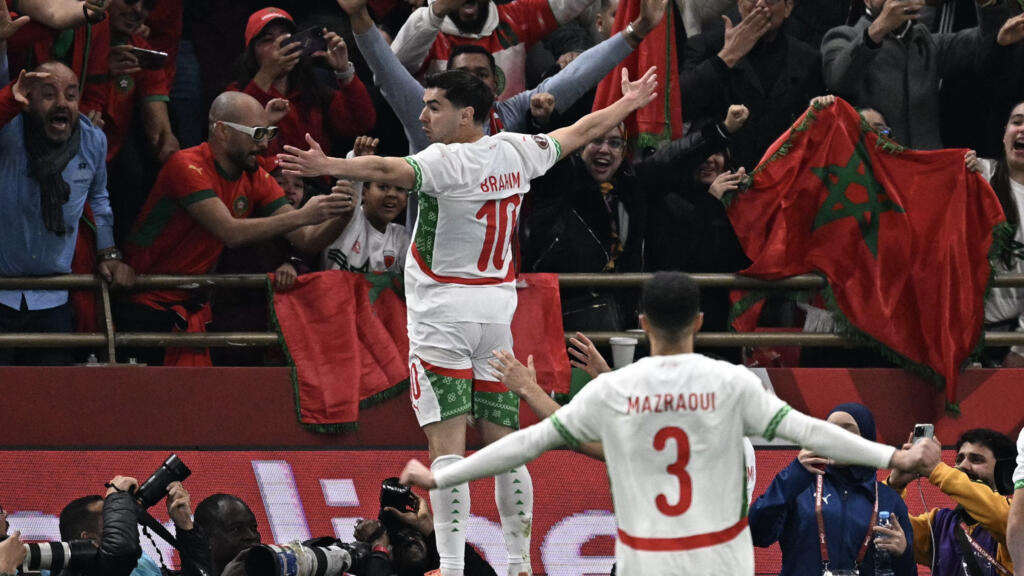
Morocco, the 2025 hosts and 2022 World Cup semi-finalists, have a squad made up of 43 percent foreign-born players. Key figures include Real Madrid playmaker Brahim Díaz, the leading scorer at the ongoing tournament. Goalkeeper Yassine Bounou was born in Canada, while midfielders Sofyan Amrabat and Hakim Ziyech are of Dutch origin. Emerging talents such as Bilal El Khannouss, born in Belgium, further underline this reliance.
Algeria, champions in 2019, have a 57 percent foreign-born squad. Their most prominent example is Riyad Mahrez, who was born and raised in France. Other notable additions include forward Ibrahim Maza, born in Berlin, Germany, who represented his birth country at youth level before switching allegiance.
Senegal, winners of the 2021 edition, have 43 percent foreign-born players. Captain and defensive leader Kalidou Koulibaly was born in France, while the Teranga Lions are also integrating promising young talent such as Paris Saint-Germain-developed forward Ibrahim Mbaye.
DR Congo’s squad, with 79 percent born abroad, relies heavily on its diaspora in Belgium and France. Recent additions include West Ham defender Aaron Wan-Bissaka, born in England, whose switch of nationality was approved by FIFA in late 2025.
Even established forces such as Nigeria, with 18 percent foreign-born players, and Ivory Coast, with 25 percent, benefit from this pipeline. Nigeria’s knockout-stage hero Ademola Lookman was born in London.
While nations such as South Africa, Egypt, and Botswana field entirely homegrown squads, many of Africa’s strongest contenders are leveraging their global diasporas, shaping both the identity and competitive edge of modern African football.
Popular News




-
AFCON 2025: Fixtures, Results, Scores and Standings
Jan 18, 2026 -

South African giants Orlando Pirates set to lose influential forward Monnapule Saleng
Mar 19, 2025 -

Leadership and long-term vision key to rescuing Zamalek and inspiring Egyptian football – Hany Abou Rida
Nov 5, 2025 -

Full schedule for 2025 Africa Cup of Nations in Morocco confirmed
Feb 12, 2025
-

FECOFOOT president Jean-Guy Blaise Mayolas slapped with life prison sentence over money laundering, embezzlement, and forgery
Mar 10, 2026 -

Kaizer Chiefs weigh Fernando da Cruz return as head coach talks emerge
Mar 11, 2026 -

Welayta Dicha vs Sidama Bunna 3:1, 2026-03-08, Ethiopia Premier League Match Report and Result
Mar 8, 2026 -

Kaizer Chiefs sporting director refuses to comment on Benni McCarthy speculation
Mar 7, 2026