Morocco’s Fouzi Lekjaa faces uncertainty over FRMF future amid political reports
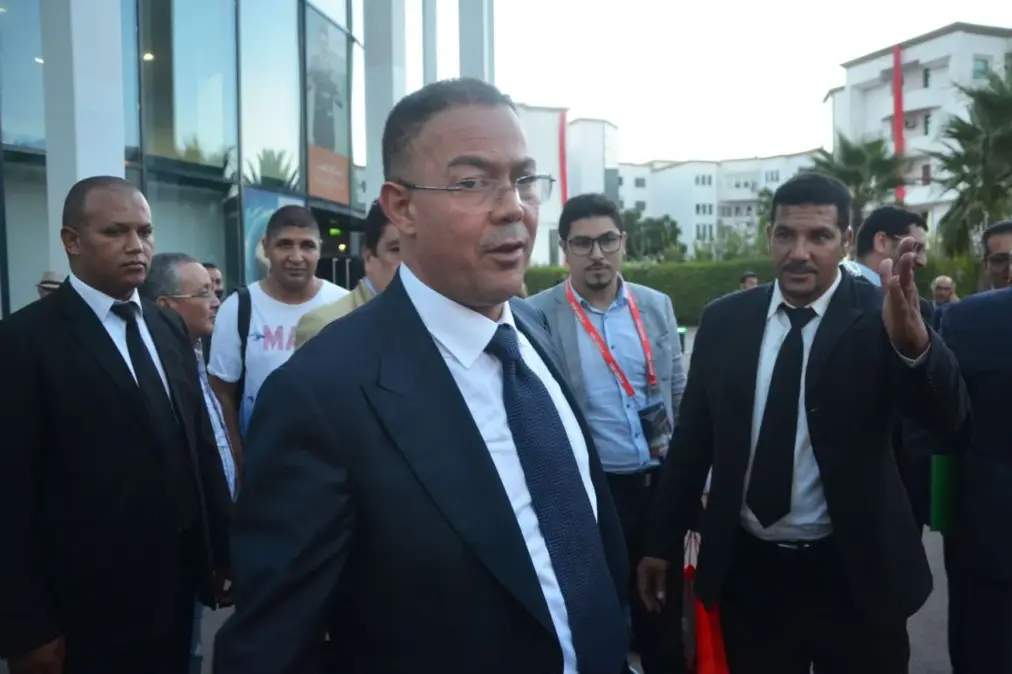
Speculation is mounting over the future of Moroccan Football Federation (FRMF) president Fouzi Lekjaa after reports suggested he could take on a greater political role ahead of the country’s parliamentary elections.
Lekjaa, who has led Moroccan football for more than a decade while also serving as Morocco’s Minister Delegate for the Budget and first vice-president of the Confederation of African Football (CAF), is reportedly preparing for a new phase in his public career.
According to several local media reports, the influential football administrator is expected to officially join the Authenticity and Modernity Party (PAM), with an announcement potentially coming during the party’s National Council meeting on 25 July.
The reports also claim that Lekjaa could seek the position of Prime Minister following Morocco’s legislative elections scheduled for 23 September.
Those developments have inevitably prompted fresh questions over whether he would be able to continue combining senior political responsibilities with his role as president of the FRMF.
Despite the growing speculation, there has been no official confirmation that Lekjaa intends to step down from Moroccan football’s governing body.
His current mandate as FRMF president expired at the beginning of June, while the federation’s elective General Assembly was postponed until September, coinciding with the period of the parliamentary elections.
That timing has further fuelled suggestions that a leadership change could eventually take place after more than 12 years under Lekjaa’s presidency.
However, football-focused account Soccer212 has urged caution, stating that Lekjaa’s departure from the federation “is by no means automatic.”
Since first being elected FRMF president in 2014, Lekjaa has overseen a period widely regarded as one of significant progress for Moroccan football.
During his tenure, the federation has invested in modern infrastructure, strengthened youth development programmes, advanced the professionalisation of domestic clubs and supported the continued growth of Morocco’s national teams.
His leadership has also coincided with Morocco securing the right to co-host the 2030 FIFA World Cup alongside Spain and Portugal, while his influence within CAF has continued to expand.
Although no succession plan has been confirmed, reports have already linked several high-profile figures with the possibility of replacing him should he eventually leave the federation.
Former Morocco captain Houssine Kharja is among the names being mentioned. Since retiring from professional football in 2016, Kharja has served as FIFA’s regional director for the Middle East and North Africa, giving him extensive experience within football administration.
Former Marseille sporting director Medhi Benatia has also been mentioned in reports, although to a lesser extent.
For now, however, there is no official indication that a successor has been identified or that Lekjaa’s departure from the FRMF is imminent.
His reported political ambitions may simply represent another chapter in an already influential career rather than signalling an immediate end to his leadership of Moroccan football.
The coming weeks are expected to provide greater clarity as both Morocco’s political calendar and the FRMF’s postponed electoral process move closer.
-
 Junior Dina Ebimbe faces battle for Schalke starting spot Oct 17, 2026
 -
Leroy Sane exit rumours dismissed amid difficult Galatasaray spell Oct 17, 2026
-
Manchester City 3-2 Ipswich: Iliman Ndiaye assists Erling Haaland in Premier League win Oct 17, 2026
-
Burkina Faso face Niger in UFOA-B U17 semi-final Oct 17, 2026


-
AFCON 2025: Fixtures, Results, Scores and Standings Jan 18, 2026
-
Match hero Taiwo Awoniyi reflects on team effort after Chelsea triumph May 5, 2026
-
Leadership and long-term vision key to rescuing Zamalek and inspiring Egyptian football – Hany Abou Rida Nov 5, 2025
-
South African giants Orlando Pirates set to lose influential forward Monnapule Saleng Mar 19, 2025




-
Real Betis v Barcelona: kick-off time, TV details and match preview Oct 16, 2026
-
Morocco to face New Zealand as FIFA U-17 Women’s World Cup kicks off in Rabat Oct 16, 2026
-
Roma v Real Madrid: home side tipped to score first in Champions League clash Oct 12, 2026
-
Atletico Madrid v Manchester United: probable line-ups for Champions League clash Oct 12, 2026