The opening rounds of the CAN 2027 qualifiers have highlighted five players who have combined individual quality with a significant influence on their national teams.
Alongside established international figures, a number of emerging talents have used the latest window to strengthen their reputations. Relebohile Mofokeng, Malick Yalcouye, Brahim Diaz, Bachir Belloumi and Nicolas Jackson have all made notable contributions.
Mofokeng leads South Africa’s new generation
At 21, Relebohile Mofokeng has quickly become one of the standout players of the campaign so far. After impressing against Guinea, the South African attacker produced an even more decisive display against Eritrea.
Mofokeng scored twice in a 5-0 victory for the Bafana Bafana, using his movement, pace and finishing to cause constant problems. The Royale Union Saint-Gilloise player regularly attacked space and took on defenders, adding a fresh dimension to South Africa’s forward line.
His performances suggest he is developing into more than a goalscorer and could become one of the leading figures in the country’s next generation. His progress will be watched closely in the coming rounds.
Yalcouye makes immediate impression
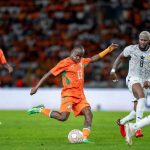
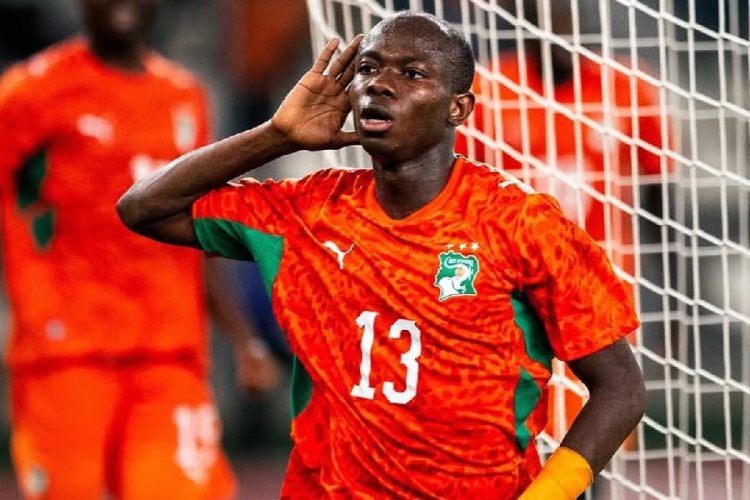
Malick Yalcouye made his first appearance for Ivory Coast in the high-profile meeting with Ghana, but showed no sign of being overawed by the occasion.
Selected by Herve Renard, the young midfielder displayed maturity from the outset and scored in a 2-0 win. His contribution extended beyond the goal: he competed strongly, offered himself as an option to team-mates and carried the ball through the lines to give Ivory Coast’s midfield greater tempo.
The performance could mark the beginning of a significant international career. If he maintains that level in the next fixtures, Yalcouye may soon establish himself as a regular for the Elephants.
Diaz provides Morocco with a creative spark
Brahim Diaz again underlined his importance to Morocco in their 2-0 victory over Lesotho, scoring one of the goals as the Lions of the Atlas made a positive start to the qualifiers.
Diaz’s value is not limited to his statistics. His ability to operate between the lines, take on opponents and create openings against deep defensive blocks gives Morocco a player capable of changing a match with a single moment.
In a qualifying campaign where tight games may be decided by one action, that creativity is a valuable asset.
Belloumi inspires Algeria’s response
Algeria faced a difficult situation against Burundi after falling two goals behind. Bachir Belloumi helped revive the Fennecs by pulling one goal back and sparking their response in a match that finished 2-2.
The young winger was energetic on the flank, repeatedly looked to challenge defenders and was willing to take responsibility when Algeria needed an attacking outlet. Although the team’s overall display was uneven, Belloumi’s performance showed the character of a player prepared to act in a difficult moment.
He has strengthened his case as one of the leading members of Algeria’s emerging generation.
Jackson offers Senegal a constant threat
Playing under Patrick Vieira, Nicolas Jackson was a persistent danger in Senegal’s game against Ethiopia. The forward was not rewarded with a large number of goals, but his influence on the attack was clear.
His runs behind the defence, movement, acceleration and ability to create chances kept Ethiopia under pressure and placed him at the centre of Senegal’s main attacking moves.
That range of movement gives Vieira an important option in the final third. For Jackson, the qualifiers offer an opportunity to show that he can become one of the main attacking forces of the Lions’ next generation.
Together, the five players represent South African energy, Ivorian promise, Moroccan creativity, Algerian resilience and Senegalese attacking power. Their strong starts do not guarantee a successful campaign, but they have already signalled that CAN 2027 could introduce a new group of players to the top level of African football.
-
 CAN 2027 qualifiers: Five players who struggled in the opening two matchdays Oct 2, 2026
 -
Mohamed El Shenawy extends Al Ahly contract as African football news round-up Oct 2, 2026
-
Five players who have made an early impact in the CAN 2027 qualifiers Oct 2, 2026
-
Argentina v Burkina Faso: Hosts rated favourites in Estadio Monumental friendly Oct 2, 2026



-
AFCON 2025: Fixtures, Results, Scores and Standings Jan 18, 2026
-
Match hero Taiwo Awoniyi reflects on team effort after Chelsea triumph May 5, 2026
-
Leadership and long-term vision key to rescuing Zamalek and inspiring Egyptian football – Hany Abou Rida Nov 5, 2025
-
South African giants Orlando Pirates set to lose influential forward Monnapule Saleng Mar 19, 2025




-
AFCON 2027 Qualifiers: McCarthy warns South Africa to expect tough test against Eritrea Sep 29, 2026
-
AFCON 2027 qualifiers: Algeria, Morocco and Nigeria among winners on opening matchday Sep 26, 2026
-
AFCON 2027 qualifiers: Burkina Faso held by Benin in Group F Sep 25, 2026
-
Denmark v Portugal: Nations League kick-off time, TV channel and match prediction Sep 29, 2026