
Cabo Verde
COSAFA
Côte d’Ivoire
Countries
DR Congo
Egypt
FIFA World Cup
Ghana
Latest News
Morocco
Senegal
South Africa
UNAF
UNIFFAC
WAFU A
WAFU B
Zonal Bodies
FIFA faces legal battle as fans challenge ‘excessive’ 2026 World Cup ticket prices
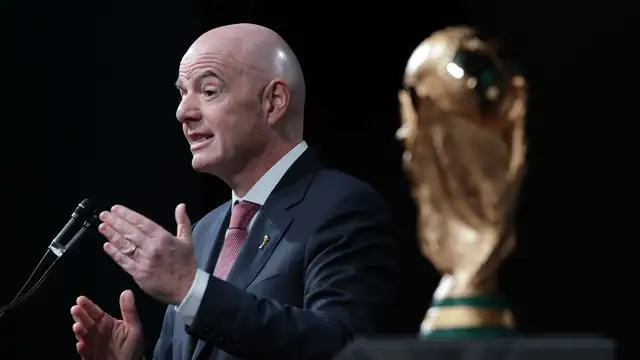
Football Supporters Europe has escalated tensions ahead of the 2026 FIFA World Cup, launching formal legal action against FIFA over what it describes as ‘excessive ticket prices’ and unfair sales practices.
The complaint, filed with the European Commission in partnership with Euroconsumers, accuses FIFA of abusing its dominant position in ticket distribution.
At the centre of the dispute is the claim that football’s global governing body has created a system that disadvantages supporters, particularly those travelling from Europe to attend the tournament across the United States, Canada and Mexico.
“Euroconsumers and Football Supporters Europe (FSE) have filed a formal complaint with the European Commission against FIFA, alleging that the football body has abused its monopoly position to impose excessive ticket prices and opaque and unfair purchasing conditions and processes on European fans ahead of the 2026 World Cup,” the FSE said in a statement.
With nearly seven million tickets released for what will be the first 48-team World Cup, demand has surged sharply. However, critics argue that pricing has spiralled beyond reasonable levels. According to FSE, the cheapest publicly available tickets for the final have reached $4,185, a figure that dwarfs the entry price for the 2022 showpiece in Qatar. In extreme cases, resale listings have pushed prices into six-figure territory, highlighting what supporters see as a deeply flawed system.
“FIFA holds a monopoly over ticket sales for the 2026 World Cup and has used that power to impose conditions on fans that would never be acceptable in a competitive market,” the group added.
FIFA president Gianni Infantino has defended the pricing model, attributing fluctuations to demand-driven mechanisms. In particular, the use of “dynamic pricing” has drawn criticism for its lack of transparency and absence of limits, with fans often unable to determine final costs before entering purchase queues.
“FIFA used ‘variable pricing’, or dynamic pricing, with no cap and no transparency on how prices are set,” FSE said.
Although FIFA introduced a limited allocation of lower-priced tickets, starting at $60, these were restricted in availability and largely tied to national team allocations. Critics argue that such measures fall short of addressing broader accessibility concerns.
Popular News




-

AFCON 2025: Fixtures, Results, Scores and Standings
Jan 18, 2026 -

Leadership and long-term vision key to rescuing Zamalek and inspiring Egyptian football – Hany Abou Rida
Nov 5, 2025 -

South African giants Orlando Pirates set to lose influential forward Monnapule Saleng
Mar 19, 2025 -

Full schedule for 2025 Africa Cup of Nations in Morocco confirmed
Feb 12, 2025
-

2025/26 CAF Confederation Cup: Fixtures, Results, Tables and Standings
Mar 21, 2026 -

2025/26 CAF Champions League: Fixtures, Results, Tables and Standings
Mar 21, 2026 -

AFCON 2025 final: How Senegal’s victory was overturned in a controversial CAF decision
Mar 18, 2026 -

Morocco star Achraf Hakimi reacts after being declared AFCON 2025 champions
Mar 18, 2026