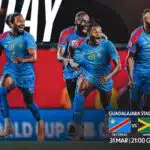
Femafoot leadership quits as Mali challenges football’s governing powers
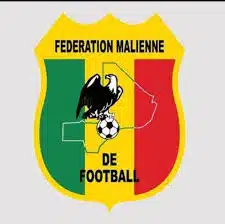
Thirteen members of Mali’s football federation executive committee have resigned in a move that has plunged the country’s game into fresh uncertainty and openly challenged the authority of FIFA and the Confederation of African Football’s Moroccan office.
The coordinated resignations by the members of the Femafoot Executive Committee have brought an abrupt end to the mandate of its former president Mamoutou Touré, widely known as Bavieux, while also dissolving the entire leadership structure.
Touré, a member of the FIFA Council, had remained in office despite being imprisoned during his term for an off-field matter.
The departing officials have now called for an extraordinary general assembly, including elections, in a bid to “begin anew” and reset governance within Malian football.
The move has been interpreted by observers as an act of defiance rather than a concession to international bodies.
It follows a prolonged period of tension between Femafoot and football authorities in Zurich, Cairo and Rabat, with critics arguing that external intervention has prolonged instability instead of resolving it.
In response, the Moroccan FIFACAF office issued a letter asserting its authority over the situation.
The correspondence states that it “acknowledges the vacancy of all positions within the Femafoot Executive Committee following the recent resignation of all its members.”
The letter goes further, warning that “to release funds (FIFA Forward and CAF IMPACT accounts), only the signatures of Sidi Bekaye Magassa (General Secretary) and Koniba Maïga (Financial Director) are now valid.”
For many within Malian football, this was seen as a thinly veiled threat, reinforcing concerns that financial leverage is being used as a tool of control.
Critics argue that the resignations reflect deeper dissatisfaction with the current model of governance in African football.
Since the Africa Cup of Nations, discontent has grown over what is described as an increasingly centralised system dominated by an alliance between FIFA president Gianni Infantino, CAF president Patrice Motsepe and Moroccan football chief Fouzi Lekjaâ.
According to observers, this approach has weakened the autonomy of national federations, contrasting sharply with the independence enjoyed by confederations elsewhere.
For supporters of the resigning officials, the decision represents a rare moment of collective resistance.
They see it as the start of a broader mobilisation by national federations, often backed by their governments, to confront corruption and perceived favoritism within continental football administration.
As Mali prepares for an extraordinary general assembly, uncertainty remains over the immediate management of the federation and access to international funding.
What is clear, however, is that the crisis has exposed fault lines between national football bodies and international authorities, raising fresh questions about governance, accountability and independence within African football.
Popular News



-

AFCON 2025: Fixtures, Results, Scores and Standings
Jan 18, 2026 -

Leadership and long-term vision key to rescuing Zamalek and inspiring Egyptian football – Hany Abou Rida
Nov 5, 2025 -

South African giants Orlando Pirates set to lose influential forward Monnapule Saleng
Mar 19, 2025 -

Full schedule for 2025 Africa Cup of Nations in Morocco confirmed
Feb 12, 2025

-
LIVE UPDATES: D.R Congo 1-0 Jamaica – 2026 FIFA World Cup Playoffs
Mar 31, 2026 -
Cameroon defeat China 2-0 in FIFA Series clash
Mar 31, 2026 -

Africa’s 2026 World Cup Teams: Fixtures and Results for March friendly games
Apr 1, 2026 -
Zimbabwe defender Teenage Hadebe dropped after code of conduct breach
Mar 30, 2026