FEATURE: Women’s Africa Cup of Nations confusion – What are CAF and Morocco doing with WAFCON 2026?
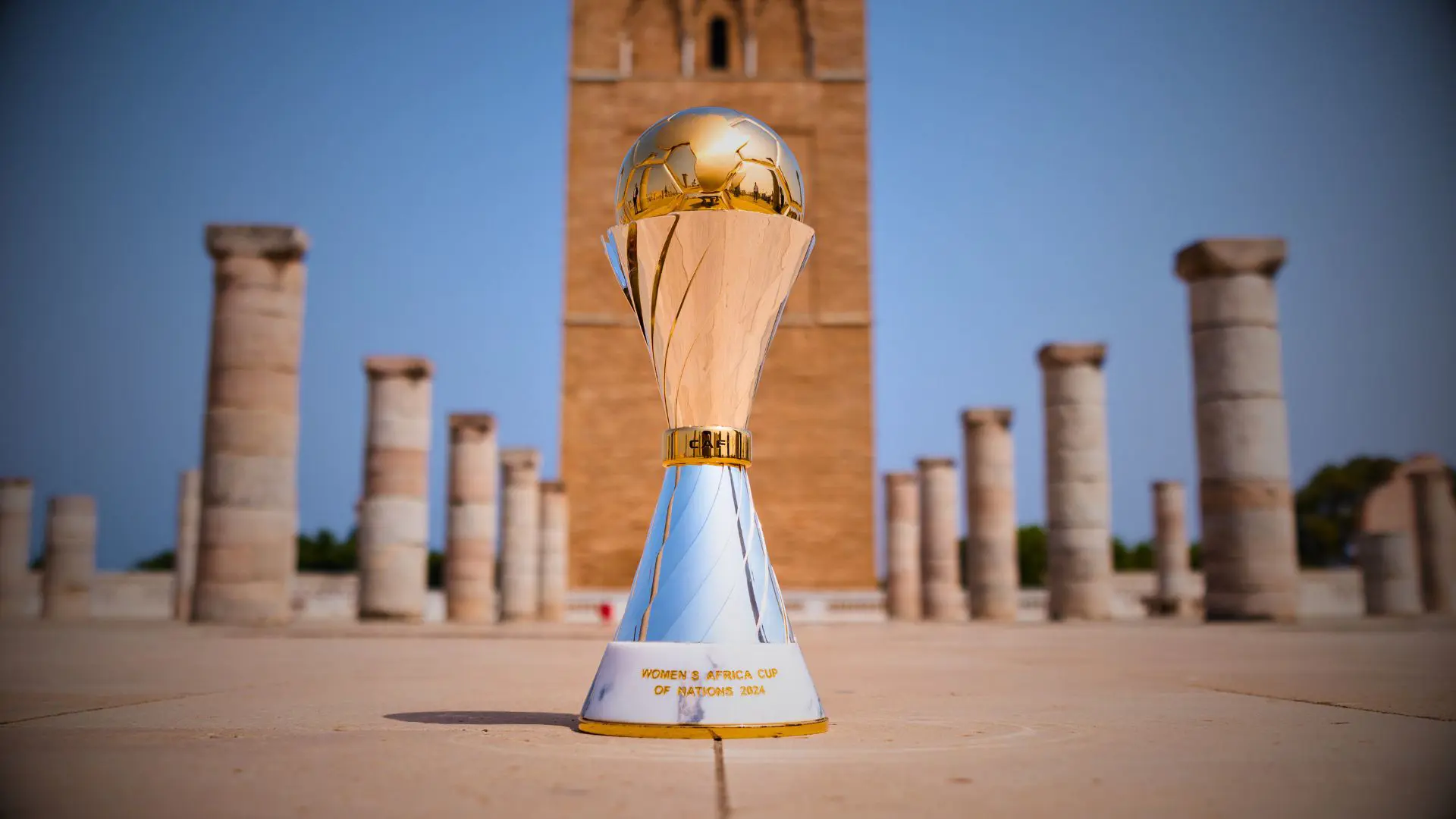
At the time of writing, we’re less than two weeks away from the 2026 Women’s Africa Cup of Nations… or are we?
Amidst increasing rumours that the tournament is to be postponed, rearranged, moved or cancelled – with the Confederation of African Football yet to clarify the competition’s fate – players, supporters, journalists, sponsors and stakeholders are none the wiser as to whether the continent’s biennial showpiece will take place – and where – or not.
How did we get here, what happens next, and how can CAF’s stated commitment to the women’s game on the continent be trusted after this latest debacle?
WAFCON 2026: What’s the problem?
With less than two weeks to go until the tournament, CAF are yet to finalise the competition calendar, are yet to confirm the venues for the knockout rounds, have not issued accreditation, are yet to name the tournament officials, yet to host their media workshop, and are yet to deploy their security officials to the competition sites in Morocco.
All of this should have been well advanced by now, raising speculation that the tournament will not proceed as planned.
These concerns have emerged against a backdrop of pre-existing uncertainty, with Peace Mabe, Member of the South African Assembly, announcing in early February that South Africa had replaced Morocco as tournament hosts, only for the country’s Minister of Sports, Arts & Culture, Gayton McKenzie, to clarify that her comments had been premature.
A genuine error by the deputy minister, or evidence of a clear scheduling problem behind the scenes on the part of CAF?
“We took an opportunity that presented itself because we feel we have the necessary infrastructure and support [to host] the WAFCON,” Mabe told SABC Sport. “When Morocco said: ‘We are not able to host,’ South Africa said: ‘Yes. We are available. We are going to take it.'”
South Africa ultimately retracted their claims, CAF denied that there was a problem, and appeared (on the surface) to be business as usual.
Last week, a report emerged in the French publication L’Equipe that CAF were intending to postpone the tournament – with a decision having been taken on Friday February 27 – with various other sources across the continent and beyond subsequently repeating and embellishing the news.
On Monday, Jeune Afrique – citing an anonymous CAF informant – again reiterated that the tournament would not take place in the originally planned March 17 to April 3 slot, but that it would be shifted to a July and/or August programme, in Morocco or elsewhere.
Still, however, there has been no official communique. We are now into the sixth day since L’Equipe’s report without any response from the confederation, their silence creating a vacuum into which more uncertainty and speculation is being sucked.
Africa’s women’s teams, including Morocco, are in camp ahead of the Women’s Africa Cup of Nations later in March, but there’s no certainty that the tournament will actually go ahead. ABDEL MAJID BZIOUAT/AFP via Getty Images
Could the WAFCON still go ahead as planned?
Admittedly, it’s looking increasingly unlikely, although there are perhaps several indications to suggest that – for now at least – it’s perhaps too soon to definitively write it off.
First of all, there’s CAF’s silence.
If the rumours of a postponement or a rearrangement were true, then the confederation should surely have acted as quickly as possible to clarify the situation, take control of the narrative, and shutdown as much needless speculation as possible.
Yet, to date, they haven’t.
Perhaps this means that things will go ahead as planned, maybe it means that they’re still scrabbling around for a solution – to move the dates, change the destination, reach a compromise with Morocco – surely, if it was definitely dead, they would have said something, right?
Perhaps, considering CAF in its current guise, such PR negligence and further disorganisation may be expected, this is, after all, the governing body who opted to expand the tournament to 16 teams after the qualifying campaign had been concluded. However, it’s still a bizarre and baffling way for an organisation of such a scale to conduct themselves.
At least the editor of CAF’s website – CAFOnline.com – still appears to believe the tournament will go ahead as planned, publishing an interview with Senegal’s Mama Diop on Monday with reference to the upcoming competition.
Indeed, Diop’s Senegal as well as all of the other tournament contenders appear to believe things will kick-off as planned on March 17, with the competing squads currently in pre-tournament training camps after the players have already been taken from their club sides for the WAFCON window.
Are the likes of Ghana, who defeated Russia 4-0 in the UAE on Tuesday, or Nigeria, who downed Cameroon 3-1 in Yaounde on the same day, really preparing and warming up for a tournament that won’t take place?!
Did would-be hosts Morocco really name their tournament squad for the WAFCON knowing that the competition won’t be going ahead as planned?!
How will federation presidents, the people whose support keeps Dr Patrice Motsepe at the head of CAF, respond to having to pay to these pre-tournament training camps for a March-April competition that doesn’t exist?!
South Africa themselves have even unveiled their new kit ahead of the competition, seemingly unaware that it may not be taking place as planned.
Considering that one of CAF’s rationale for reducing the number of male AFCON tournaments from once every two years to once every four years was to avoid club-vs-country player-availability wrangles, to act as though the WAFCON is going ahead as planned, taking the players from their club sides, only to annul the tournament at the last minute, would be remarkable even by their recent standards.
Why are we in this situation?
In truth, the full picture isn’t entirely clear, even though reports in the local media indicated that the Moroccan FA informed CAF of Morocco’s inability to host the WAFCON as far back as early February.
Faouzi Lekjaa, less than a fortnight out from being at the centre of the men’s AFCON final storm, informed CAF of two factors which would prevent Morocco from taking on hosting responsibilities due to the demands on the country’s stadia and infrastructure.
First of all, there’s the conclusion of the Botola Pro – the top division of men’s football in Morocco – which had already been pushed back because of the African Nations Championship, the Arab Cup, and the AFCON.
Then, there’s the series of men’s football friendlies which are set to take place in Morocco in March, with just under a dozen teams set to descend on the North African country during the international break between the 23rd and the 31st to play international friendlies.
There are questions to be asked about why men’s international friendlies are taking precedent ahead of the WAFCON, the jewel in the crown of Africa’s women’s football calendar, while Morocco knew about hosting the tournament during this window for two years… why are these conflicts only becoming apparent now?
It doesn’t appear to make sense, and will only fuel speculation that Morocco’s late, late withdrawal may well be a political move linked to their perceived injustice after Senegal’s infamous AFCON final heist in Rabat earlier this year.
This theory isn’t entirely coherent either; would Morocco really throw the Atlas Lionesses, their credibility as Africa’s most reliable tournament hosts, and the reputation of their women’s game -into which they’ve invested so much – under the bus?
Perhaps, in light of the fallout of the AFCON final, and Morocco’s failure to ‘reward’ all of this extensive investment in the game with silverware, the country’s commitment to ploughing money into sports is wavering, and WAFCON 2026 is the collateral damage.
Certainly, right now, the country appears more preoccupied by the future of Walid Regragui and the identity of his successor at the helm of the men’s national side, rather than the WAFCON.
ESPN has reached out to the Moroccan federation for comment, but no additional information has been forthcoming.
What are the consequences? The impacts both of the ongoing malaise and uncertainty, not to mention a potential rescheduling/change of host/cancellation are diverse and manifold.
Practically, the tournament is set to double up as the qualifiers for next year’s World Cup in Brazil – a problem in itself – and without it, it remains to be seen how or when the continent’s four representatives for that tournament will be determined.
That competition – set to take place in June next year – means that there’s no possibility for the WAFCON to be pushed back to next summer, and a window must be found this year.
More broadly, this fiasco leaves CAF’s repeated pledged commitment in the women’s game in tatters, with those vows surely exposed as the vacuous and vapid platitudes they surely were.
“We want women’s football to be significantly growing and progressing in the period of my presidency,” he said after taking the reins of the continent’s governing body, while the president has repeatedly insisted that the development of the women’s game is a central pillar of his administration’s strategy and priorities. But here we are.
How will broadcasters approach the WAFCON now and in the future in light of such uncertainty and a dearth of clear communication? How will sponsors, other potential stakeholders view investing in the women’s game in Africa given how the continent’s own governing body appears to struggle to prioritise and promote the tournament itself?
Certainly, it is disappointing and disrespectful for the players and staff involved to find themselves in such a situation so close to the tournament, and CAF’s relationship with the women’s game will take a lot of rebuilding.
What happens now?
We wait and see what decision is made when CAF deign it the right time to announce their intentions for the WAFCON.
Should the tournament take place in Morocco this month as planned, then questions may exclusively focus on CAF’s communication and prioritisation of the women’s game.
If it is delayed until later in the year, then programming and calendar concerns and caveats must be taken into account, while CAF risk some disgruntled FAs having to again pay out for another pre-tournament training camp.
What kind of backing can they expect for the tournament from broadcasters and sponsors in the moments immediately after the men’s FIFA World Cup, having already postponed the tournament last-minute earlier in the year?
Should Morocco refuse to host altogether, then there will be significant consequences both for themselves and CAF. The latter will have to identify a replacement host, potentially South Africa, while attempting to find an appropriate time slot for the tournament in order to give enough time for World Cup qualification.
The relationship between CAF and Morocco, once so tight, may well need to be salvaged – if possible – and repaired from both sides, while the confederation must evaluate their potential over-reliance on the North African state in recent years.
Morocco potentially face missing out on the tournament entirely, which would have the knock-on effect of therefore taking themselves out of the running for World Cup qualification, while also potentially facing their own WAFCON ban.
It would be a disastrous scenario for the North African nation, who have invested so heavily in their women’s game, not least parachuting in Spain’s World Cup-winning head coach Jorge Vilda to oversee the Lionesses, achieved such success, and genuinely been a beacon of progress for the rest of the continent.
Ultimately, it’s clear that if CAF is serious about its pledges and stated ambitions for the women’s game in Africa, the organisation of the continent’s premier international competition must improve dramatically.
Source: ESPN
Popular News




-

AFCON 2025: Fixtures, Results, Scores and Standings
Jan 18, 2026 -

Leadership and long-term vision key to rescuing Zamalek and inspiring Egyptian football – Hany Abou Rida
Nov 5, 2025 -

South African giants Orlando Pirates set to lose influential forward Monnapule Saleng
Mar 19, 2025 -

Full schedule for 2025 Africa Cup of Nations in Morocco confirmed
Feb 12, 2025