FEATURE: Why Tarik Sektioui appears as the ideal candidate to replace Walid Regragui as Morocco coach
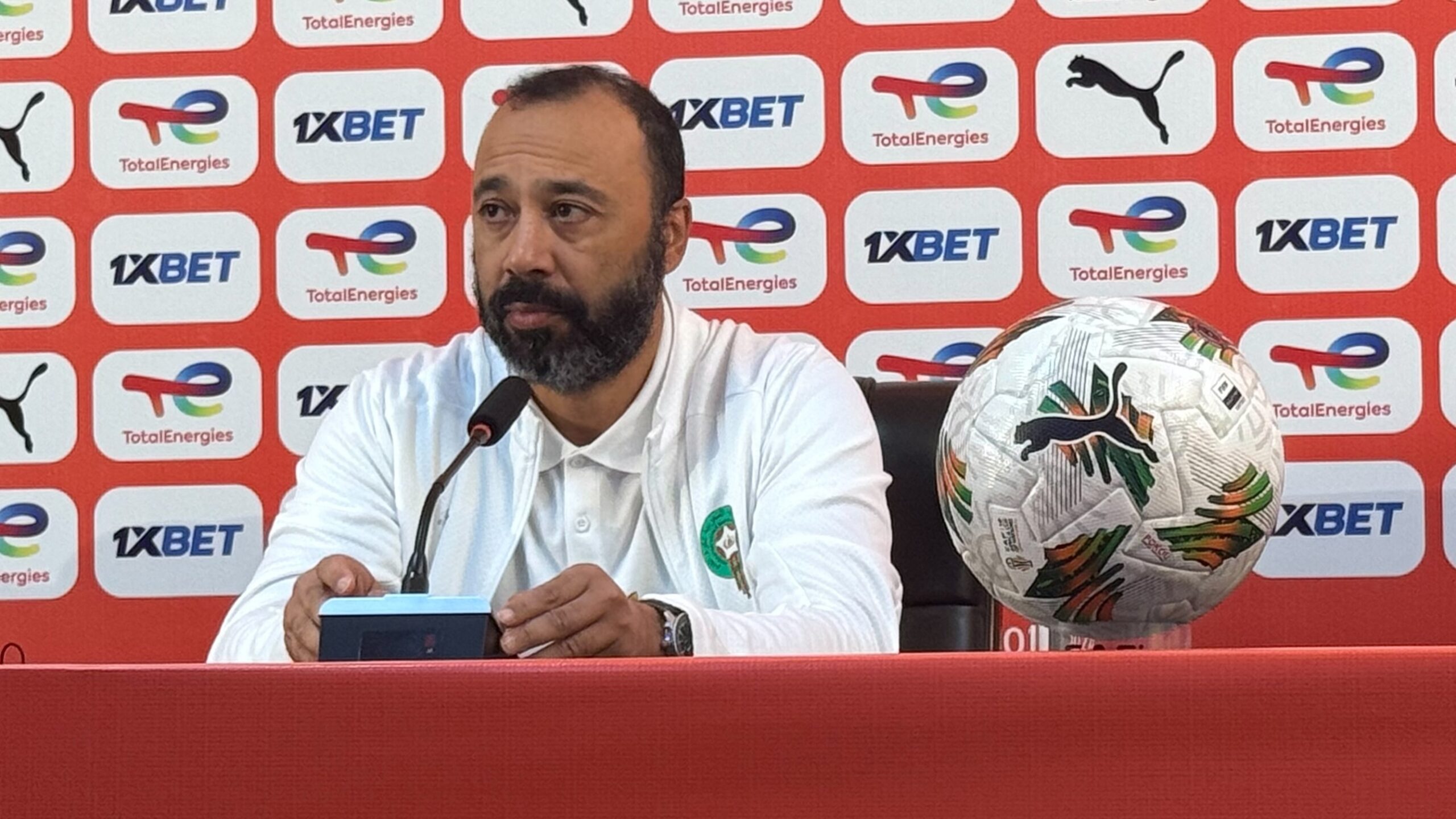
With the 2026 World Cup fast approaching, the Royal Moroccan Football Federation appears ready to usher in a new era following the expected departure of Walid Regragui.
While several profiles have been discussed in recent days, one name continues to impose itself with growing conviction behind the scenes: Tarik Sektioui.
Reports indicate that an agreement has been reached to terminate Regragui’s contract, officially closing a memorable chapter in the history of the Atlas Lions. Attention has since shifted to identifying his successor, with speculation intensifying across national and international media.
Among the names circulating most prominently are Sektioui and former Barcelona coach Xavi Hernandez. Although Xavi’s global reputation carries undeniable weight, the current context appears to favour continuity over prestige.
With only months separating Morocco from the 2026 World Cup, stability and deep familiarity with the national setup may prove more valuable than a high-profile appointment requiring adaptation time.
Sektioui’s credentials present a compelling case. As a former Moroccan international, he enjoyed a distinguished playing career in Europe with clubs such as AJ Auxerre, FC Porto, and AZ Alkmaar.
That experience has granted him natural legitimacy among a generation of players shaped by European academies and competitions. He understands their mindset, speaks their football language, and appreciates the demands of elite performance.
His achievements on the bench further reinforce his candidacy. Sektioui lifted the Throne Cup with Maghreb de Fes in 2016 and later guided RS Berkane to CAF Confederation Cup glory in 2020. At international level, he has left an even deeper imprint.
He led Morocco to a historic bronze medal at the Paris 2024 Olympic Games, becoming the first Moroccan coach to secure such an achievement, with Achraf Hakimi captaining the side. His ability to manage a dressing room filled with high-profile talent was evident throughout that campaign.
Sektioui also demonstrated his capacity to deliver under pressure by guiding a hastily assembled squad to triumph at the African Nations Championship and steering Morocco to success in the Arab Cup in Qatar. In each case, he operated within tight timelines and demanding conditions, yet produced tangible results without sacrificing competitive standards.
With less than four months before the World Cup, time has become a decisive factor. Appointing a foreign coach would inevitably require a period of adjustment, from understanding the squad dynamics to adapting to the institutional culture shaped since 2022. Sektioui, by contrast, is already embedded within the national framework.
Having worked with the under-23 side, the local national team, and the reserve squad, he possesses direct knowledge of many players currently forming the core of the senior team. His transition would therefore be immediate and seamless.
The comparison with 2022 remains instructive. Regragui himself was appointed only months before the tournament in Qatar, and reliance on a strong domestic base facilitated Morocco’s historic run to the semi-finals. Continuity at pivotal moments can become a competitive advantage rather than a risk.
While Xavi’s name continues to surface, particularly given his experience with FC Barcelona and Al Sadd SC, questions persist about the broader strategic direction. For years, the Moroccan federation has invested heavily in nurturing national coaching talent, empowering local expertise and building a coherent football identity across age categories. Turning toward a foreign solution at this juncture could appear inconsistent with that long-term vision.
Moreover, history offers a telling reminder: no national team has ever won the World Cup under a foreign coach. The most enduring triumphs have been guided by managers deeply rooted in their nation’s football culture and emotional fabric.
Morocco now approaches the North American World Cup not merely as participants, but as semi-finalists from 2022 and a team ranked among the world’s elite in the FIFA standings. Expectations have evolved. The objective is no longer symbolic progress but sustained excellence.
In that context, Sektioui represents continuity without complacency. He embodies institutional memory, tactical familiarity, and emotional proximity to the dressing room. Sometimes the strongest decision is not the most spectacular one, but the most coherent. By every sporting and strategic measure, Tarik Sektioui appears to be the logical choice to lead the Atlas Lions into their next defining chapter.
Popular News
-
AFCON 2025: Fixtures, Results, Scores and Standings
Jan 18, 2026 -

Leadership and long-term vision key to rescuing Zamalek and inspiring Egyptian football – Hany Abou Rida
Nov 5, 2025 -

South African giants Orlando Pirates set to lose influential forward Monnapule Saleng
Mar 19, 2025 -

Full schedule for 2025 Africa Cup of Nations in Morocco confirmed
Feb 12, 2025