
FEATURE: When titles are decided off the pitch – Football’s most controversial administrative victories
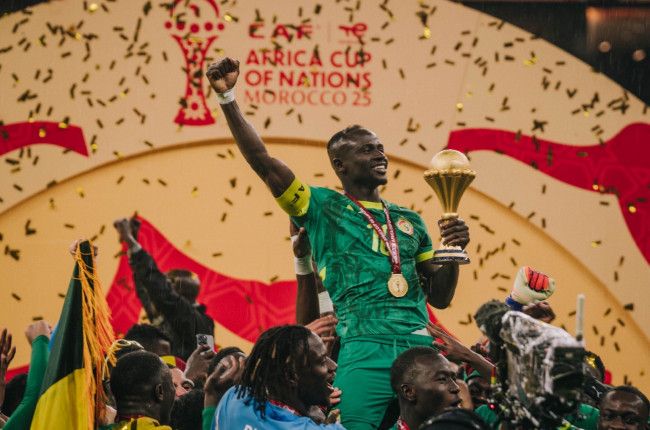
In football, a match may stretch over 120 minutes, yet in some cases, the true outcome is determined long after the final whistle.
What unfolded in the 2025 Africa Cup of Nations final stands as one of the most dramatic examples in modern football, where a ruling by the Confederation of African Football’s Appeal Board effectively rewrote history.
CAF’s Ruling Rewrites AFCON 2025 Outcome
In a stunning administrative reversal, Senegal—initially crowned champions—were stripped of the title, with Morocco awarded a 3-0 victory by default. CAF based its decision on Articles 82 and 84 of its regulations, concluding that Senegal’s mass withdrawal during the match constituted a breach serious enough to warrant forfeiture. The trophy that had been celebrated in Dakar was, in effect, reassigned to Rabat not by a goal, but by the rulebook.
Chaos, Controversy, and a Costly Walk-Off
The final itself had already delivered high drama. A Senegalese goal was ruled out for a foul in the buildup, while Morocco were awarded a penalty after a lengthy VAR review. Brahim Díaz failed to convert with a Panenka attempt, denied by an inspired save from Édouard Mendy.
Yet the defining moment came before the penalty was taken, when Senegal’s players left the pitch in protest for around 14 minutes, creating chaos that would later prove decisive.
Although the match resumed and Senegal eventually found a winning goal through Pape Gueye in extra time, the celebrations were short-lived. CAF’s initial disciplinary response, which imposed fines and suspensions while upholding the result, drew criticism for being too lenient. Morocco pursued an appeal, and the subsequent ruling was clear and uncompromising. A temporary withdrawal, CAF concluded, was enough to invalidate the result. The 1-0 scoreline was erased and replaced with a 3-0 administrative victory.
From Celebration in Dakar to Reversal in Rabat
What followed was a dramatic shift from jubilation to uncertainty. Senegal’s triumph, celebrated with pride, was effectively nullified by a legal interpretation that placed regulations above the events on the field.
When the Rulebook Overrides the Scoreline
Such rulings, often referred to as “administrative victories,” are not new to football. They represent moments when the laws of the game override events on the pitch, turning legal interpretation into the ultimate decider.
Historic Cases of Administrative Victories in Football
One of the earliest and most symbolic cases occurred in 1973, when Chile were awarded a victory after the Soviet Union refused to travel for a World Cup qualifying playoff. The match went ahead regardless, with Chile scoring into an empty net in a surreal scene that secured their qualification.
A different kind of administrative intervention reshaped UEFA Euro 1992, when Yugoslavia were expelled due to international sanctions. Denmark, called up as replacements, went on to win the tournament in one of football’s greatest underdog stories.
From Marseille to Juventus: Titles Lost Off the Field
Off-field decisions have also brought down giants. In 1993, Olympique de Marseille were stripped of their league title following a bribery scandal, leaving the season without a champion. Similarly, the 2006 Calciopoli scandal saw Juventus relegated and stripped of titles, with one Scudetto reassigned to Inter Milan in a decision that remains contentious.
European competitions have also witnessed such moments. In the 2005 UEFA Champions League, a heated clash between AC Milan and Inter Milan was abandoned after crowd trouble, leading to a 3-0 win awarded to Milan. Nearly a decade later, Legia Warsaw were eliminated from the Champions League after fielding an ineligible player against Celtic FC, turning a commanding aggregate victory into a painful administrative defeat.
African Football’s Own Precedents of Controversy
Africa itself has seen a similar controversy. The 2019 CAF Champions League final between Espérance de Tunis and Wydad Casablanca descended into chaos after a disputed VAR incident. Wydad’s refusal to continue led to the match being awarded to Espérance, a decision later upheld by the Court of Arbitration for Sport.
Between Sporting Merit and Legal Authority
What sets the 2025 AFCON final apart, however, is the fact that the match was completed and a winner initially declared. Senegal’s players returned to finish the game, scored the decisive goal, and celebrated a continental triumph before the legal reversal. This unusual sequence has intensified debate, with some praising CAF for enforcing discipline, while others argue it undermines the principle that matches should be decided on the field.
Morocco’s Title and the Debate It Leaves Behind
Morocco’s coronation, therefore, represents more than just a title win. It highlights the delicate balance between sporting action and regulatory authority. For some, it is a necessary assertion that rules must be upheld at all costs. For others, it raises uncomfortable questions about whether legal frameworks are overshadowing football’s essence.
In the end, this episode will be remembered not only for changing the identity of an African champion but for reinforcing a powerful truth about the modern game.
Sometimes, the final goal is not scored with the foot, but written in the law.
Popular News
-

-

‘No one knows’ – Mohamed Salah camp cools transfer speculation after Liverpool decision
Mar 25, 2026 -

FEATURE: From Senegalese roots to Tyneside Royalty: Malick Thiaw’s unshakable Premier League dream
Mar 25, 2026 -

Al Ahly sacked Pitso Mosimane after failing to defend CAF Champions League title
Mar 25, 2026
-

AFCON 2025: Fixtures, Results, Scores and Standings
Jan 18, 2026 -

Leadership and long-term vision key to rescuing Zamalek and inspiring Egyptian football – Hany Abou Rida
Nov 5, 2025 -

South African giants Orlando Pirates set to lose influential forward Monnapule Saleng
Mar 19, 2025 -

Full schedule for 2025 Africa Cup of Nations in Morocco confirmed
Feb 12, 2025
-
2025/26 CAF Confederation Cup: Fixtures, Results, Tables and Standings
Mar 21, 2026 -

2025/26 CAF Champions League: Fixtures, Results, Tables and Standings
Mar 21, 2026 -

Guinea seeks review of 1976 AFCON title after CAF’s decision to strip Senegal of title
Mar 20, 2026 -

Wayne Rooney labels South Africa 2010 ‘worst World Cup’ in history
Mar 19, 2026