
FEATURE: What are Hakim Ziyech’s chances of returning to Morocco’s squad for 2026 FIFA World Cup?
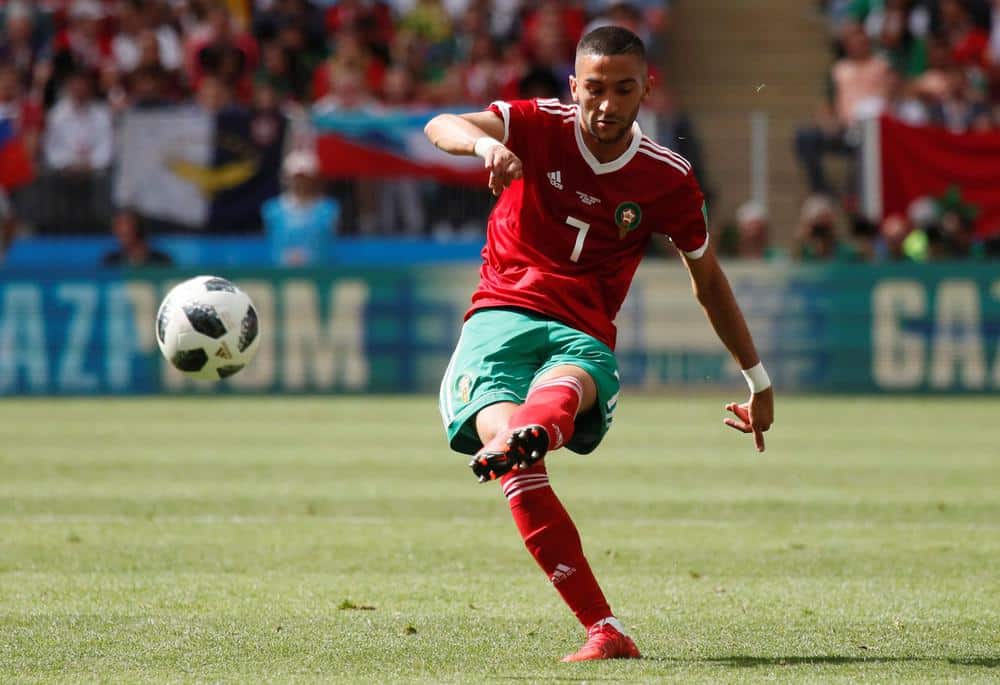
In the winter of 2022, Hakim Ziyech was not merely a gifted winger in the Moroccan national setup; he stood as one of the defining figures of a team driven by belief and ambition.
At the 2022 FIFA World Cup, he emerged as a player unafraid of responsibility, constantly demanding the ball in high-pressure moments and playing a central role in Morocco’s historic run to the semi-finals, an achievement that resonated across both the Arab and African football landscape.
His impact extended beyond statistics. Ziyech’s composure, mentality, and refusal to accept defeat elevated him into a symbol of a generation that carved its place in history.
As the tournament in Doha came to a close, it felt as though he had reached a peak that would be difficult to replicate. Yet football rarely allows players to rest on past glory, instead testing their ability to sustain excellence.
His return to Chelsea FC came during a turbulent period marked by instability both on and off the pitch.
Frequent managerial changes and intense competition for attacking positions limited his opportunities, depriving him of the rhythm and confidence essential to his style of play.
The situation worsened following a failed move to Paris Saint-Germain, a collapse that turned what could have been a fresh start into another setback, leaving him caught in a cycle of uncertainty.
Gradually, the decline became evident, not in his natural ability, but in his consistency, a crucial factor for any player aiming to remain at the highest level. His subsequent move to Galatasaray initially offered hope, with flashes of brilliance reminding fans of his quality.
However, those moments proved difficult to sustain, as his performances fluctuated between glimpses of his old self and signs of physical and mental struggle.
As time passed, the conversation around Ziyech shifted. It was no longer about his talent, but whether he could consistently rediscover it. This uncertainty was reflected in his role within the Moroccan national team, where he transitioned from a guaranteed starter to a player fighting to prove his place.
His omission from Morocco’s squad for the 2025 Africa Cup of Nations underlined this shift. It was more than a routine selection decision; it symbolised a broader decline in form and continuity.
Notably, Ziyech did not contest the decision, openly acknowledging that his recent performances did not justify inclusion. While this admission reflected maturity, it also highlighted how far his standing had changed.
Seeking a revival, his move to Wydad AC represented both an opportunity and a gamble. Regular playing time in a passionate environment offered him a platform to rebuild, while also placing him back under the scrutiny of national team selectors. His early displays hinted at a possible resurgence, but football often judges players in decisive moments.
One such moment came in the Confederation Cup quarter-final against Olympique Safi, where a costly loss of possession proved decisive. It was not just a simple mistake, but a moment that encapsulated the doubts surrounding his current level. As is often the case with high-profile players, the same figure celebrated in triumph became the focal point of criticism in defeat.
Meanwhile, the Moroccan national team has entered a new phase under Mohamed Ouahbi, with a renewed emphasis on physical intensity, tactical discipline, and the integration of younger talent. Ziyech’s absence from the coach’s initial squad signalled a clear message that past achievements alone no longer guarantee selection.
With the 2026 FIFA World Cup approaching, the path back for Ziyech appears increasingly narrow. Any potential return will not hinge on isolated performances but on sustained consistency, improved fitness, and a renewed mental edge.
The challenge ahead is as much psychological as it is technical, requiring him to overcome scrutiny, rebuild confidence, and convince a new regime that he still has a role to play.
Popular News



-
AFCON 2025: Fixtures, Results, Scores and Standings
Jan 18, 2026 -

Leadership and long-term vision key to rescuing Zamalek and inspiring Egyptian football – Hany Abou Rida
Nov 5, 2025 -

South African giants Orlando Pirates set to lose influential forward Monnapule Saleng
Mar 19, 2025 -

Full schedule for 2025 Africa Cup of Nations in Morocco confirmed
Feb 12, 2025
-
2025/26 CAF Confederation Cup: Fixtures, Results, Tables and Standings
Mar 21, 2026 -

2025/26 CAF Champions League: Fixtures, Results, Tables and Standings
Mar 21, 2026 -
AFCON 2025 final: How Senegal’s victory was overturned in a controversial CAF decision
Mar 18, 2026 -

Morocco star Achraf Hakimi reacts after being declared AFCON 2025 champions
Mar 18, 2026