World Cup 2026: Uruguay keep faith in injured Giorgian De Arrascaeta as playmaker targets return
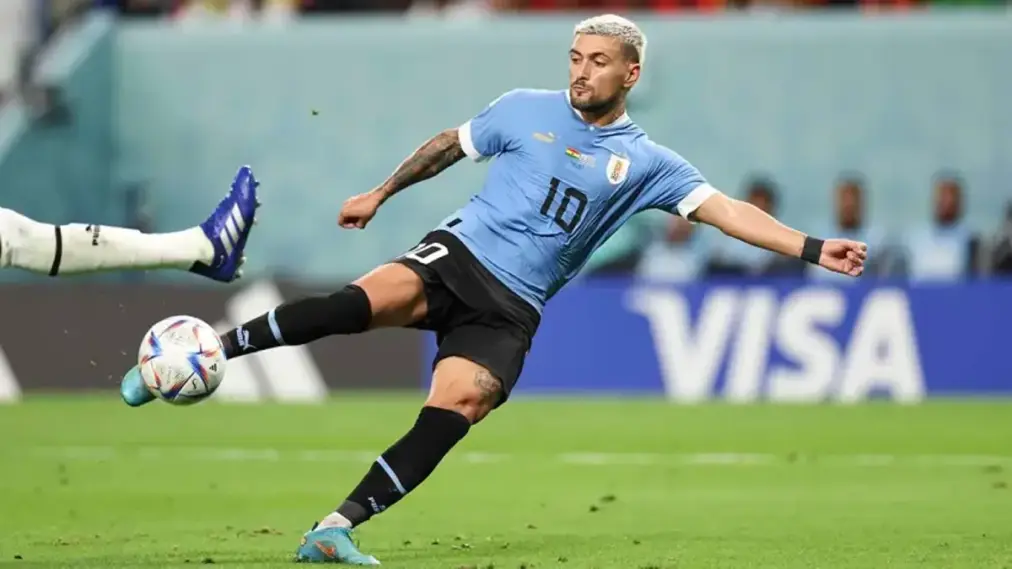
Uruguay have been dealt an injury setback ahead of the 2026 World Cup after Giorgian De Arrascaeta was diagnosed with a calf muscle tear, although the influential playmaker will remain part of Marcelo Bielsa’s squad.
The Uruguayan Football Federation confirmed the injury following medical examinations, but the midfielder has not been ruled out of the tournament.
Instead, Uruguay’s coaching and medical staff are working towards a gradual recovery plan that could see him return later in the competition.
The development represents a concern for Uruguay at the start of the World Cup, given De Arrascaeta’s importance to the national team.
However, the decision to keep him within the squad reflects confidence that he can still play a role during the tournament.
Medical assessments carried out by the federation confirmed the presence of a calf muscle tear.
While the injury will prevent him from being immediately available, officials indicated that no more serious damage had been detected.
That assessment has provided encouragement for both the player and the coaching staff.
Rather than facing a lengthy spell on the sidelines, De Arrascaeta will remain under the supervision of Uruguay’s medical team throughout the tournament.
The objective is to manage his recovery carefully while ensuring he remains available should he regain fitness in time for the later stages.
The injury comes at a difficult moment for Uruguay as preparations intensify for the competition.
De Arrascaeta is widely regarded as one of the team’s most creative players and has often been responsible for linking midfield and attack.
His technical ability, vision and experience make him an important figure within the squad, particularly in matches where Uruguay need creativity in possession and composure in advanced areas of the pitch.
For that reason, the news of his injury was initially viewed as a significant setback.
Yet Uruguay’s response has been measured rather than alarmed.
Head coach Marcelo Bielsa has opted to retain the Flamengo player within his World Cup plans, choosing not to replace him despite uncertainty surrounding his availability in the opening phase of the tournament.
The decision underlines the confidence Bielsa continues to place in the midfielder.
Since taking charge of Uruguay, the Argentine coach has relied on experienced players capable of influencing games in key moments.
De Arrascaeta’s qualities fit that profile, and Bielsa appears unwilling to lose a player he believes could still have a major impact later in the competition.
By keeping him in the squad, Uruguay are effectively investing in the possibility of a successful recovery.
The move also demonstrates the value the coaching staff place on De Arrascaeta’s presence within the group.
Even while recovering, his experience and understanding of international football remain assets for a squad preparing to compete on the sport’s biggest stage.
Uruguay’s approach suggests that the immediate focus is not on rushing the player back into action.
Instead, the priority is to allow him sufficient time to recover while maintaining the option of using him if the team progresses through the tournament.
The hope within the camp is that De Arrascaeta can return in time for the knockout rounds.
Such a scenario would provide Uruguay with an important reinforcement at a decisive stage of the competition.
Tournament football often hinges on fine margins, and the return of a creative player can significantly alter a team’s attacking options.
That possibility explains why the coaching staff have chosen patience rather than making an immediate replacement.
Uruguay are expected to begin the World Cup without the midfielder, adapting their plans for the opening matches while monitoring his rehabilitation closely.
The challenge will be to navigate the early stages successfully and create the opportunity for De Arrascaeta to contribute later in the tournament.
Should that happen, Uruguay would welcome back a player capable of changing the rhythm of a match through his passing, movement and technical quality.
For now, however, the focus remains on recovery.
Medical staff will continue overseeing his rehabilitation programme, while Bielsa and his coaching team prepare for the opening phase of the competition without one of their most influential attacking players.
Although the diagnosis of a calf muscle tear represents an unwelcome setback, the fact that no more serious injury was identified has offered a measure of optimism.
Uruguay have not lost De Arrascaeta for the tournament. Instead, they are hoping that careful management and time will allow him to return when the stakes are highest.
As the World Cup approaches, the midfielder’s recovery will be closely monitored.
For Uruguay, the objective is clear: preserve one of their most gifted players now in the hope that he can make a decisive contribution when the competition reaches its most important moments.
-
 CFFEB and Majestic SC secure 1-0 wins in Fasofoot Ligue 1 Oct 9, 2026
 -
CAF reconsiders Africa Cup of Nations cycle amid commercial and fixture concerns Oct 9, 2026
-
Cheikhou Kouyate retires from football after 92 Senegal caps Oct 9, 2026
-
Academie Basga Jo appoint Darko Janackovic to lead sporting operations Oct 9, 2026



-
AFCON 2025: Fixtures, Results, Scores and Standings Jan 18, 2026
-
Match hero Taiwo Awoniyi reflects on team effort after Chelsea triumph May 5, 2026
-
Leadership and long-term vision key to rescuing Zamalek and inspiring Egyptian football – Hany Abou Rida Nov 5, 2025
-
South African giants Orlando Pirates set to lose influential forward Monnapule Saleng Mar 19, 2025




-
Croatia face Spain with Nations League hopes on the line in Split Oct 5, 2026
-
France v Belgium: Probable line-ups for Nations League clash Oct 3, 2026
-
Morocco coach Mohamed Ouahbi refuses to single out player after Mali draw Oct 4, 2026
-
Manchester United host winless Tottenham in Premier League clash Oct 7, 2026