
Cameroon: Unpaid bonuses spark fresh controversy for Samuel Eto’o’s FECAFOOT
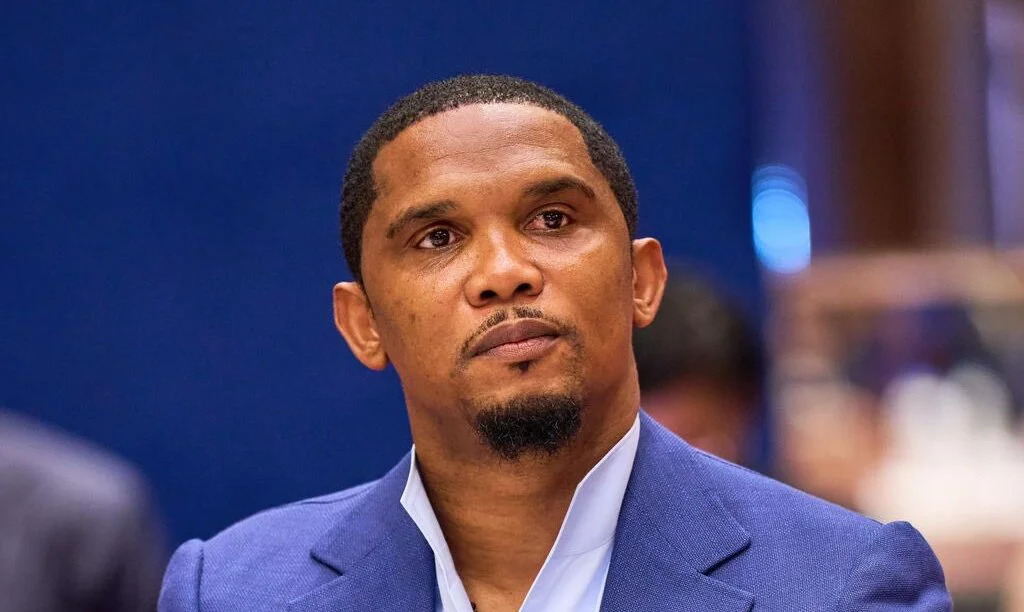
Cameroon’s football authorities are facing renewed scrutiny after the country’s reigning champions accused the national federation, led by Samuel Eto’o, of failing to pay outstanding prize money and subsidies totalling nearly €300,000.
Colombe Sportive du Dja et Lobo, winners of both the league title and the Super Cup, have publicly challenged the management of the Cameroonian Football Federation (FECAFOOT), saying unpaid bonuses and grants are threatening the financial stability of a club operating at the top of the domestic game.
The scale of the alleged debt was disclosed by the club’s chairman, Doko Edjiane, during Colombe’s general assembly.
He said the total sum owed amounts to around 200 million CFA francs, money that the club claims has accumulated over several seasons without settlement.
According to Edjiane, the unpaid amounts include prize money for three major competitions.
FECAFOOT is said to still owe 50 million CFA francs for the 2025 Super Cup, another 50 million for the 2025 league championship and a further 50 million for the 2024 Cameroon Cup.
The club also claims it has not received the participation bonus linked to its involvement in the African Champions League, a payment regarded as essential for supporting clubs representing Cameroon on the continental stage.
For Colombe Sportive du Dja et Lobo, the situation is described as increasingly unsustainable.
Despite its recent sporting success, the club says the absence of these funds has weakened its economic base and raised concerns about its ability to plan effectively for future campaigns.
The accusations go beyond competition prize money.
The club’s leadership has also alleged a broader breakdown in financial support, claiming that state subsidies usually allocated to clubs have not been paid for the past four seasons.
This, they argue, represents a departure from established funding mechanisms that underpin professional football in the country.
The public nature of the dispute places additional pressure on FECAFOOT and its president, Samuel Eto’o, at a time when the federation is already grappling with wider financial challenges.
Questions over solvency, governance and transparency are once again dominating discussions within Cameroonian football circles.
As the debate intensifies, the claims made by one of the country’s most successful clubs risk deepening a crisis of confidence in the federation’s financial management, with potential implications for the credibility and attractiveness of domestic competitions.
Popular News


-

AFCON 2025: Fixtures, Results, Scores and Standings
Jan 18, 2026 -

Leadership and long-term vision key to rescuing Zamalek and inspiring Egyptian football – Hany Abou Rida
Nov 5, 2025 -

South African giants Orlando Pirates set to lose influential forward Monnapule Saleng
Mar 19, 2025 -

Full schedule for 2025 Africa Cup of Nations in Morocco confirmed
Feb 12, 2025

-

Morocco vs Ecuador Friendly: Where and How to Watch
Mar 26, 2026 -

Chile overturn deficit to defeat Cape Verde in FIFA Series clash
Mar 27, 2026 -

Morocco vs. Ecuador: Match details, key talking points and where to watch
Mar 27, 2026 -
Where and how to watch Saudi Arabia vs Egypt friendly ahead of 2026 World Cup
Mar 26, 2026


