Cameroon Football Federation hit by resignation of Samuel Eto’o’s close associate
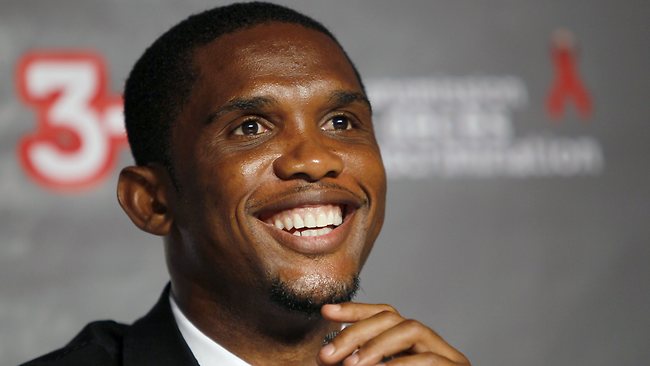
Félix Mbigha has resigned from his position as fourth vice-president of the Cameroon Football Federation (Fecafoot), dealing a setback to President Samuel Eto’o just two months before the body’s elective general assembly.
Mbigha confirmed his departure in a letter made public this week, with Cameroonian media reporting that his decision stemmed from what he described as persistent interference that prevented him from fulfilling his duties.
Alongside his national role, Mbigha had been serving as president of the North West Regional League while also holding responsibilities in the South West League.
In his statement, Mbigha explained: “This decision is due to the fact that I have been unable to discharge my assigned responsibilities in the North West and South West regions due to the persistent influence that makes it difficult for us to freely enjoy football.”
The resignation comes at a crucial moment for Fecafoot, with elections scheduled for 29 November. As the federation prepares for this decisive assembly, the loss of a senior executive adds fresh uncertainty to its leadership dynamics.
Although Mbigha stopped short of directly accusing Samuel Eto’o, his comments on interference have fuelled speculation about tensions within the federation’s hierarchy.
Eto’o, who has faced repeated criticism since assuming the presidency, now finds himself navigating yet another internal challenge.
This development mirrors a similar episode last year, when Henry Njalla Quan stepped down from his vice-presidential post. At the time, Njalla Quan denounced what he described as a lack of transparency in Fecafoot’s handling of commercial contracts.
He also claimed to have received death threats from employees, executives, and partners, alleging that Eto’o failed to intervene despite being alerted on several occasions.
Mbigha’s resignation therefore marks the second high-profile departure from Fecafoot’s executive committee in just two years, raising further questions about the federation’s governance and the atmosphere surrounding its decision-making processes.
For Eto’o, the loss of another close associate comes at a politically sensitive juncture. While the resignation does not legally affect his eligibility, it reduces the circle of allies upon whom he could previously rely as he seeks a renewed mandate.
The Cameroonian Sports Ministry has already issued a directive barring him from standing for another term, though the former Barcelona striker is still widely expected to pursue re-election.
The atmosphere around Fecafoot has been increasingly charged, with Eto’o both praised for his ambition to modernise Cameroonian football and criticised for what detractors describe as a heavy-handed leadership style.
The departure of Mbigha, like that of Njalla Quan before him, will likely fuel ongoing debates about the federation’s direction and the extent of Eto’o’s influence over its structures.
As the countdown to the November elections continues, attention will now turn to whether further resignations follow or if Eto’o can consolidate enough support within the executive committee to secure another mandate.
What remains clear is that Fecafoot is once again at the centre of internal disputes, with the latest resignation underscoring the divisions that continue to shape Cameroonian football governance.
🔴 OFFICIEL ! Félix Mbigha démissionne de son poste de 4e vice-président de la FECAFOOT et membre du Comité Exécutif.
Dans sa lettre de démission, Mbigha a déclaré : « Cette décision est due au fait que j’ai été incapable d’assumer mes responsabilités assignées dans les régions… pic.twitter.com/nImblXl1Vr
— AllezLesLions (@AllezLesLions) September 12, 2025