CAF turns focus to Africa’s technical future after record growth in coaching investment
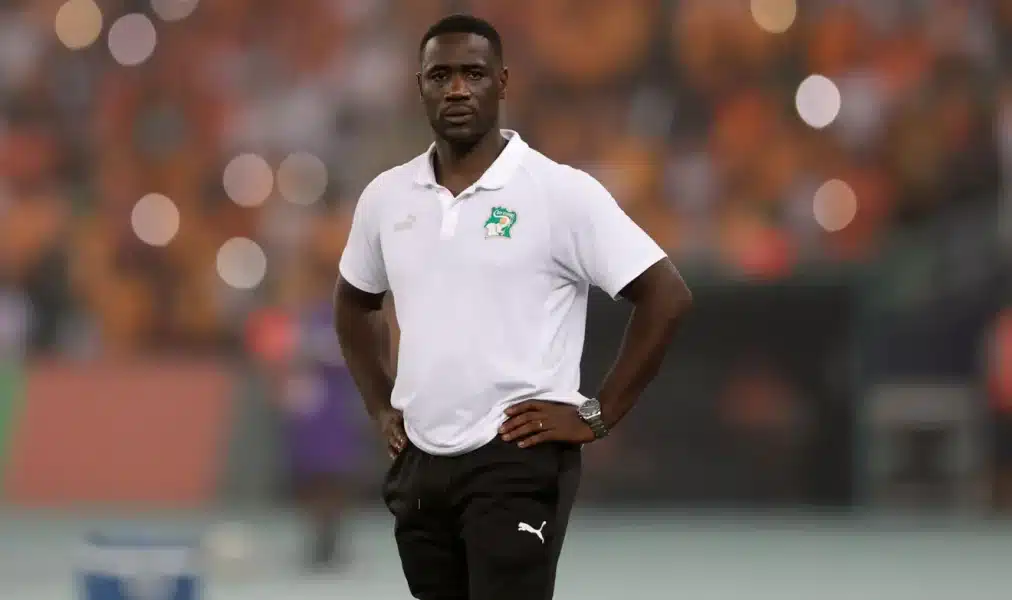
The Confederation of African Football (CAF) is turning its attention to the future of African football’s technical development after a significant rise in investment in coach education across the continent.
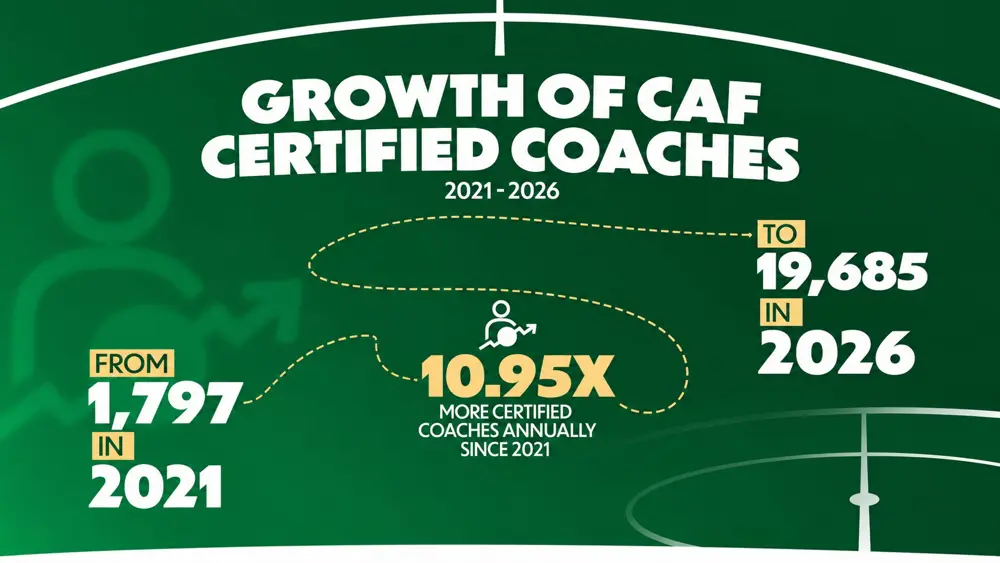
A total of 19,685 coaches have been certified through CAF programmes between 2021 and 2026, underlining the growing emphasis on building a stronger and more qualified coaching base across Africa.
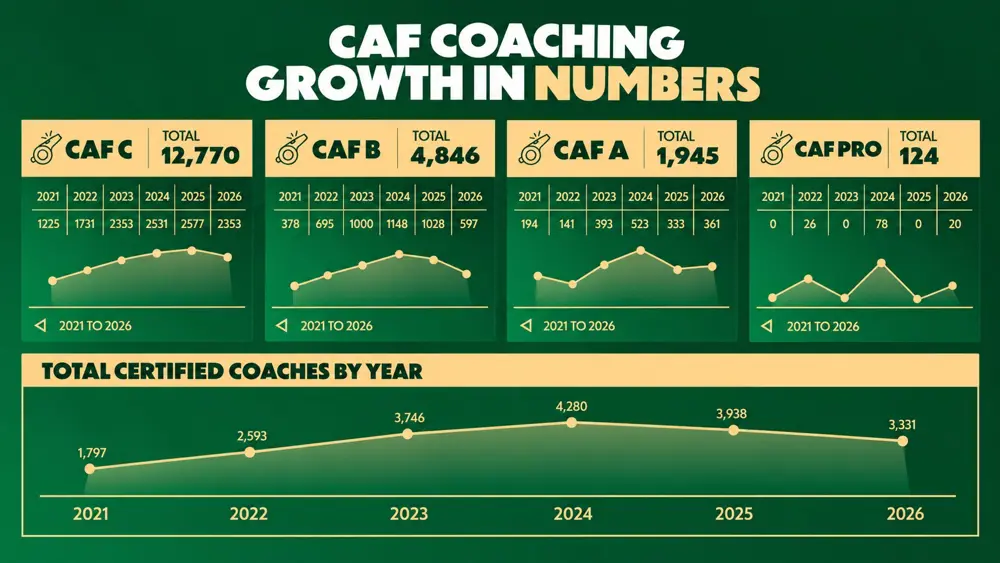
The figures include 12,770 CAF C Licence coaches, 4,846 B Licence coaches, 1,945 A Licence coaches and 124 Pro Licence coaches.
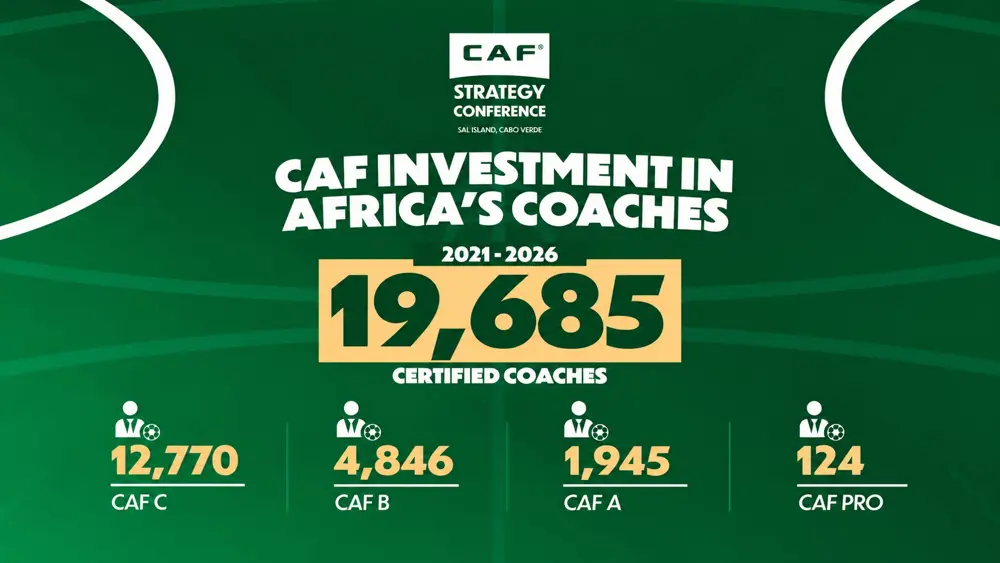
The progress will be a key focus at the CAF Strategy Conference in Sal, Cabo Verde, from October 7 to 9, where football experts and technical leaders will examine the lessons from the 2026 FIFA World Cup and discuss how to strengthen Africa’s technical pathways ahead of the 2030 tournament.
CAF’s investment in coaching education has coincided with a growing presence of African coaches at the highest level of international football.
Six of Africa’s 10 representatives at the 2026 World Cup were led by African coaches, marking another significant step in the continent’s development.
The progression has been notable over the past four World Cups. Only one African team was coached by an African at the 2010 tournament, while two were led by African coaches in both 2014 and 2018. At the 2022 World Cup, all five African representatives had African coaches.
Africa also enjoyed its strongest collective performance at the 2026 World Cup, with nine of its 10 teams advancing to the knockout stage.
The growth in coach certification has accelerated in recent years. CAF recorded 1,797 certified coaches in 2021, 2,593 in 2022, 3,746 in 2023, 4,280 in 2024, 3,938 in 2025 and 3,331 in 2026.
Several coaches have already demonstrated the value of the continent’s growing technical expertise on the international stage.
Pedro Brito, widely known as Bubista, guided Cabo Verde to their first-ever World Cup qualification and then led the team into the knockout stage.
Emerse Faé helped Côte d’Ivoire reach the knockout rounds, while Hossam Hassan guided Egypt to the World Cup and a historic victory at the tournament.
The development also builds on the landmark achievement of Morocco coach Walid Regragui, who became the first African coach to lead a team to a World Cup semi-final in 2022.
However, CAF’s next challenge is to ensure that the increase in coaching qualifications translates into sustained opportunities for African coaches.
The Strategy Conference will therefore examine coach education, licensing, knowledge-sharing and technical pathways, with particular attention on creating clearer routes for coaches through youth football, clubs and national teams.
The lessons from the 2026 World Cup are expected to help shape CAF’s technical strategy as the continent prepares for 2030.
With almost 20,000 coaches now certified in six years, CAF is seeking to turn its investment in coaching education into a lasting technical foundation capable of driving African football’s continued progress on the global stage.
-
 CAF turns focus to Africa’s technical future after record growth in coaching investment Oct 6, 2026
 -
CAF assembles star-studded African technical masterminds for 2026 World Cup review after historic run Oct 6, 2026
-
Zamalek step up efforts to resolve registration ban before winter window Oct 6, 2026
-
Togo name Djankpata in starting XI for Libya clash in U23 Africa Cup of Nations qualifier Oct 6, 2026


-
AFCON 2025: Fixtures, Results, Scores and Standings Jan 18, 2026
-
Match hero Taiwo Awoniyi reflects on team effort after Chelsea triumph May 5, 2026
-
Leadership and long-term vision key to rescuing Zamalek and inspiring Egyptian football – Hany Abou Rida Nov 5, 2025
-
South African giants Orlando Pirates set to lose influential forward Monnapule Saleng Mar 19, 2025




-
Denmark v Portugal: Nations League kick-off time, TV channel and match prediction Sep 29, 2026
-
Croatia face Spain with Nations League hopes on the line in Split Oct 5, 2026
-
France v Belgium: Probable line-ups for Nations League clash Oct 3, 2026
-
AFCON 2027 qualifiers: Manchester United injury crisis deepens as Noussair Mazraoui hobbles off in Morocco win Sep 30, 2026