
CAF Secretary General Mosengo-Omba facing mounting scrutiny amid abuse of power and nepotism claims
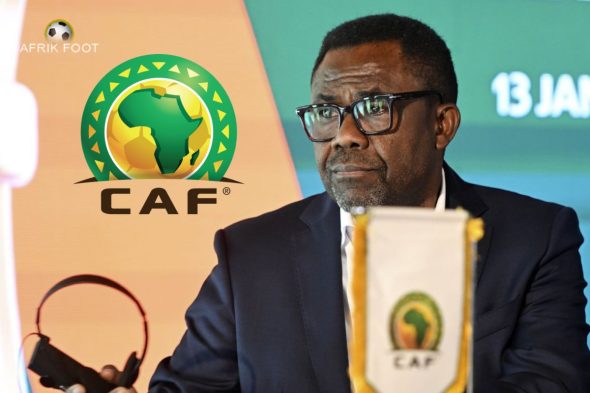
Secretary General of the Confederation of African Football (CAF), Veron Mosengo-Omba, has been accused as one of the most polarising figures in African sport, with his leadership now overshadowed by persistent allegations of abuse of power, intimidation, nepotism and disregard for CAF’s own rules.
Despite the gravity of the accusations levelled against him, Mosengo-Omba continues to exercise firm control over the organisation’s daily affairs. Critics remain baffled by his ability to retain power in the face of repeated calls for his removal, questions over his legal mandate to remain in office and claims that he has fostered a culture hostile to transparency and accountability.
Concerns about his leadership intensified in 2024 after an internal CAF Governance, Risk and Compliance report painted a damning picture of his conduct. The report accused Mosengo-Omba of blocking oversight mechanisms, breaching internal regulations and undermining governance structures, going as far as recommending his suspension. That advice was ultimately ignored by CAF’s leadership, a decision that only emboldened critics who argue that the organisation has failed to police itself.
Since then, allegations of harassment, rule-breaking and financial misconduct have continued to mount, raising fundamental questions about CAF’s commitment to good governance and the extent to which its leadership is willing to confront wrongdoing at the highest level.
Several current and former CAF employees have described Mosengo-Omba’s leadership style as authoritarian and abusive, with some portraying the organisation as a personal fiefdom run through fear and intimidation. A Guardian investigation reported that staff who questioned decisions or raised concerns were routinely dismissed or marginalised.
One senior employee, who spoke anonymously, told the Guardian: “Anyone who dares to speak up, anyone who is part of the report, is terminated, without cause, without any due process.”
Officials who attempted to enforce governance standards or challenged questionable practices were either removed or forced out. Among those affected were Hannan Nur, head of compliance and risk; Abiola Ijasanmi, former chief operating officer; Noumandiez Doue, former head of refereeing; and Raul Chipenda, development director. All lost their positions after raising concerns or being linked to whistleblowing efforts, reinforcing claims that dissent is punished rather than addressed.
Former insiders also allege that Mosengo-Omba systematically weakened internal oversight by stripping audit, compliance and governance committees of their independence. One former senior official said: “The independent committees are not independent… Veron always tries to manipulate the decision, and he’s always influencing them.”
Instead of addressing governance failures, critics say Mosengo-Omba’s inner circle focused on hunting down alleged “moles” and controlling information to prevent leaks. This approach, staff claim, hollowed out CAF’s checks and balances and left employees with no safe avenue to report misconduct.
Accusations of favouritism and nepotism have further fuelled controversy around Mosengo-Omba’s tenure. Multiple insiders allege that senior roles were filled by close associates and compatriots from the Democratic Republic of Congo, often without transparent recruitment processes or appropriate qualifications.
“He abuses his office to have people from his home country and people he knows in positions that they’re not qualified for,” one source alleged.
Examples frequently cited include the appointment of Sarah Mukuna, described as a close friend, as Director of Member Associations in her early thirties, despite limited experience at FIFA. Similarly, Reem Adel’s promotion from manager to director at the age of 34 raised questions among staff about merit and due process.
These appointments reportedly disrupted established reporting lines, with some of Mosengo-Omba’s allies wielding influence across multiple departments. In one particularly contentious case, Cedrick Aghey, described by critics as a personal confidant, was installed as Acting Director of Legal Affairs while also serving as chief of staff. This dual role, critics argue, created a glaring conflict of interest by effectively allowing him to advise himself on legal matters.
Perhaps the most striking aspect of Mosengo-Omba’s continued grip on power is the question of whether he is even legally entitled to remain in office. CAF’s employment regulations impose a mandatory retirement age of 63, with a single extension of up to three years permitted at the president’s discretion.
Born in October 1959, Mosengo-Omba reached the initial retirement threshold in 2022. CAF President Patrice Motsepe exercised his authority to grant a maximum three-year extension, which expired in mid-October 2025 when Mosengo-Omba turned 66. Under CAF rules, no further extensions are allowed beyond that point.
By October 2025, critics argue, Mosengo-Omba had reached the absolute statutory retirement age and was no longer legally permitted to remain in office. Yet he has refused to step aside, continuing to sign contracts, approve appointments and oversee operations, including relocating activities to Morocco during the recent AFCON tournament.
One CAF official remarked in October 2025: “He should not continue beyond the 15th of October.” A commentator openly asked: “On what legal basis does he continue to exercise his authority?”
The implications of this breach extend far beyond a technical violation. Observers warn that contracts signed without a valid mandate could be challenged, exposing CAF to legal and commercial risks while further eroding its credibility. The failure of CAF’s Executive Committee and governance bodies to enforce the retirement rules has intensified fears of a deepening governance crisis.
Many insiders attribute Mosengo-Omba’s apparent immunity to his close relationship with FIFA President Gianni Infantino. The two are longtime associates who studied law together in Switzerland, a bond that has carried over into football politics.
After Patrice Motsepe was elected CAF President unopposed in 2021, Mosengo-Omba was appointed Secretary General, moving from his role as FIFA’s Chief Member Associations officer. Observers viewed the appointment as Infantino placing a trusted ally at the heart of African football’s administration, a perception that has persisted amid the ongoing controversy.
Despite the growing list of allegations, FIFA has remained publicly silent. Infantino has not commented on reports of mismanagement or governance failures, while Motsepe has repeatedly expressed “total confidence” in his Secretary General. Critics argue that this silence amounts to tacit approval and reflects a double standard, given FIFA’s frequent rhetoric about ethics and reform.
One of the most troubling episodes linked to Mosengo-Omba’s tenure involves his reported handling of the Pierre-Alain Mounguengui case. Mounguengui, president of the Gabonese Football Federation, was arrested in 2022 amid allegations of covering up sexual abuse of young players, spending six months in pre-trial detention. The case remains open and unresolved.
Rather than distancing CAF from the scandal, Mosengo-Omba is alleged to have supported Mounguengui’s rise within the organisation. During the 2023 Executive Committee elections, CAF’s Governance Committee reportedly recommended Mounguengui’s disqualification, advice that Mosengo-Omba allegedly overruled.
According to sources, he blocked an independent review and insisted on using Mounguengui’s personal lawyer, a move widely criticised as a conflict of interest. One official told the Guardian the Governance Committee chair was “shouting” in protest, while another recalled: “It was a mess.”
Mounguengui subsequently secured a seat on the Executive Committee and was named CAF Vice-President in 2025, despite the unresolved allegations. Critics argue that the episode undermined CAF’s safeguarding commitments and reinforced perceptions that loyalty is prioritised over ethics.
Internally, Mosengo-Omba’s leadership is widely blamed for a collapse in morale and functionality. Employees describe an organisation paralysed by fear, favouritism and internal conflict, with skilled professionals pushed out and replaced by loyalists.
One insider revealed that even communication between the offices of the CAF President and the Secretary General has effectively broken down. “They’re not allowed to speak to each other, to say hello, to ask for anything,” the source said, describing a workplace fractured by distrust and turf wars.
Oversight mechanisms have also been eroded, with audit and compliance committees allegedly sidelined or overridden. A former senior staffer remarked: “The independent committees are not independent… committees do not function.”
The Executive Committee itself has reportedly been marginalised, with key decisions taken by Mosengo-Omba and a small circle of allies. Appointments have been made without open recruitment or formal approval, bypassing established procedures and further concentrating power.
Critics say this centralisation has been enabled by Patrice Motsepe’s limited presence at CAF headquarters. Insiders claim the president has visited the Cairo offices only a handful of times since taking office, creating a leadership vacuum that Mosengo-Omba has filled.
“Motsepe is never here… He doesn’t have a clue what’s going on inside his own confederation,” one senior employee said. Another federation president observed: “Nature abhors a vacuum,” noting how the Secretary General assumed de facto control of the organisation.
The consequences for CAF’s mission have been significant. Long-serving staff argue that development has taken a back seat to internal politics and personal interests. “CAF is no longer pursuing a policy of development, but rather serving individual interests,” one employee lamented.
The culture of secrecy and paranoia has also damaged decision-making. A communications officer admitted: “We have clear instructions to control information and prevent certain things from leaking out.” Rather than addressing underlying problems, insiders say leadership focused on identifying whistleblowers, deepening mistrust and stagnation.
Financial questions have further clouded Mosengo-Omba’s tenure. In early 2024, Swiss prosecutors opened a criminal investigation into suspicious payments linked to his Swiss bank accounts, alleging that he had obtained bonuses far exceeding contractual limits.
Court records cited large cash withdrawals that prevented tracing of funds and suggested “acts of disloyal management to the benefit of Mosengo-Omba.” Although the case was dropped in January 2025 due to lack of evidence, CAF’s own audit and compliance committee had already raised concerns and called for his suspension.
CAF later commissioned an international firm to investigate alleged violations of audit and governance regulations, but the findings have not been made public, fuelling suspicions of a cover-up.
Particular concern surrounds the handling of FIFA Forward funds, development money intended for African football projects. Insiders allege that Mosengo-Omba exercised sole control over these funds, bypassing oversight and leaving spending opaque. Critics fear that weakened safeguards have created opportunities for misuse, depriving grassroots football of vital resources.
While CAF announced a $9.48 million surplus at its 2025 General Assembly, insiders dispute the robustness of those figures, warning that one-off deals and weak accountability mask deeper financial vulnerabilities.
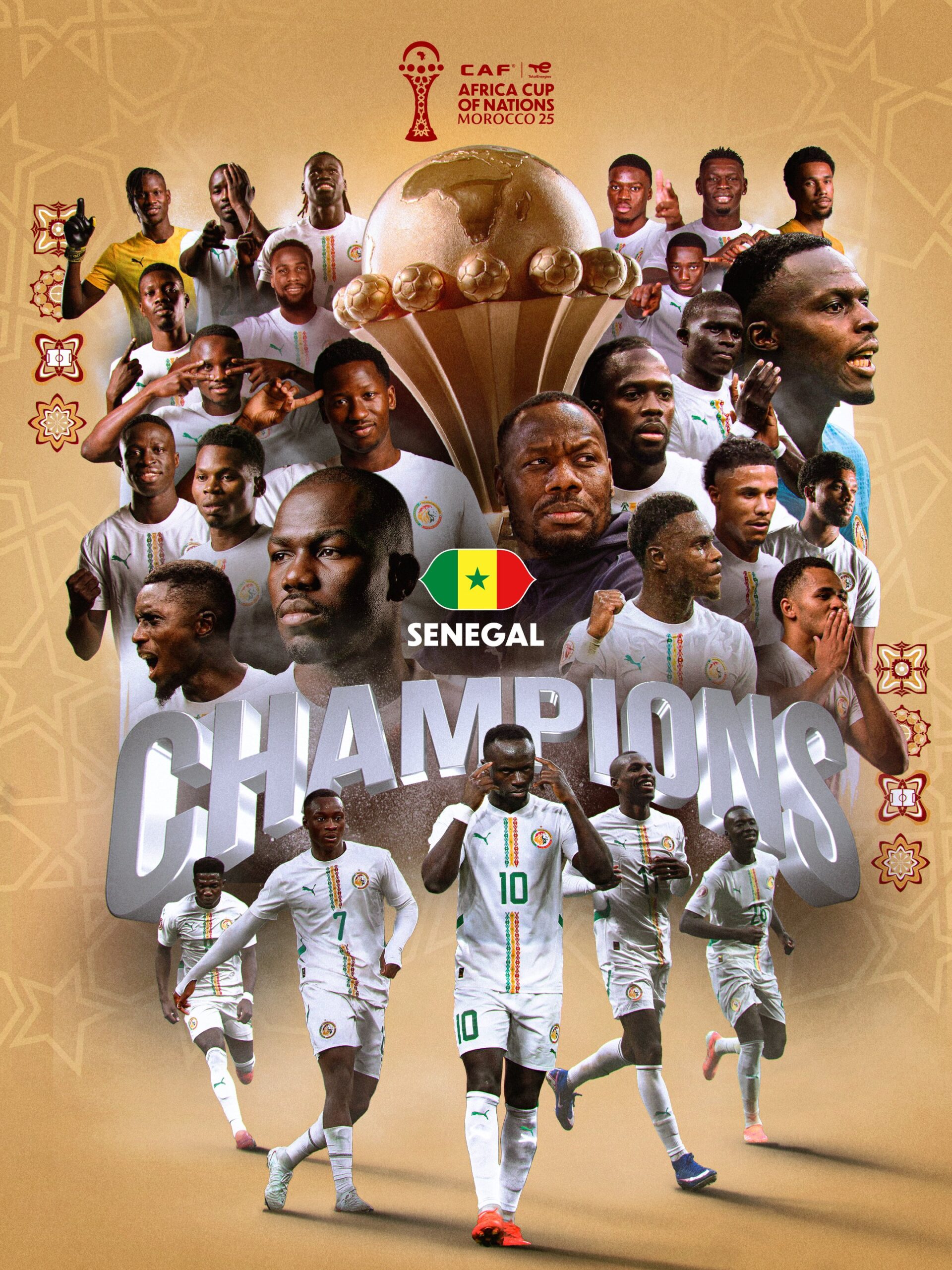
The broader impact of this governance breakdown has been visible on the pitch. Critics point to CAF’s muted response to Senegal walking off during the 2025 AFCON final and other controversial refereeing decisions as evidence of an organisation unwilling or unable to enforce its own rules.
When the Secretary General himself is seen to ignore regulations with impunity, observers argue, it sends a dangerous signal throughout the system. Corruption and favouritism, they warn, do not merely damage reputation but risk influencing results and normalising misconduct.
Mosengo-Omba’s survival amid repeated scandals has become emblematic of a deeper crisis at CAF. To many observers, it reflects a leadership culture in which loyalty and political alliances outweigh ethics and accountability.
With both Patrice Motsepe and Gianni Infantino offering either silence or support, critics argue that CAF’s top executive has effectively been placed beyond scrutiny. The result is an organisation struggling to command respect from fans, sponsors and international partners, while dedicated professionals inside CAF grow increasingly demoralised.
The outcome of the promised inquiry into Mosengo-Omba’s conduct is now seen as a critical test. A failure to act decisively would confirm fears that CAF is unwilling to reform itself, while meaningful accountability could mark a long-awaited turning point in restoring credibility to African football’s governing body.
Popular News
-
AFCON 2025: Fixtures, Results, Scores and Standings
Jan 18, 2026 -

South African giants Orlando Pirates set to lose influential forward Monnapule Saleng
Mar 19, 2025 -

Leadership and long-term vision key to rescuing Zamalek and inspiring Egyptian football – Hany Abou Rida
Nov 5, 2025 -
Full schedule for 2025 Africa Cup of Nations in Morocco confirmed
Feb 12, 2025
-

Lamini Fati set for Real Madrid breakthrough opportunity
Mar 5, 2026 -

Spanish prosecutors seek 10-year prison sentence for Rafa Mir as legal case deepens
Mar 6, 2026 -
Achraf Dari denied contract exit as Al Ahly SC settle dues
Feb 28, 2026 -

FIFA suspends Algeria’s Youcef Belaïli for one year over Ajaccio dispute
Mar 6, 2026