CAF faces test over chaotic AFCON 2025 final ruling
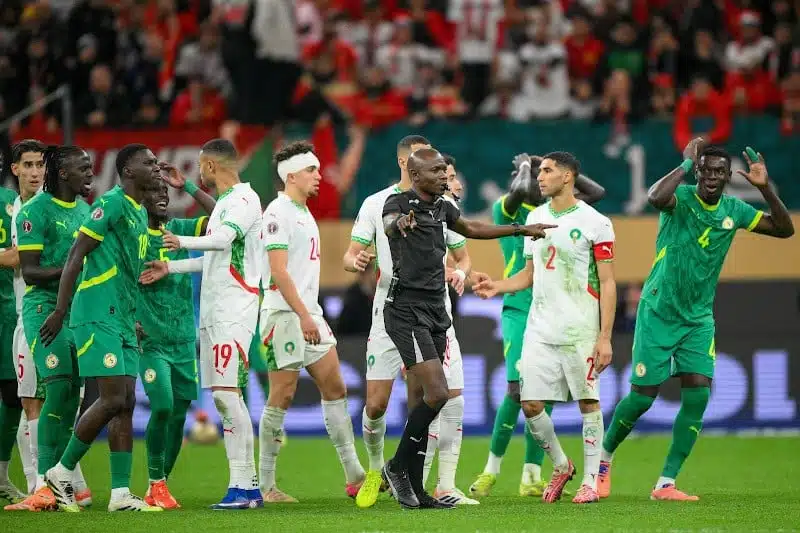
The African sporting fraternity and observers of sports law across the continent are holding their breath as the Confederation of African Football’s (CAF) Disciplinary Committee deliberates on the turbulent events that overshadowed the final of the 2025 Africa Cup of Nations in Morocco. What was intended to be the crowning moment of Africa’s premier football tournament has now evolved into a complex disciplinary and legal case, carrying weighty consequences at both continental and international levels.
The dramatic incidents that unfolded during the closing stages of the final, followed by further disorder inside and outside the stadium, have thrust CAF into the spotlight as the competition’s governing authority. While Morocco hosted the tournament, responsibility for the organization of the match itself does not fall on the host nation. Nevertheless, the Royal Moroccan Football Federation finds itself directly involved in the dispute and is fully entitled to pursue all available legal avenues to protect its interests.
Speaking on the matter, Dr. Khalil Boubhi, a Moroccan researcher specializing in sports law, stressed that the case currently before CAF extends far beyond the sporting outcome of a single match. For him, the proceedings involve potential legal accountability for acts of unsportsmanlike conduct allegedly committed by members of the Senegal national team’s technical staff and players, as well as controversial behavior by supporters. For CAF, the case represents a critical test of its judicial credibility and its standing within the global football community.
Dr. Boubhi explained that the Disciplinary Committee is faced with two fundamental questions: who ultimately bears legal responsibility for the incidents, and whether the events constitute a serious breach of the integrity of the competition and a violation of CAF’s statutes and disciplinary regulations.
A Disciplinary Body Under Scrutiny
The sports law expert emphasized that CAF’s Disciplinary Committee operates as an independent judicial body empowered to adjudicate all violations of CAF regulations, as outlined in its Statutes and Disciplinary Code. However, its rulings are not final, as they may be challenged before the CAF Appeals Committee and, subsequently, the Court of Arbitration for Sport (CAS) in Lausanne. This layered system of review places a premium on procedural correctness, transparency, and impartiality.
In this regard, Dr. Boubhi pointed out that conflict-of-interest principles necessitate the recusal of the current chairman of the Disciplinary Committee due to his affiliation with the Senegalese Football Federation. As a result, the committee’s vice-chairman is expected to assume leadership of the panel tasked with handling this sensitive and high-profile case.
Procedures and Evidentiary Standards
According to Dr. Boubhi, disciplinary proceedings are triggered automatically on the basis of official match reports submitted by referees and CAF delegates. In parallel, the Royal Moroccan Football Federation retains the right to lodge formal appeals within the prescribed deadlines, supported by detailed legal submissions and accompanying evidence.
While official match reports carry considerable evidentiary weight, they are not beyond challenge. Video footage, witness testimonies, and statements from the parties involved may all be admitted as counter-evidence. The Disciplinary Committee also has the authority to open an extensive investigation, which could span several months, during which all parties are required to cooperate fully and appear when summoned.
Strict Liability and Possible Sanctions
Dr. Boubhi further noted that CAF’s disciplinary framework is built on the principle of strict liability, meaning that responsibility may be established regardless of intent. The regulations apply equally to players, technical staff, supporters, and national federations, and criminalize a wide range of behaviors, including misconduct, intimidation of referees, incitement to violence, provocation of spectators, and abandoning the field without authorization.
In light of the events witnessed during the AFCON final, many observers believe there are strong indicators of serious regulatory breaches that could, if legally substantiated, lead to heavy sanctions. These may target individuals such as coaches and players, as well as the relevant national federation, and could extend to collective penalties including significant fines or matches played behind closed doors.
A Landmark Decision on the Horizon
The Moroccan sports law researcher concluded that should the Disciplinary Committee be satisfied that the alleged violations occurred, the range of potential sanctions is wide. Under CAF regulations, penalties could include annulment of the match result, withdrawal of titles and awards, suspensions of individuals, substantial financial fines, and bans extending over several matches.
Dr. Khalil Boubhi concluded by describing the case as a defining moment for African sports justice, noting that the anticipated ruling will not only determine the fate of the 2025 Africa Cup of Nations final, but will also serve as a clear indicator of CAF’s commitment to integrity, fairness, and the protection of African football’s image, particularly after a final watched by millions worldwide raised profound questions about the governance of the game.
Popular News



-

AFCON 2025: Fixtures, Results, Scores and Standings
Jan 18, 2026 -

Leadership and long-term vision key to rescuing Zamalek and inspiring Egyptian football – Hany Abou Rida
Nov 5, 2025 -

South African giants Orlando Pirates set to lose influential forward Monnapule Saleng
Mar 19, 2025 -

Full schedule for 2025 Africa Cup of Nations in Morocco confirmed
Feb 12, 2025