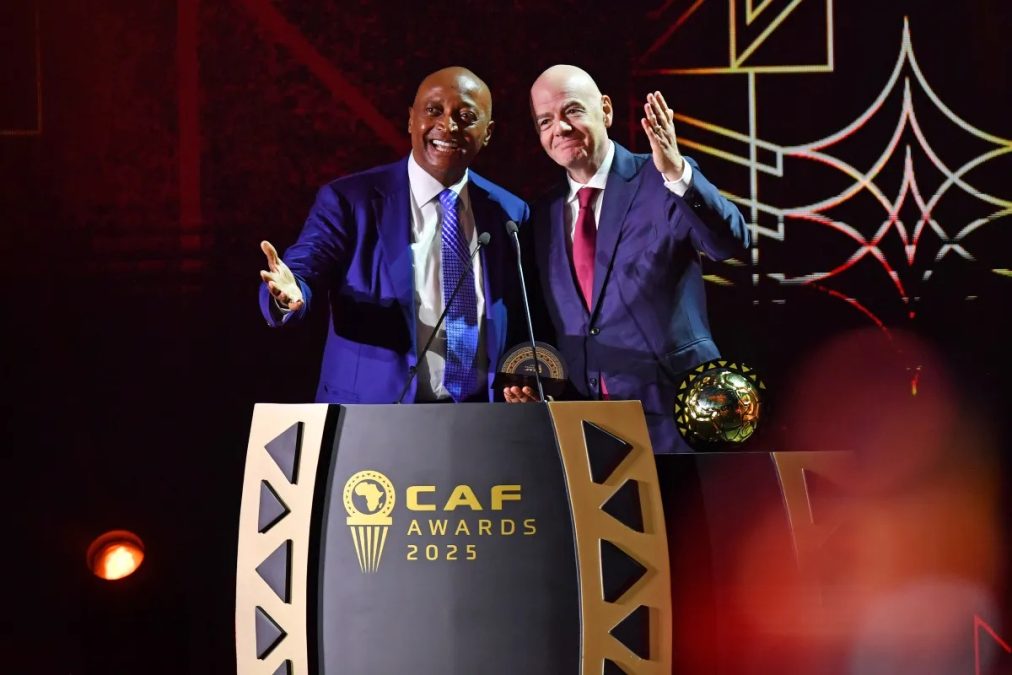
The CAF Awards ceremony in Lagos, where the 2026 African Ballon d’Or will be presented, has been brought forward by five days after European clubs reportedly objected to releasing their players on the original date.
The Confederation of African Football (CAF) announced on 4 November that its 2026 awards would take place on 7 December in Lagos. Six days later, the organisation confirmed that the event would instead be held on 2 December, again in Nigeria’s economic capital.
A CAF statement issued on Tuesday announced the revised date but did not explain why the ceremony had been moved.
According to journalist Osasu Obayiuwana, several European clubs were unwilling to release players for the 7 December event because it fell shortly before, or on the eve of, Champions League matches.
A CAF official reportedly summarised the choice facing the organisation as either holding the ceremony without some of its leading nominees or changing the date to ensure they could attend.
“We did not really have a choice,” the official was quoted as saying.
The absence of players such as Achraf Hakimi, Sadio Mane and Brahim Diaz would have reduced the impact of an event celebrating Africa’s leading footballer. Presenting the award without its winner would also risk diminishing the importance of both the prize and African football.
However, the change has raised wider questions about the CAF’s planning. The organisation announced 7 December before securing the availability of the players and confirming that their clubs would release them. Critics argue that a credible institution should settle those issues before publishing a final date, rather than revising its schedule days later in response to external pressure.
The latest alteration follows several other changes to the African football calendar. The Africa Cup of Nations has been moved to fit between international competitions and the demands of clubs. For the 2025 edition, FIFA reduced the compulsory release period for players by one week after consultations with the relevant parties. That period was set to begin on 15 December, leaving African national teams with less time to prepare.
The CAF has also changed the frequency of its main tournament. Under pressure from FIFA and UEFA, it moved the Africa Cup of Nations from a two-year cycle to a four-year schedule, before reversing that decision. On 29 October, its executive committee restored a biennial tournament.
That sequence has prompted comparisons with the administrations of Issa Hayatou and Ahmad Ahmad, when the African calendar was seen as subject to fewer conflicting changes. Under Patrice Motsepe, the priorities of FIFA, broadcasters and major clubs appear to carry greater weight than institutional continuity.
The CAF relies on partners, sponsors, broadcasters and clubs that employ African internationals, while also receiving financial and political support from FIFA. But agreements should be reached before dates are announced.
For the CAF Awards to build the prestige expected of the continent’s leading individual honour, they need a stable annual date planned and secured well in advance. Claims for greater respect for Africa in global football will carry more weight when its own governing bodies treat their schedules as firm decisions rather than provisional proposals.
-
 CAF Awards 2026 moved forward after European clubs raise player availability concerns Nov 10, 2026
-
Ibrahima Konate reveals Kylian Mbappe’s reaction after Ballon d’Or disappointment Nov 10, 2026
-
Bachir Belloumi’s camp rejects fears over lengthy injury absence Nov 10, 2026
-
Morocco striker Yassir Zabiri named in LaLiga Team of the Week alongside Kylian Mbappe Nov 10, 2026


-
AFCON 2025: Fixtures, Results, Scores and Standings Jan 18, 2026
-
Match hero Taiwo Awoniyi reflects on team effort after Chelsea triumph May 5, 2026
-
Leadership and long-term vision key to rescuing Zamalek and inspiring Egyptian football – Hany Abou Rida Nov 5, 2025
-
South African giants Orlando Pirates set to lose influential forward Monnapule Saleng Mar 19, 2025




-
Manchester United host Aston Villa as both sides seek a Premier League lift Nov 6, 2026
-
Real Sociedad and Lyon name probable line-ups for Europa League meeting Nov 3, 2026
-
Atletico Madrid host Barcelona in Liga summit clash with history at stake Nov 6, 2026
-
Nottingham Forest v Manchester City: City Ground hosts clash at opposite ends of the table Nov 6, 2026