CAF Awards 2024: Controversy clouds Best XI over Andre Onana selection
The 2024 CAF Awards, held in Marrakech, Morocco on Monday night, have reignited debates over CAF's transparency and fairness in African football accolades.
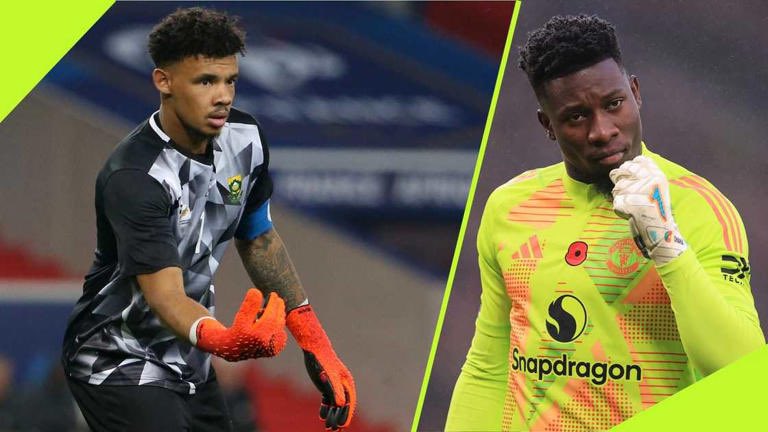
The 2024 CAF Awards, held in Marrakech, Morocco on Monday night, have reignited debates over CAF’s transparency and fairness in African football accolades.
While the event celebrated outstanding players across the continent, questions over the selection process have cast a shadow on the credibility of the CAF Men’s and Women’s Best XI.
Ronwen Williams, South Africa’s AFCON-winning captain, was crowned Goalkeeper of the Year, a decision widely applauded given his impressive performances for both club and country that has won FIFA recognition.
However, eyebrows were raised when Cameroonian goalkeeper André Onana was included in the Men’s Best XI ahead of Williams.
Fans and journalists alike have criticized what they perceive as inconsistencies, with many questioning the lack of clear selection criteria.
The controversy doesn’t end there. Nigeria’s William Troost-Ekong, who was named Player of the Tournament at the recent Africa Cup of Nations, failed to make the Best XI altogether.
Troost-Ekong’s omission has been met with widespread disapproval, with critics pointing out his central role in Nigeria’s strong AFCON campaign.
Fans Question Women’s Best XI
Similarly, questions have been raised about the CAF Women’s Best XI. Nigeria’s Chiamaka Nnadozie, who was named Best Goalkeeper in the women’s category, was surprisingly excluded from the team of the year.
For many, this disconnect highlights a broader issue within the awards system.
“If Chiamaka is the Best Goalkeeper of the Year, why isn’t she in the Best XI?” asked Nigerian football analyst Adaeze Nwachukwu. “The logic just doesn’t add up, and fans deserve better clarity.”
The selection of Mohamed Salah has also sparked debate, with some arguing that the Egyptian star’s inclusion reflects recency bias rather than his overall contributions in the past year.
“Salah is a fantastic player, but others were more deserving this year,” said Tanzanian journalist Isaac Kamugisha. “It’s almost as if these decisions are driven by popularity rather than form.”
Transparency Concerns Persist
At the heart of the controversy lies the issue of transparency. The CAF Best XI is voted for by African players worldwide through FIFPro Africa, an independent body representing professional footballers.
However, critics argue that many voters are disconnected from key tournaments like AFCON and local African leagues, leading to selections that often raise questions.
“Most African players abroad don’t watch AFCON or their home leagues,” explained football analyst Rabiu Ahmed.
“It’s no surprise that we see names like André Onana or Mohamed Salah, even when their performances don’t necessarily warrant it.”
The criticism underscores a larger challenge facing CAF and its partners: balancing popularity, form, and fair representation in African football’s most prestigious awards.
Fan Backlash
On social media, fans expressed frustration, with many feeling that deserving talents were snubbed in favor of more marketable names. “These awards should celebrate excellence on the pitch,” one fan tweeted. “Troost-Ekong deserved to be there. This feels political.”
Others pointed to the need for reform. “CAF must provide transparency on the selection process,” another fan wrote. “Without clarity, the awards lose their value.”
While the CAF Awards remain a major celebration of African football, the controversies surrounding the 2024 edition highlight a need for greater transparency and improved communication with fans.
Context: How the Best XI is Selected
It is important to note that the CAF Men’s and Women’s Best XI are selected exclusively by African players worldwide through FIFPro Africa.
Many of these players, however, do not closely follow African tournaments such as AFCON or local leagues, which often influences their voting decisions.
Below are some of the comments from fans and journalists on social media following the awards ceremony:
Dear @CAF_Online,
How is it possible that the two best goalkeepers in the continent Chiamaka Nnadozie (NGR) & Ronwen Williams (RSA) are missing from the final best X1 of both categories?
No be juju be that? ???? pic.twitter.com/jGNP6YtRiE
— Kingsley Ogar (@IamKingsleyOgar) December 16, 2024
Who wouldn’t want to watch this team? ????
The ???????????? ???????????????????????? ????????????’???? ???????????????? ???????? belongs in a museum. ????️⁰#CAFAwards2024 | @FIFProAfrica | @FIFPRO pic.twitter.com/XQZzmoyxfx
— CAF_Online (@CAF_Online) December 16, 2024
The debate extends to other players like William Troost-Ekong, whose contributions were significant but not reflected in the awards.
The conversation also touches on whether factors like recency bias or player popularity might overshadow performance metrics in these prestigious awards.
This year’s awards, held in Marrakech, Morocco, have thus not only celebrated achievements but also highlighted potential flaws in the selection criteria.
This CAF Men’s Team Of The Year is a JOKE because how is Onana in that team ahead of Nwabali, how is Koulibaly in that team ahead of Ekong!!!!
Whats the criteria for choosing these players!!!!#CAFAwards2024 pic.twitter.com/vAdHz9IQ8c
— SportsDokita (Odogwu ☝️) (@Sports_Doctor2) December 16, 2024
Onana is the GK for CAF Best XI.
This is a slap on all the GKs that performed well at AFCON.
No way
— POOJA!!! (@PoojaMedia) December 16, 2024
Andre Onana made the CAF Men’s XI of the Year ahead of Stanley Nwabali and Rowen Williams. What sort of joke is this ????????????????????????????????????????????????????????????????????????????????????????????????????????????
— LERRY (@_AsiwajuLerry) December 16, 2024
Ronwen Williams didn’t make the best XI of the year — whiles Onana makes it. ????
I prefer NOT to speak. #cafawards2024#africanfootball pic.twitter.com/29wQbSqI17
— Micky Jnr (@MickyJnr__) December 16, 2024
No Ekong and Adingra?
Ronwen Williams and Adingra were shortlisted for CAF POTY and both didn’t make the XI.
— Forlán (@viqforlan) December 16, 2024
Best Goalkeeper in AFRICA. 9th in the world didn’t make it to Best 11 but Onana does? @CAF_Online what are you doing?
— Harold X (@_IamHarold) December 16, 2024
Troost Ekong Best Player at the AFCON didn’t make CAF Best XI
How?
— ???????????????????????????????????????????????? (@IyawoChelsea) December 16, 2024
How Onana made the list for the best Goalkeeper of the Year award in an AFCON Year ahead of Nwabali is a joke I will never understand.
Now he’s in the African Best XI, even Troost Ekong who won AFCON Player of the Year isn’t even in the squad.
Which kind egwuregwu be this one…
— SportsDokita (Odogwu ☝️) (@Sports_Doctor2) December 16, 2024
Nnadozie and Williams were named the best goalkeepers in the men’s and women’s categories, yet neither made it to the CAF XI. Something seems off about this award. ????????#CAFAwards2024 pic.twitter.com/vOiNOLTsSU
— Shina Oludare ???????? (@sportingshina) December 16, 2024
Funny that Ronwen Williams is the best keeper but is not in the CAF XI some jokes are crazy ????
— Collins Okinyo (@bedjosessien) December 16, 2024
Dear CAF @CAF_Online, how can Ronwen Williams deservedly win Goalkeeper of the Year but a flop called Onana makes it to the CAF XI squad ahead of him?
You guys are not very okay.
Williams, then Stanley Nwabali are way ahead of Onana this year.#AdemolaLookman… pic.twitter.com/gT2j9EHz90
— Prince de Lagos???? (@TheKayodeBadmus) December 16, 2024
Ronwen Williams wins the CAF’s Africa’s Best Goalkeeper and Best Interclub Player of the Year but misses in the Team of the Year and Andre Onana takes the goalkeeper spot in the Best 11
Doesn’t make sense at all
— Luhya_Dollar (@Dollar__SM) December 16, 2024
How is Ronwen Williams CAF Goalkeeper of the Year, but not in the team of the year? #Sundowns #CAFAwards2024 pic.twitter.com/yR1813RtAv
— Chief Erican (@EricanSA) December 16, 2024
Popular News


-
AFCON 2025: Fixtures, Results, Scores and Standings
Jan 18, 2026 -

Leadership and long-term vision key to rescuing Zamalek and inspiring Egyptian football – Hany Abou Rida
Nov 5, 2025 -

South African giants Orlando Pirates set to lose influential forward Monnapule Saleng
Mar 19, 2025 -

Full schedule for 2025 Africa Cup of Nations in Morocco confirmed
Feb 12, 2025
-
LIVE UPDATES: D.R Congo 1-0 Jamaica – 2026 FIFA World Cup Playoffs
Mar 31, 2026 -
Cameroon defeat China 2-0 in FIFA Series clash
Mar 31, 2026 -
Africa’s 2026 World Cup Teams: Fixtures and Results for March friendly games
Apr 1, 2026 -
Zimbabwe defender Teenage Hadebe dropped after code of conduct breach
Mar 30, 2026