
Breaking News: Veron Mosengo-Omba steps down as CAF general secretary
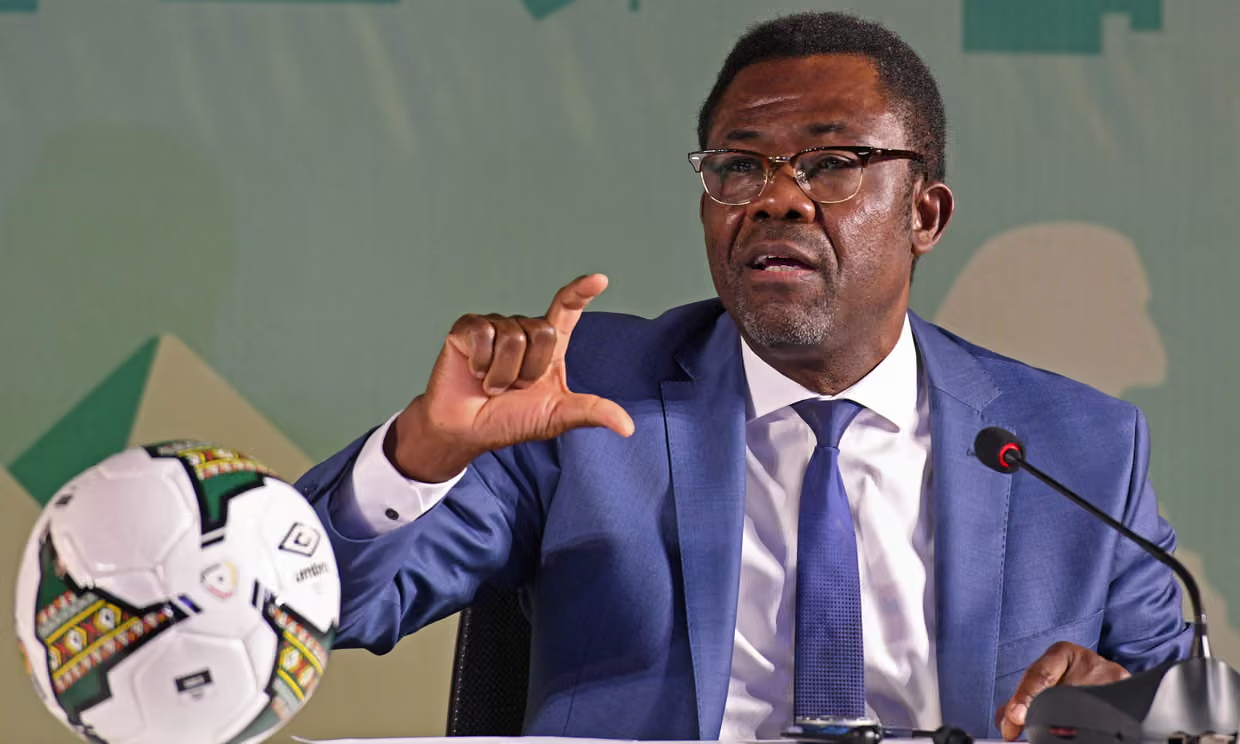
Veron Mosengo-Omba has officially stepped down as general secretary of the Confederation of African Football (CAF), confirming AfricaSoccer.com’s earlier exclusive report three days ago that his exit was imminent amid mounting internal pressure.
In a statement released from Cairo on Sunday 29 March 2026, the DR Congo official announced his resignation, bringing an end to a tenure marked by both significant reforms and growing controversy over governance issues within African football’s governing body.
“After over 30 years of an international professional career dedicated to promoting an ideal form of football that brings people together, educates, and creates opportunities for hope, I have decided to step down from my position as Secretary General of CAF to devote myself to more personal projects,” Mosengo-Omba said.
His departure follows weeks of speculation and internal tensions, with AfricaSoccer.com previously revealing that CAF’s Executive Committee members were prepared to push for his removal if he did not resign voluntarily.
He resigned just when the Executive Committee meeting was taking place at the headqwuarters of CAF on Sunday.
Pressure over tenure and governance
Mosengo-Omba’s position had come under increasing scrutiny after he remained in office beyond CAF’s mandatory retirement regulations.
Under Regulation 130, CAF staff are required to retire at 63, with a maximum three-year extension permitted. Having been appointed in March 2021, Mosengo-Omba reached that limit in October 2025 after receiving an extension from CAF president Patrice Motsepe.
His continued stay beyond that period had been widely criticised within sections of CAF’s leadership, raising concerns about governance, accountability and adherence to internal rules.
Sources had described the atmosphere surrounding his role as “toxic”, with growing pressure from within the Executive Committee forcing a resolution.
In his statement, Mosengo-Omba appeared to acknowledge the controversy that had surrounded his tenure.
“Now that I have been able to dispel the suspicions that some people have gone to great lengths to cast on me, I can retire with peace of mind and without constraint, leaving the CAF more prosperous than ever,” he said.
A tenure of progress and criticism
Since taking office, Mosengo-Omba oversaw a period of transformation within CAF, including increased commercial revenues, expansion of competitions and efforts to strengthen administrative structures.
His leadership coincided with CAF’s renewed financial stability and greater global visibility, particularly following partnerships and reforms aimed at modernising African football.
However, his tenure was also marked by criticism over internal appointments and allegations of favouritism, as well as broader concerns about transparency in decision-making.
His close working relationship with FIFA president Gianni Infantino also drew scrutiny from some observers, who questioned the influence of external factors on CAF’s governance.
Despite these challenges, Mosengo-Omba expressed gratitude to those he worked with during his time at the organisation.
“I sincerely thank the CAF’s President Dr. Patrice Motsepe, my teams, and all those who, directly or indirectly, have enabled CAF and organized African football to make real and remarkable progress,” he said.
Uncertainty over succession
His resignation leaves a significant leadership gap within CAF, with no deputy general secretaries currently in place — a situation that could complicate the transition process.
The organisation is now expected to move quickly to appoint an interim replacement or outline a succession plan, particularly as it navigates a critical period that includes ongoing competitions and governance challenges.
CAF has yet to officially announce who will assume the role on a temporary or permanent basis.
A turning point for CAF
Mosengo-Omba’s exit comes at a sensitive time for African football, with CAF facing broader scrutiny following recent high-profile decisions, including the controversial ruling to strip Senegal of the 2025 Africa Cup of Nations title.
His departure is likely to be seen as a turning point for the organisation, as it seeks to restore confidence in its governance structures and reinforce its commitment to transparency.
In his closing remarks, Mosengo-Omba struck a hopeful tone about the future of the organisation he leaves behind.
“Let us hope that the progress made will last and be sustained.”
For CAF, the challenge now will be to ensure that continuity is maintained — and that the next chapter builds on both the achievements and lessons of a complex era.
Popular News
-
AFCON 2025: Fixtures, Results, Scores and Standings
Jan 18, 2026 -

Leadership and long-term vision key to rescuing Zamalek and inspiring Egyptian football – Hany Abou Rida
Nov 5, 2025 -

South African giants Orlando Pirates set to lose influential forward Monnapule Saleng
Mar 19, 2025 -
Full schedule for 2025 Africa Cup of Nations in Morocco confirmed
Feb 12, 2025
-
Morocco vs Ecuador Friendly: Where and How to Watch
Mar 26, 2026 -

Morocco vs. Ecuador: Match details, key talking points and where to watch
Mar 27, 2026 -
Chile overturn deficit to defeat Cape Verde in FIFA Series clash
Mar 27, 2026 -
Where and how to watch Saudi Arabia vs Egypt friendly ahead of 2026 World Cup
Mar 26, 2026


