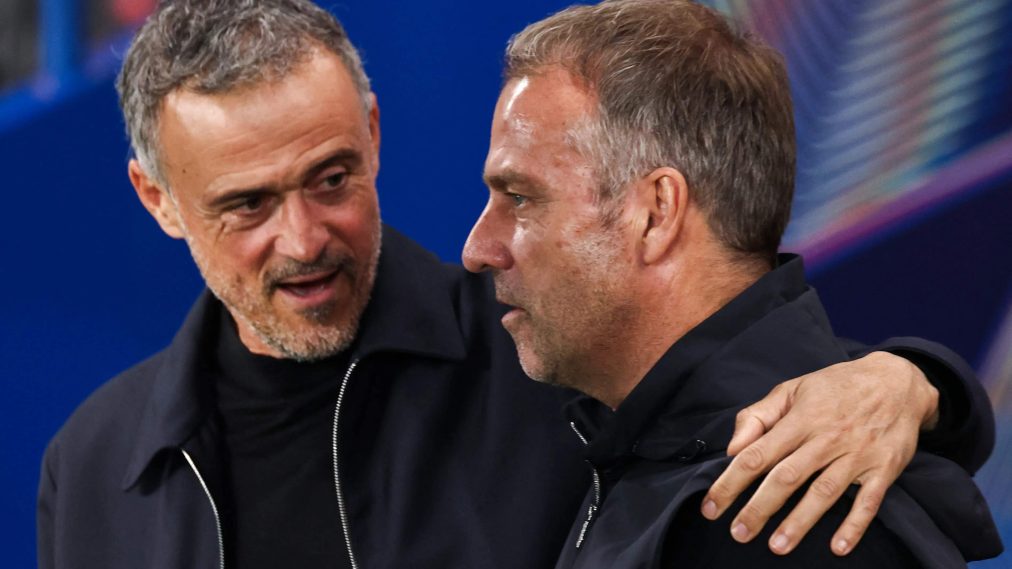
Paris Saint-Germain exposed Barcelona’s weaknesses in midfield, under pressure and in protecting defensive spaces as they secured a 4-2 victory on Tuesday. Hans Flick’s side twice fought back to level, but could not maintain its balance, while Paris repeatedly regained control and continued creating danger before eventually winning with confidence.
The key difference was PSG’s ability to seize the initiative again after each Barcelona goal. Individual quality was not enough for Barcelona, who are hoping to reclaim the Champions League, because their attacking talent was not protected by the balance required in the most demanding moments.
Barcelona struggle to control midfield
Barcelona found it difficult to dominate the centre of the pitch, with the Paris midfield regularly offering passing options. Pedri appeared to carry much of the responsibility for connecting the lines, while Vitinha, Joao Neves and Fabian Ruiz combined their movement to give the player in possession ways through the press.
When PSG escaped that pressure, Barcelona’s defence was forced to retreat and protect space rather than recover the ball high up the pitch. That underlined the difference between numerical possession and genuine control.
According to Flashscore, Barcelona had 53% possession to PSG’s 47% and recorded the better passing accuracy. However, Paris had 22 shots to Barcelona’s 18, including 15 on target compared with five. PSG also recorded an expected goals figure of 3.73 against 2.19 and created six big chances to Barcelona’s five.
The figures reflected how Vitinha, Joao Neves and Fabian Ruiz turned a smaller share of possession into a sustained attacking threat.
High defensive line punished
Barcelona’s high press and advanced defensive line can provide an attacking advantage when it works, but they left space for a team capable of moving the ball quickly and identifying where to attack.
Achraf Hakimi repeatedly delivered dangerous crosses and created PSG’s fourth goal for Ruiz. He moved to within one assist of Samuel Eto’o’s record of 20 as the leading African provider in the Champions League and equalled the total of former Liverpool player and current Trabzonspor forward Mohamed Salah, on 19 assists.
Desire Doue also exploited the space behind the advanced defence, scoring PSG’s first goal and supplying the corner for the second. He was named player of the match. Barcelona’s problem, therefore, was not simply the position of the defensive line, but the lack of pressure on the ball and the difficulty of closing passing angles.
Flick’s decision to leave Rodri Hernandez on the bench also attracted attention. The manager wanted to rest him after he had completed the previous three matches and said he trusted Marc Bernal, with the clasico against Real Madrid to come.
Rodri’s absence was significant because Barcelona needed someone to play out under pressure, control the tempo, link midfield and defence, and retain possession to calm PSG’s rapid transitions. Bernal could not fully fill those roles, leaving Pedri to shoulder several responsibilities.
Substitutions raise questions
Flick’s decision to remove Pedri and Raphinha in the 60th minute prompted questions, as Barcelona needed to retain its ability to organise play and withstand PSG’s pressure. Rodri’s introduction did not solve the problem completely.
The replacement of Xavi Espart, despite his positive performance, while Anthony Gordon remained on the pitch despite a poor display, also raised doubts about whether the substitutions reflected the players’ performances or the team’s needs.
Espart had scored Barcelona’s equaliser after 74 minutes, registering one shot on target, an xG of 0.29, 43 passes at 84% accuracy, four tackles and five recoveries.
ESPN recorded 48 touches for Gordon across the full 90 minutes. He had no goal, assist or shot, an xG of zero and an xA of 0.16, while winning one duel and making one interception.
PSG repeatedly restored its attacking momentum as the score changed. Barcelona produced dangerous moments and showed determination by recovering twice, but PSG imposed a repeatable threat, remained composed after conceding and exposed the distance Barcelona must still bridge to challenge seriously for the Champions League.
-
 African Talent Expanding Globally: From the Pitch to the Diamond Oct 21, 2026
-
Bayern Munich and Arsenal face high-profile Champions League test at Allianz Arena Oct 21, 2026
-
Lille and Galatasaray meet with Champions League hopes at stake Oct 21, 2026
-
Kaizer Chiefs goalkeeper Bruce Bvuma faces uncertain future as Renaldo Leaner rises Oct 21, 2026




-
AFCON 2025: Fixtures, Results, Scores and Standings Jan 18, 2026
-
Match hero Taiwo Awoniyi reflects on team effort after Chelsea triumph May 5, 2026
-
Leadership and long-term vision key to rescuing Zamalek and inspiring Egyptian football – Hany Abou Rida Nov 5, 2025
-
South African giants Orlando Pirates set to lose influential forward Monnapule Saleng Mar 19, 2025




-
PSG v Barcelona: fiery attacks set up Champions League classic at Parc des Princes Oct 18, 2026
-
Champions League: PSG beat Barcelona as Liverpool complete comeback against Villarreal Oct 20, 2026
-
Real Betis v Barcelona: kick-off time, TV details and match preview Oct 16, 2026
-
Porto v PSV: predicted line-ups for Champions League league-phase clash Oct 19, 2026