Aliou Cissé threatens exit amid unpaid salary row with Libyan FA
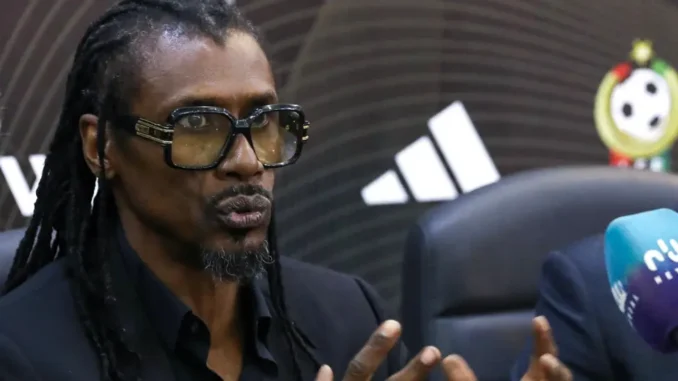
Aliou Cissé is reportedly considering walking away from his role as head coach of Libya’s national team, just four months into his appointment, due to a serious financial dispute with the Libyan Football Federation.
The 49-year-old Senegalese coach, who took charge of the Mediterranean Knights in March following a successful nine-year tenure with Senegal, has yet to be paid a single euro since assuming the post, according to sources close to the national team’s technical staff.
Despite a mixed start to his Libya tenure—drawing 1-1 with Angola and suffering a 3-1 loss to Cameroon in the 2026 World Cup qualifiers—the main source of tension is not on the pitch but off it.
Cissé, believed to be earning €76,000 per month and thus one of the highest-paid coaches in African football, has grown increasingly frustrated by the lack of salary payments since his arrival.
“He hasn’t received any of his wages,” confirmed the agent of a national team staff member, underscoring the severity of the issue.
Under contract until 2027, Cissé has reportedly issued an ultimatum to the Libyan Football Federation, demanding full payment of the owed salary by Thursday, July 17.
Failure to meet the deadline could result in the former Senegal captain terminating his contract and leaving his position—a development that would plunge Libya’s World Cup qualifying campaign into further uncertainty.
Libya currently sits third in their qualifying group, four points adrift of Cameroon, who occupy the playoff spot.
The Knights of the Mediterranean are scheduled to face Angola and Eswatini in crucial back-to-back fixtures in early September.
Cissé’s decision to accept the Libyan post was grounded in mutual trust and ambition. Upon his appointment, he expressed enthusiasm about the project.
“I chose to be here in Libya and start this project because from my very first meeting with the board members of the Libyan Football Federation I felt the willingness and how much they believed in me as a person and as a coach,” Cissé said.
That optimism now appears to be fading in the face of financial dysfunction, potentially putting Libya’s long-term footballing ambitions—and its relationship with one of Africa’s most respected coaches—in jeopardy.
Popular News



-

AFCON 2025: Fixtures, Results, Scores and Standings
Jan 18, 2026 -

Leadership and long-term vision key to rescuing Zamalek and inspiring Egyptian football – Hany Abou Rida
Nov 5, 2025 -

South African giants Orlando Pirates set to lose influential forward Monnapule Saleng
Mar 19, 2025 -

Full schedule for 2025 Africa Cup of Nations in Morocco confirmed
Feb 12, 2025