Algeria face race against time to find next manager before 2027 Africa Cup of Nations qualifiers
Algeria remain without a permanent head coach less than a month after Vladimir Petkovic was dismissed, with the 2027 Africa Cup of Nations qualifiers due to begin at the end of September.
The prolonged vacancy at the national team has raised questions about whether the Algerian Football Federation (FAF) is handling the appointment with excessive caution or whether it reflects a deeper uncertainty about the identity and direction of the Fennecs.
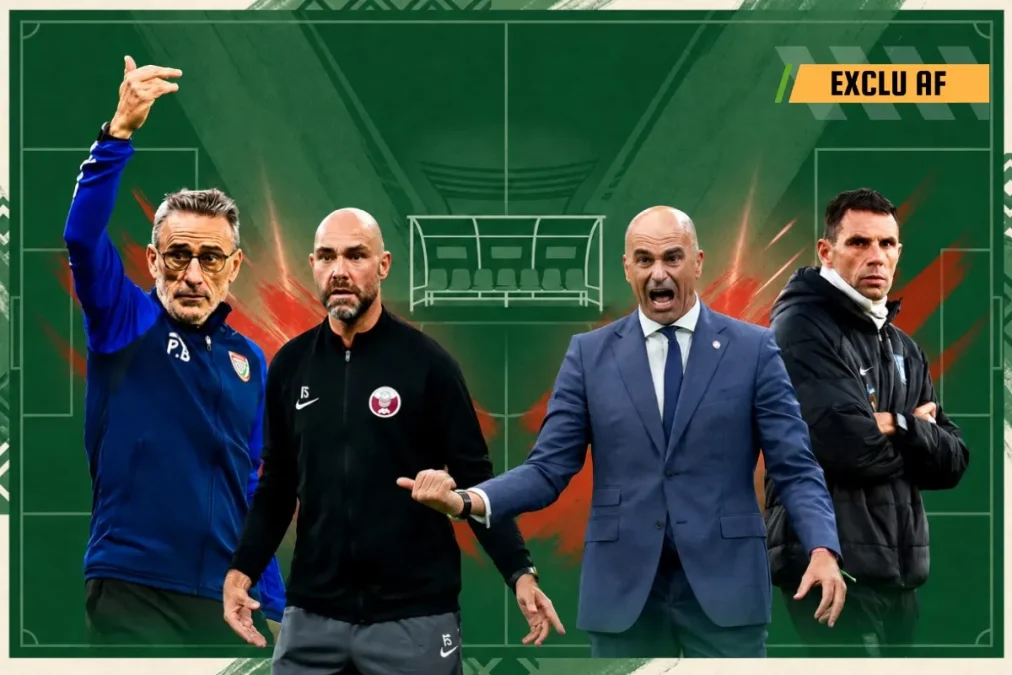
Several high-profile names have been linked with the position. Paulo Bento, Felix Sanchez and Rafael Benitez were reported as possible candidates, before Gustavo Poyet emerged as the leading option. A further rumour then involved Roberto Martinez.
However, the debate in Algeria extends beyond the identity of the next appointment. The country is also considering what type of coach can succeed in one of African football’s most demanding jobs.
Petkovic’s time in charge left an impression of a technically minded but distant coach who struggled to connect with the public’s passion. To examine the requirements of the role, Afrik-Foot spoke to three figures with extensive knowledge of Algerian football: former Algeria manager Jean-Michel Cavalli, former Mouloudia d’Alger coach Patrice Beaumelle and ex-Algeria international Abdelmalek Cherrad.
For many supporters, leaving the position unfilled so close to official matches appears amateurish. Cherrad, however, believes the federation is right not to rush into a decision.
“It’s a good thing, and it isn’t, because time is pressing and the qualifiers are approaching rapidly. But you must not appoint a coach lightly or in a hurry,” he told Afrik-Foot.
Cherrad also expressed regret that the search had not appeared to include more domestic possibilities, such as Madjid Bougherra.
The immediate transition is being managed by an interim arrangement involving Antar Yahia, with Moussa Saib taking the role of general manager. Cherrad sees Saib’s presence as a stabilising influence.
“Moussa, amid all the noise, brings wisdom and calm. With the experience he has, he is a very good asset for the national team,” he said.
That temporary structure cannot remain in place indefinitely, though. Whoever takes over will inherit a team facing intense public scrutiny. Cherrad described the pressure in Algeria as “ten times greater” than elsewhere on the continent.
A strong CV alone will not guarantee acceptance. Beaumelle, whose spell with Mouloudia d’Alger was successful, believes an overseas coach must become closely acquainted with the country, visiting stadiums across Algeria from Setif to Tizi Ouzou.
At the same time, the manager must retain enough distance from the surrounding noise to make clear decisions.
“If you are too close to the population, you receive too much information. You have to be able to sort through it to keep a clear mind,” Beaumelle said.
Understanding local customs is another part of the challenge. Beaumelle noted that a Muslim coach could have a natural understanding of periods such as Ramadan and Eid, while Cavalli, who managed Algeria between 2006 and 2007, stressed the importance of resilience.
“Whoever takes charge of Algeria must be strong inside; otherwise, it is impossible to withstand the pressure,” Cavalli said.
The lack of African experience among candidates such as Bento and Poyet has also been questioned. Cavalli believes modern preparation can reduce that disadvantage, while Cherrad argued that video analysis, the internet and the federation’s financial resources allow a coach and staff to prepare for a difficult away trip weeks in advance.
Beaumelle offered a more traditional view, saying familiarity with Africa’s demanding conditions can prevent players from using them as excuses.
Whether the next coach is Poyet, Martinez or Bento, the task will be substantial. Algeria’s manager must combine emotional connection with discipline, involvement with independence, and authority with an understanding of the country’s football culture. The reward, however, is the chance to be embraced by one of Africa’s most passionate football nations.
-
 Three football bets to consider on 18 October: goals, corners and half-time stalemate Oct 18, 2026
 -
VAR introduction to Betway Premiership could face further delays Oct 18, 2026
-
Ghana’s Black Maidens ready to take on Norway as Joe Nana Adarkwa targets winning World Cup start Oct 18, 2026
-
Lamine Yamal hailed as world’s best player after Barcelona win Oct 17, 2026



-
AFCON 2025: Fixtures, Results, Scores and Standings Jan 18, 2026
-
Match hero Taiwo Awoniyi reflects on team effort after Chelsea triumph May 5, 2026
-
Leadership and long-term vision key to rescuing Zamalek and inspiring Egyptian football – Hany Abou Rida Nov 5, 2025
-
South African giants Orlando Pirates set to lose influential forward Monnapule Saleng Mar 19, 2025




-
Real Betis v Barcelona: kick-off time, TV details and match preview Oct 16, 2026
-
Morocco to face New Zealand as FIFA U-17 Women’s World Cup kicks off in Rabat Oct 16, 2026
-
Roma v Real Madrid: home side tipped to score first in Champions League clash Oct 12, 2026
-
Atletico Madrid v Manchester United: probable line-ups for Champions League clash Oct 12, 2026