Brahim Hemdani’s decisions on Hadjam contradict club form policy
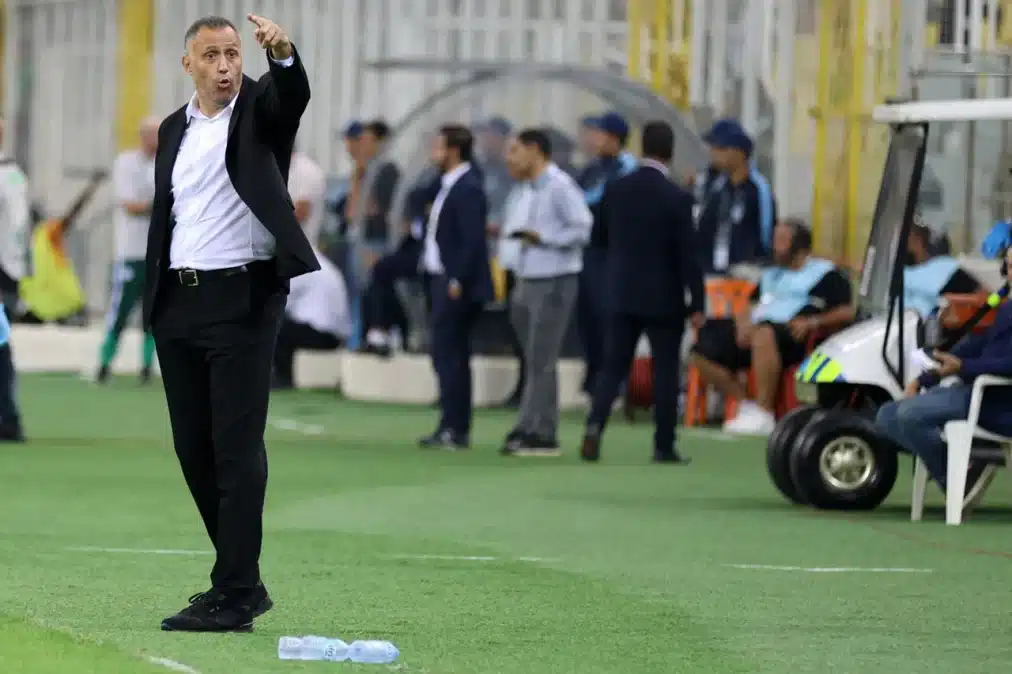
Algeria coach Brahim Hemdani has come under scrutiny for his decision to start Jaouen Hadjam in all three matches during the recent international break, despite the defender’s limited playing time at club level.
Hadjam featured against Zambia, Burundi and Niger, accumulating 240 minutes out of a possible 270. The Brighton & Hove Albion player was the most-used member of the Algeria squad during the training camp, even though he appeared to struggle physically and lacked consistency in his performances.
The decision has raised questions about Hemdani’s selection policy, particularly after the coach made it clear that players would need to be performing regularly for their clubs to earn places in future squads.
Ahead of the November training camp, Hemdani said he would prioritise players who were competitive and enjoying regular playing time.
However, his approach during the recent international break appeared to contradict that position, with Hadjam receiving significant minutes despite his lack of match fitness.
The defender had limited playing time since signing for Brighton, but Hemdani continued to rely on him throughout the three fixtures.
The situation was further complicated by the departure of Rayan Aït-Nouri after the opening match, which reduced the coach’s options on the left side of defence.
Despite the availability of alternatives, Hadjam remained in the starting line-up for the subsequent matches. His performances were inconsistent, raising doubts over whether the heavy workload was the right decision at that stage of his season.
Hemdani explains uncertainty over November squad
After Algeria’s final match against Niger, Hemdani acknowledged that the composition of his next squad would depend on how players performed during the following weeks.
“There will be four weeks before the next gathering. There are other players eligible for selection who are not here today. These are four weeks of work at club level, where everyone will try to be at their best. Making a projection about who will come next time is impossible: during these four weeks, a lot will happen, with injuries, players in form or not,” Hemdani said at his post-match press conference.
His comments suggested that players would have to prove their worth at club level before the next international window, with performances and fitness expected to influence selection decisions.
However, the handling of Hadjam during the recent camp has raised questions about how those principles were applied.
Defensive priorities limited the alternatives
Ahmed Touba could have been considered as an option at left-back, while Ramy Bensebaïni was also available after being rested for the occasion. Bensebaïni eventually replaced Hadjam for the final half-hour against Niger.
The decision not to rotate Hadjam earlier was particularly notable given his limited playing time before joining the national team.
Although the defender was inconsistent across his appearances, he was still given a substantial workload when other options were available.
One possible explanation for Hemdani’s choices was his desire to strengthen the centre of defence. Touba was instead used centrally, suggesting that the coaching staff placed greater emphasis on maintaining defensive balance than resting Hadjam.
The situation leaves questions over the balance between maintaining defensive stability and managing players who arrive at international camps without sufficient competitive minutes.
With the November gathering approaching, Hemdani will have another opportunity to apply his stated selection criteria as Algeria assess their options for the next stage of the campaign.
-
 Brahim Hemdani’s decisions on Hadjam contradict club form policy Oct 9, 2026
 -
King Promise brings Chelsea fever to Tarkwa with music and football celebration Oct 9, 2026
-
Ibrahim Maza: Bayer Leverkusen plan contract extension despite Premier League interest Oct 9, 2026
-
Rayan Ait-Nouri set for Algeria return as dispute with Brahim Hemdani nears resolution Oct 9, 2026



-
AFCON 2025: Fixtures, Results, Scores and Standings Jan 18, 2026
-
Match hero Taiwo Awoniyi reflects on team effort after Chelsea triumph May 5, 2026
-
Leadership and long-term vision key to rescuing Zamalek and inspiring Egyptian football – Hany Abou Rida Nov 5, 2025
-
South African giants Orlando Pirates set to lose influential forward Monnapule Saleng Mar 19, 2025




-
Croatia face Spain with Nations League hopes on the line in Split Oct 5, 2026
-
France v Belgium: Probable line-ups for Nations League clash Oct 3, 2026
-
Morocco coach Mohamed Ouahbi refuses to single out player after Mali draw Oct 4, 2026
-
Italy v Turkey: Mancini’s side set for Nations League clash with key absences Oct 4, 2026