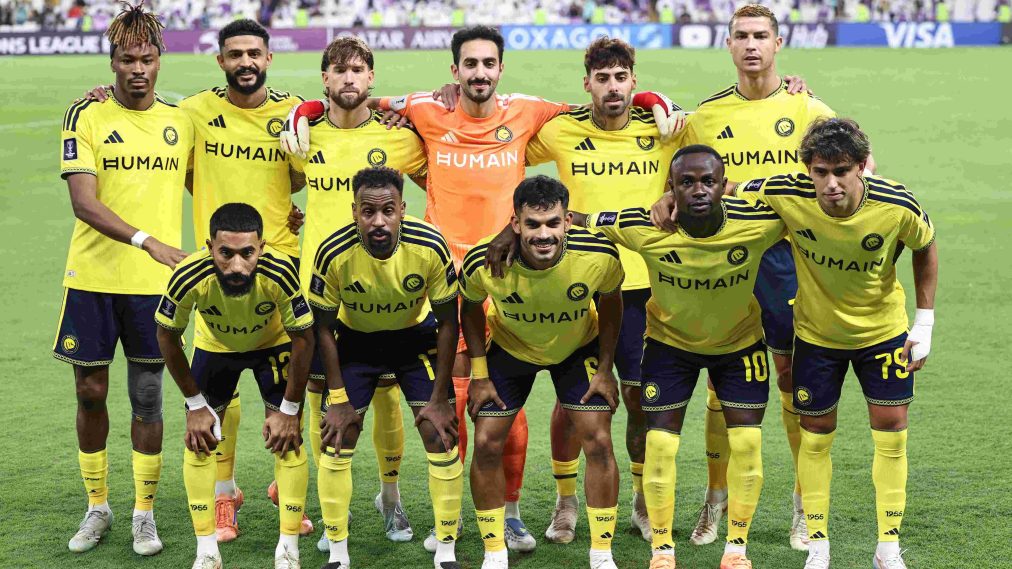
Ahmed Al Sultan has been appointed chairman of Al Nassr’s football company, succeeding Abdullah Al Majed, and begins his tenure with the club facing a number of important sporting and financial decisions.
The Saudi businessman is expected to start work quickly, arriving at a sensitive stage for Al Nassr as structural changes continue across the Roshn Saudi League. His immediate challenge will be to balance the club’s ambitions on the pitch with its financial responsibilities during a period of transition.
Al Sultan brings substantial experience in management, investment and retail to the role. He is chief executive and a board member of Al Saif Gallery, while also sitting on the boards of Arabian Oud and Cenomi Retail.
He has led Al Seef Stores for Development and Investment since December 2024, having joined its board in 2022. Before that, he was chief executive of Thob Al Aseel from 2018 until 2024, a position that further developed his background in administration, finance and investment.
Al Sultan holds a Master of Business Administration from Brunel University London and a bachelor’s degree in finance from Qassim University.
Joao Felix future among early decisions
His management credentials will soon be tested by several unresolved issues at Al Nassr, with Joao Felix’s future one of the most prominent.
The club must decide whether to pursue a new contract for the Portuguese forward or take another course that fits its sporting and financial plans for the next phase. The source article does not specify the details or timing of any potential decision.
Felix is not the only matter requiring attention. Al Nassr also needs to secure new sponsorship agreements to increase its revenues and work towards addressing its financial problems.
The club’s transfer strategy will be another key responsibility. Decisions are required over the signings needed to strengthen the squad and improve its ability to compete, while maintaining sight of the high expectations held by Al Nassr supporters.
Al Sultan’s arrival therefore represents more than a change in personnel within the club’s administrative structure. He takes over with a series of major files already awaiting action, including finances, commercial income, player contracts and recruitment.
His success will be judged not only by how he runs Al Nassr’s football company, but also by whether he can produce practical solutions to the club’s outstanding issues. The immediate task is to turn his experience in management, finance and investment into measures that restore stability and support Al Nassr’s plans for the coming period.
-
Luis de la Fuente says Lamine Yamal has the ‘anxiety of genius’ ahead of Croatia test Oct 5, 2026
-
 Argentina vs Benin: Kick-off time, TV channel and how to watch online Oct 5, 2026
 -
 Messi set for final Argentina appearance in farewell against Benin Oct 5, 2026
 -
Benin defender Mohamed Tijani says he will tell Lionel Messi he is ‘a god’ Oct 5, 2026



-
AFCON 2025: Fixtures, Results, Scores and Standings Jan 18, 2026
-
Match hero Taiwo Awoniyi reflects on team effort after Chelsea triumph May 5, 2026
-
Leadership and long-term vision key to rescuing Zamalek and inspiring Egyptian football – Hany Abou Rida Nov 5, 2025
-
South African giants Orlando Pirates set to lose influential forward Monnapule Saleng Mar 19, 2025




-
AFCON 2027 Qualifiers: McCarthy warns South Africa to expect tough test against Eritrea Sep 29, 2026
-
Denmark v Portugal: Nations League kick-off time, TV channel and match prediction Sep 29, 2026
-
South Sudan vs Egypt: Where to watch AFCON 2027 qualifier Sep 29, 2026
-
France v Belgium: Probable line-ups for Nations League clash Oct 3, 2026