Aboutrika launches scathing attack on CAF President Motsepe over four-year AFCON decision
African football legend Mohamed Aboutrika has launched a fierce public attack on the Patrice Motsepe, accusing the South African of prioritising European interests over the development of the game on the continent.

African football legend Mohamed Aboutrika has launched a fierce public attack on the Patrice Motsepe, accusing the South African of prioritising European interests over the development of the game on the continent.
The former Egypt and Al Ahly star reacted angrily after the CAF President announced a series of far-reaching reforms to African competitions, including a decision to stage the Africa Cup of Nations every four years instead of every two, and the cancellation of the African Nations Championship (CHAN) in favour of a new tournament known as the African Nations League.
The decisions were unveiled on Saturday at a CAF press conference in Morocco, just one day before the kick-off of the 2025 Africa Cup of Nations, sparking widespread debate across the continent.
Aboutrika, one of Africa’s most decorated and influential former players, took to social media to express his frustration, arguing that the changes undermine African football’s identity and autonomy.
Reflecting his belief that CAF has lost sight of Africa’s interests, Aboutrika wrote on his official Facebook page: “The African Football Confederation is at the service of European football.”
He went further, suggesting that a lack of confidence in African football’s own value was driving the decisions.
“This happens when you do not realize your true value and status; one who lacks something cannot give it.”
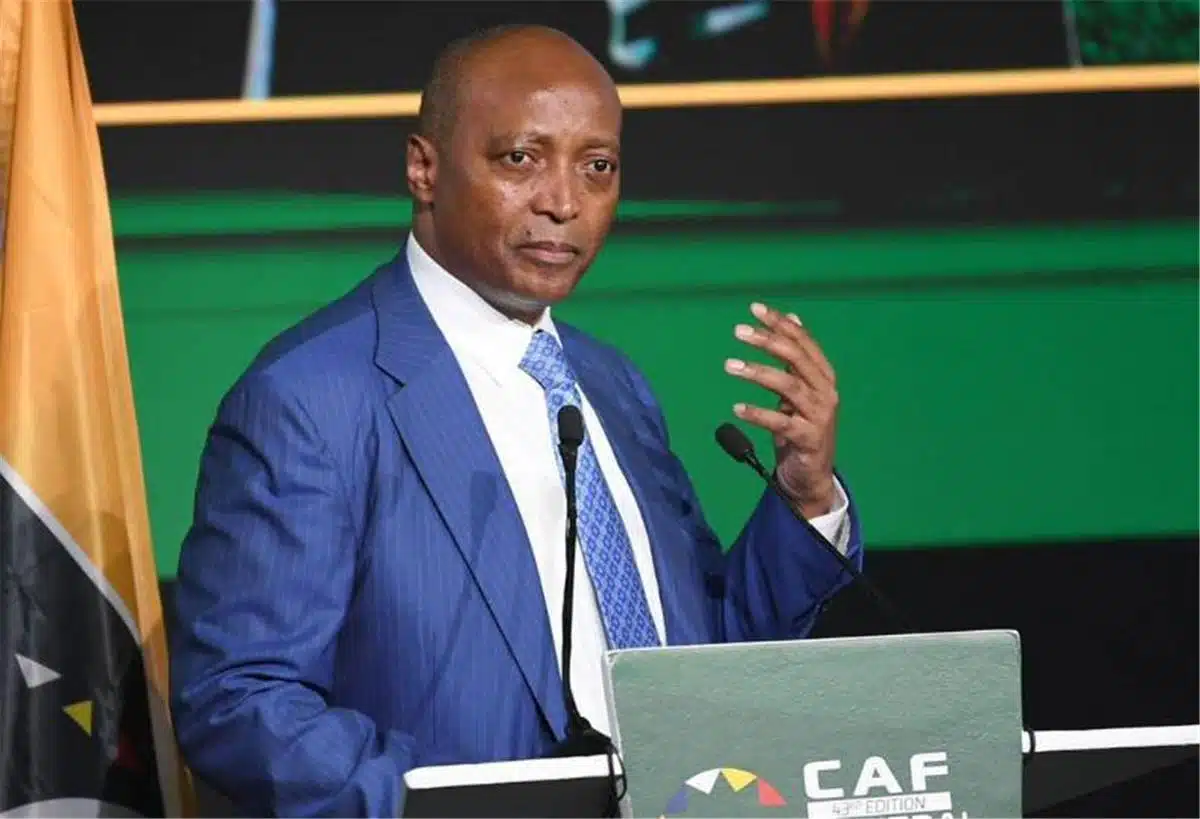
CAF reforms ignite continental backlash
CAF confirmed that the AFCON will now be played every four years, starting with the edition scheduled for 2028, ending a tradition that dates back to 1957, when the tournament was first held as a biennial competition.
The governing body also announced the abolition of CHAN, a tournament designed specifically for players based in domestic African leagues, replacing it with an annual African Nations League, modelled loosely on UEFA’s Nations League.
The timing and nature of the announcements have drawn criticism from former players, administrators and supporters, many of whom believe the reforms are designed to ease pressure on European clubs rather than strengthen African football structures.
Aboutrika’s criticism was particularly pointed because it came on the eve of a tournament that has long been regarded as Africa’s premier sporting event.
Motsepe defends CAF’s position
CAF president Patrice Motsepe defended the decisions, arguing that the congested international calendar had made it increasingly difficult for African competitions to thrive.
Speaking after the announcement, Motsepe said the reforms were part of a broader strategy to align African football with the global schedule and improve its commercial strength.
He explained that holding AFCON every two years had become a challenge, despite its importance to national federations.
He also stressed that the new African Nations League would offer greater financial incentives and higher competitive standards.
Motsepe said: “Our focus now is on the current edition of the Africa Cup of Nations, and in 2027 we will move to Tanzania, Kenya and Uganda, while the next edition will be in 2028.”
Looking further ahead, he outlined CAF’s long-term plans for the new competition.
“After the Club World Cup in 2029, we will launch the first edition of the African Nations League, with bigger prize money and tougher competition. As part of the calendar reorganization, the Africa Cup of Nations will be held every four years.”
A tournament caught between Africa and Europe
The Africa Cup of Nations has long been a point of tension between CAF and European clubs, with previous editions criticised for clashing with domestic league schedules.
CAF had earlier experimented with moving the tournament to the summer, but logistical challenges and clashes with other major tournaments forced a return to the traditional winter schedule.
For Aboutrika, however, the latest reforms go beyond scheduling issues and strike at the heart of African football’s independence.
As the 2025 AFCON gets under way in Morocco, his comments have amplified an already intense debate about who African football is really being shaped for — Africa itself, or the global game beyond its borders.
Popular News




-

AFCON 2025: Fixtures, Results, Scores and Standings
Jan 18, 2026 -

Leadership and long-term vision key to rescuing Zamalek and inspiring Egyptian football – Hany Abou Rida
Nov 5, 2025 -

South African giants Orlando Pirates set to lose influential forward Monnapule Saleng
Mar 19, 2025 -

Full schedule for 2025 Africa Cup of Nations in Morocco confirmed
Feb 12, 2025