
AFCON 2025: Walid Regragui’s resilience silences critics with Morocco on the verge of continental glory
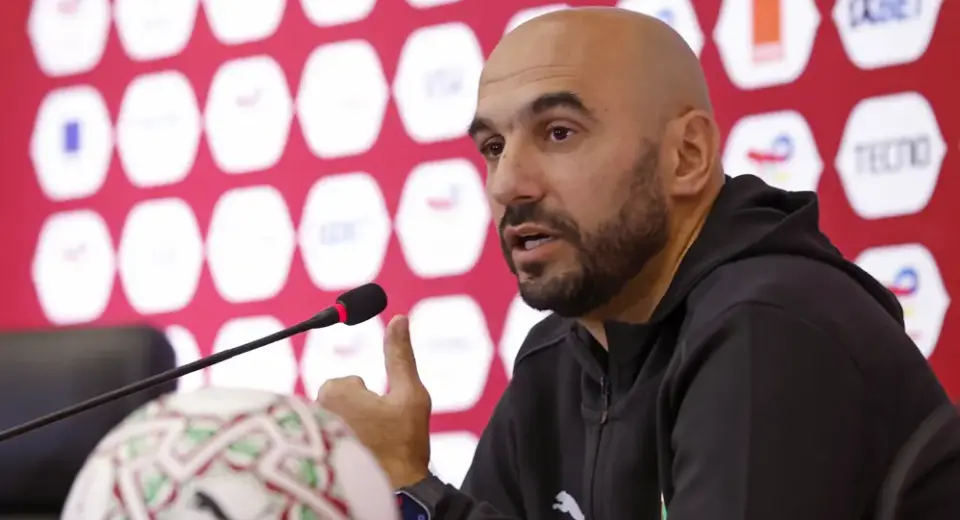
Doubt initially dominated Morocco’s Africa Cup of Nations campaign, with confidence remaining fragile even after a hard-fought 1-0 victory over Tanzania in the quarter-finals, which followed an unbeaten run in the group stage.
Criticism intensified from all sides, directed largely at head coach Walid Regragui, as questions grew over the team’s performances and direction. That narrative, however, was completely transformed following two commanding displays in the knockout stages of the tournament.
Morocco first dismantled Cameroon in the quarter-finals, delivering a composed and convincing performance that neutralised the threat of Brian Mbomo and left the Indomitable Lions without any real opportunity to trouble the goal. The Atlas Lions then repeated the feat against Nigeria in the semi-finals, halting a Super Eagles side that had recorded five consecutive wins and boasted one of the tournament’s most feared attacking trios in Victor Osimhen, Ademola Lookman and Akor Adams.
Central to Morocco’s success was their defensive solidity. Like Cameroon before them, Nigeria struggled to create clear chances, managing only two genuine threats on Yassine Bounou’s goal. One effort on target was calmly dealt with by the Al-Hilal goalkeeper, who later emerged as the hero of the night by saving two decisive penalties in the shootout.
Praise from the media quickly replaced earlier criticism as Regragui entered the press conference following the win over Nigeria. Congratulations poured in for guiding Morocco to their second AFCON final and their first in 22 years, since his own appearance as a player at the 2004 edition in Tunisia. Questions were also raised about whether the qualification represented personal revenge or a response to the intense scrutiny he had faced.
Regragui firmly rejected the idea of revenge, insisting that his motivation was rooted elsewhere. He said, “Not at all, it’s not about revenge, silencing critics, or hatred. It was a harsh campaign, but it didn’t affect me. We continued working because that’s who I am by nature, in my personal life as in football, a person of faith, and my religion didn’t teach me hatred. My principles, values, and my parents’ upbringing are what guide me. What matters to me is self-esteem, and that’s what I tell the players.”
The national coach went on to explain his personal outlook and why he remains unaffected by public opinion. He added, “I don’t expect people to say that I am a good or bad coach, and that is why some consider that to be arrogance. In Morocco, we were not psychologically raised on this matter, but I came with my principles and the values that my parents instilled in me.”
Regragui further underlined his self-belief, noting that external judgments have never shaken his confidence. He said, “There are those who say that I am the son of a construction worker and I should not dream, but I tell myself that I am the son of a construction worker and I am capable of doing something, even if I am told that I am not capable. This does not prevent me from working or from having confidence in myself.”
He also stressed that his achievements cannot be erased by a single outcome, even in the event of an early exit. “No one can erase what I have achieved previously. Today I am not saying that I am the best, no one gave me anything except God. The most important thing is that the Moroccan national team is in the final of the Africa Cup of Nations, and perhaps the pressure is what made me focus and change things within the team,” he said.
Regragui paid tribute to the unity within the squad, highlighting the role of the dressing room in weathering the storm of criticism.
“The group protected me, the players love their coach,” he noted, before revealing the challenge he set for them: “I told them they have to repay me on the field.”
While acknowledging the intensity of scrutiny that comes with managing Morocco, Regragui accepted criticism as part of the national football culture.
“Criticism is normal, as any defeat or even a draw in Morocco is a disaster,” he said, before broadening his reflection to the country’s football journey. “I am also happy for the former players who contributed to building this group by choosing Morocco early on.”
He concluded with a message focused on continuity and long-term growth, stating, “We are reaping the fruits of the golden age of Moroccan football, but we must not forget where we started. We must change our DNA, and get used to reaching the semi-finals, because the more consistent we are, the greater our chances of winning titles.”
Morocco now continue their quest for continental glory driven by a united squad, an energised fan base and a coach whose composure and conviction guided the team through intense pressure, leaving them just one step away from writing a new chapter in the history of Moroccan football.
Popular News


-
AFCON 2025: Fixtures, Results, Scores and Standings
Jan 18, 2026 -

Leadership and long-term vision key to rescuing Zamalek and inspiring Egyptian football – Hany Abou Rida
Nov 5, 2025 -

South African giants Orlando Pirates set to lose influential forward Monnapule Saleng
Mar 19, 2025 -

Full schedule for 2025 Africa Cup of Nations in Morocco confirmed
Feb 12, 2025
-

PSG youngster Senny Mayulu switches allegiance to DR Congo as World Cup dream beckons
Apr 5, 2026 -

Seven Eritrea players reported missing in South Africa after AFCON qualification
Apr 5, 2026 -
Algeria face crucial Egypt clash as Morocco meet Libya in U17 AFCON qualifiers
Apr 4, 2026 -
Kylian Mbappé reveals Algeria vs Cameroon choice if he hadn’t played for France
Apr 3, 2026
