AFCON 2025: Selective discipline? Questions raised after Morocco–Senegal final
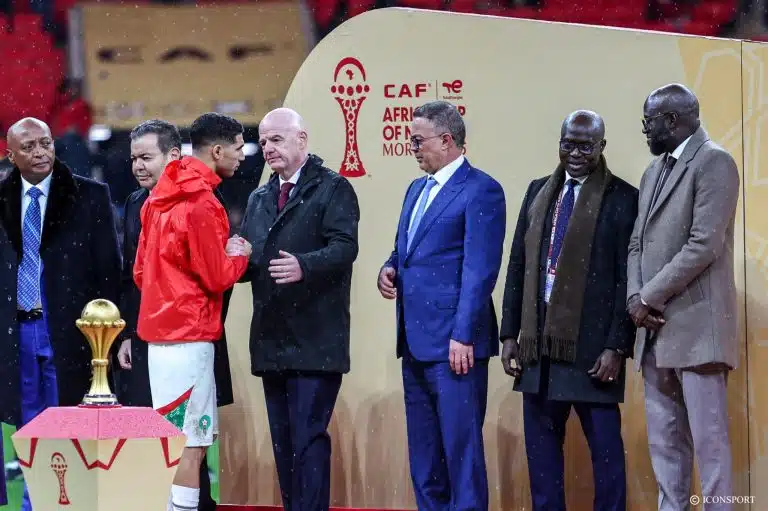
Fouzi Lekjaa’s influence at the top of African football has again come under scrutiny following the fallout from Morocco’s defeat to Senegal in the Africa Cup of Nations final, an episode that has reignited debate over power, discipline and the selective application of fair play.
As president of the Royal Moroccan Football Federation and a vice-president of the Confederation of African Football (CAF), Lekjaa occupies one of the most powerful positions in the game on the continent.
Yet the controversy surrounding the AFCON final has shifted attention away from the pitch and towards governance, accountability and the balance between authority and restraint.
Morocco’s loss to Senegal was not treated by Lekjaa as a routine sporting disappointment.
Instead, it was followed by a strong reaction to the conduct of Senegal head coach Pape Thiaw, whose protests during the match and threat to withdraw his team became a focal point for disciplinary debate.
For critics, the intensity of the response raised questions about proportionality, particularly as Thiaw neither physically confronted officials nor engaged in personal abuse, but reacted emotionally to refereeing decisions he deemed unfair.
The episode has reopened a longer-running discussion about Lekjaa’s own history with referees and officials.
Over the years, several incidents have been reported by media outlets and witnesses, ranging from confrontations with match officials to verbal outbursts at major tournaments and meetings.
None of these cases resulted in significant sanctions, a pattern that has fuelled claims of double standards within African football’s disciplinary structures.
Observers point to previous controversies, including confrontations after continental finals, disputes during women’s tournaments and reported clashes during CAF executive meetings, as evidence of an environment where authority can shield senior figures from consequences.
These moments contrast sharply with the firm stance now being taken against figures perceived to have less institutional protection.
The debate is not limited to Morocco and Senegal. It touches on wider concerns about governance at CAF, the influence of senior executives and the role of international football leaders.
Allies in high places, critics argue, help maintain a culture in which discipline is applied unevenly, reinforcing existing hierarchies rather than upholding universal standards.
The recent suspension of other prominent figures for misconduct has further sharpened the contrast, strengthening claims that punishment in African football can depend as much on status as on behaviour.
In this context, the focus on Pape Thiaw has been interpreted by some as a convenient distraction from deeper structural problems.
At the heart of the controversy lies a fundamental question: whether African football is governed by consistent principles or by the weight of power and influence.
For Senegalese football authorities, the response to this moment may define their stance for years to come — whether to accept the prevailing order or to challenge a system many believe resists dissent.
What is clear is that the debate surrounding Fouzi Lekjaa is no longer about a single match.
It has become a symbol of a broader struggle over fairness, transparency and accountability in African football governance.
Popular News


-

AFCON 2025: Fixtures, Results, Scores and Standings
Jan 18, 2026 -

Leadership and long-term vision key to rescuing Zamalek and inspiring Egyptian football – Hany Abou Rida
Nov 5, 2025 -

South African giants Orlando Pirates set to lose influential forward Monnapule Saleng
Mar 19, 2025 -

Full schedule for 2025 Africa Cup of Nations in Morocco confirmed
Feb 12, 2025

-
LIVE UPDATES: D.R Congo 1-0 Jamaica – 2026 FIFA World Cup Playoffs
Mar 31, 2026 -
Cameroon defeat China 2-0 in FIFA Series clash
Mar 31, 2026 -
Africa’s 2026 World Cup Teams: Fixtures and Results for March friendly games
Apr 1, 2026 -
Zimbabwe defender Teenage Hadebe dropped after code of conduct breach
Mar 30, 2026