AFCON 2025: Referee Dahane Baïda faces intense scrutiny as Morocco defeats Cameroon in quarter-final
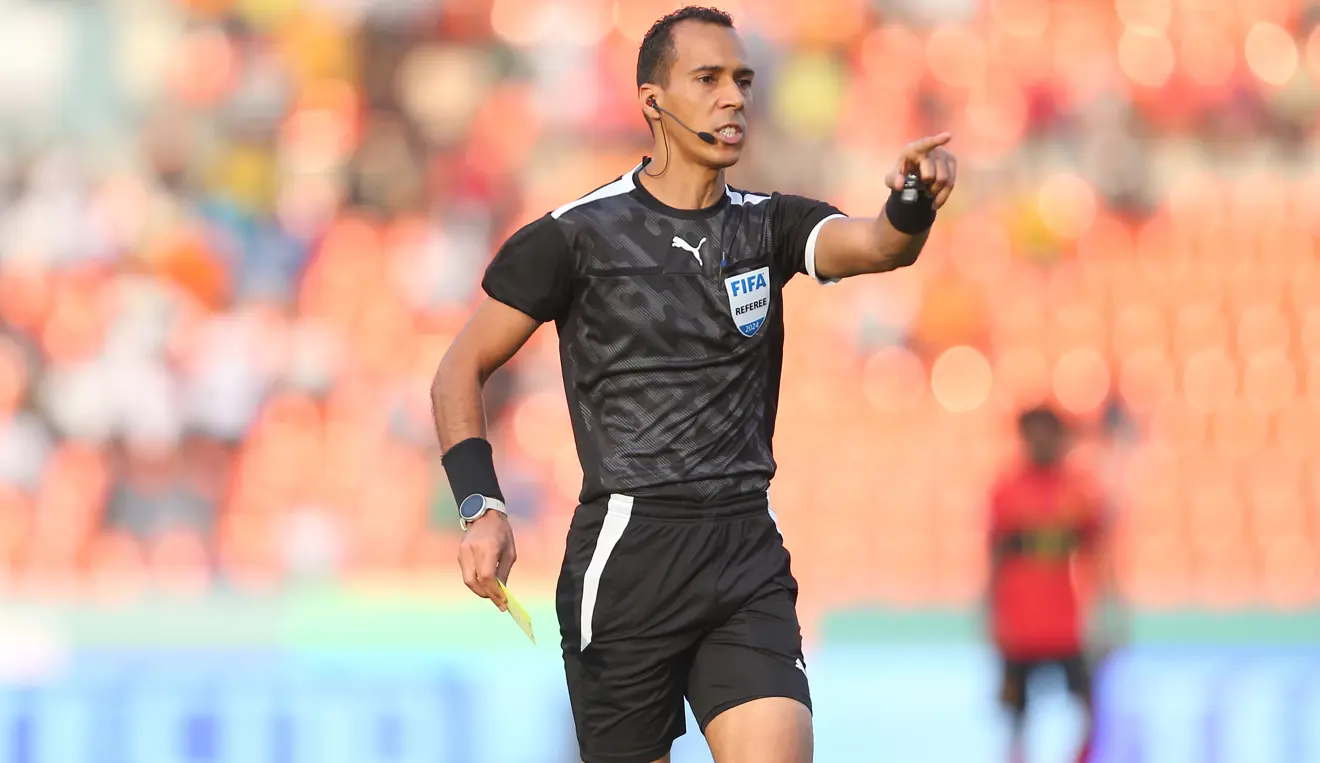
Referee Dahane Baïda came under intense criticism following Morocco’s 2-0 quarter-final victory over Cameroon in the 2025 Africa Cup of Nations, a match played before nearly 60,000 home supporters in Rabat.
Despite the scrutiny, CAF officials, including Moroccan Football Federation president Fouzi Lekjaa and CAF executive member Motsepete, were largely shielded from the backlash, leaving Baïda as the primary focus of debate.
Officiating under extraordinary pressure, Baïda oversaw a game that featured several contentious moments.
The atmosphere was charged not only by the partisan crowd but also by the institutional presence of Lekjaa, whose role in CAF and prominence in Moroccan football added a layer of scrutiny rarely faced by referees in international tournaments.
On the pitch, Cameroonian frustration centered on key incidents.
In the first half, a clear obstruction foul went unpunished, with no VAR intervention.
The most debated moment came in the 70th minute, when Bryan Mbeumo appeared to be fouled in the penalty area—an incident many believed warranted at least a VAR review.
Another moment of controversy involved Moroccan defender Nayef Aguerd, whose elbow on Christian Kofane went unpunished, though many argued it deserved at least a yellow card.
Collectively, these decisions fueled claims of hesitant or biased officiating, even if no serious fouls were formally recorded.
While the refereeing was widely questioned, Morocco’s overall performance provided a tactical rationale for the result.
The Atlas Lions controlled possession, maintained defensive organization, and created consistent attacking opportunities, making their qualification appear logical from a purely sporting perspective.
Nonetheless, the denied penalty for Mbeumo could have shifted momentum, potentially altering the match’s trajectory and creating a scenario where Cameroon might have equalized and applied pressure on the hosts.
The choice of Baïda as referee, following the initial appointment change, has added to the controversy.
While no formal explanation has been provided, the context—officiating a host nation under intense public and institutional attention—has prompted questions about the pressures African referees face in high-stakes matches.
Experts note that in such settings, decisions are often influenced by both crowd and institutional dynamics, placing the referee in a delicate position where any call against the host team can have significant personal and professional repercussions.
Ultimately, Baïda’s performance underscores the challenges referees encounter in high-profile AFCON fixtures, where scrutiny, pressure, and the stakes of home advantage converge, creating an environment in which impartiality can be tested and public criticism inevitable.
Popular News




-

AFCON 2025: Fixtures, Results, Scores and Standings
Jan 18, 2026 -

Leadership and long-term vision key to rescuing Zamalek and inspiring Egyptian football – Hany Abou Rida
Nov 5, 2025 -

South African giants Orlando Pirates set to lose influential forward Monnapule Saleng
Mar 19, 2025 -

Full schedule for 2025 Africa Cup of Nations in Morocco confirmed
Feb 12, 2025

-

LIVE UPDATES: D.R Congo 1-0 Jamaica – 2026 FIFA World Cup Playoffs
Mar 31, 2026 -

Cameroon defeat China 2-0 in FIFA Series clash
Mar 31, 2026 -

Africa’s 2026 World Cup Teams: Fixtures and Results for March friendly games
Apr 1, 2026 -

Zimbabwe defender Teenage Hadebe dropped after code of conduct breach
Mar 30, 2026