AFCON 2025: Lassana Coulibaly urges Mali to rebuild after quarter-final exit to Senegal
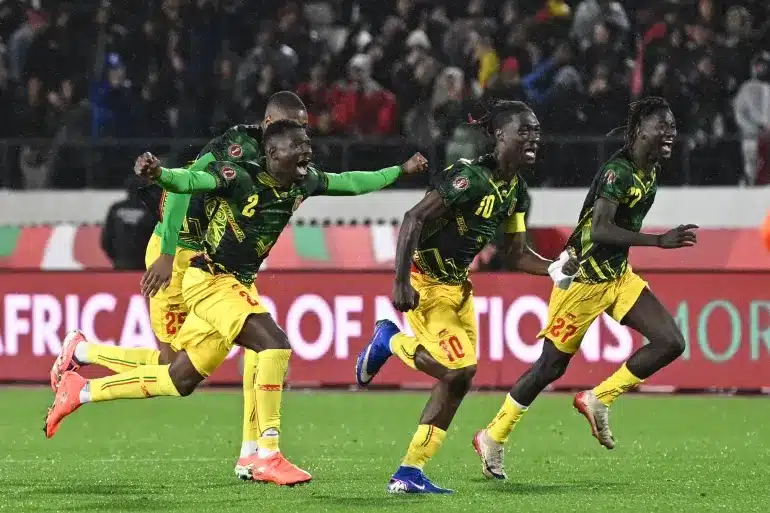
Lassana Coulibaly admitted that playing with ten men proved decisive as Mali were edged out 1-0 by Senegal in the opening quarter-final of the 2025 Africa Cup of Nations on Friday.
The Eagles’ hopes of ending their long wait for continental silverware were undone in Tangier after a disciplined but ultimately punishing encounter against the reigning champions.
Having already shown resilience earlier in the tournament by eliminating Tunisia despite being reduced to ten players, Mali were unable to summon the same escape act against the Lions of Teranga.
The turning point came in the first half when Yves Bissouma was sent off, leaving Tom Saintfiet’s side a man short.
Senegal seized the initiative soon after, Iliman Ndiaye striking in the 27th minute to give the holders the advantage they would protect until the final whistle.
From that moment on, Mali were forced into a rearguard battle, absorbing pressure in an effort to force the contest into extra time.
Despite their numerical disadvantage, the Eagles did not abandon their principles.
They pressed when possible, defended in compact lines and searched for a moment of inspiration that never quite arrived.
The margin of defeat was slim, yet the sense of frustration was palpable as Mali once again bowed out at the quarter-final stage.
Speaking in the mixed zone afterwards, Coulibaly struggled to mask his disappointment but struck a defiant tone about the future.
“ It’s difficult to draw conclusions right now, but we’re certainly satisfied with what we’ve done. It’s always difficult to play ten against eleven, but we’re not going to make excuses (…) Today we fell, we’re going to work to come back stronger.”
His words reflected a broader mood within the camp: pride in the effort, tempered by the reality that the ultimate prize remains elusive.
Mali have often impressed at the Africa Cup of Nations with their energy and technical ability, yet the quest for a first title continues to stall at the latter stages of the competition.
For Senegal, Ndiaye’s composed finish proved enough to carry them into the semi-finals, but the holders were made to work for their victory.
Mali’s organisation after the dismissal ensured that the match remained in the balance, with the Eagles pushing forward whenever an opening appeared, even as fatigue set in.
The defeat will sting, particularly given the circumstances.
After the heroics shown earlier in the tournament, there was quiet belief that history might repeat itself.
Instead, the Eagles were left to reflect on another campaign that promised much but ended before the final hurdle.
Coulibaly’s message, however, was one of resilience rather than resignation.
His insistence on avoiding excuses suggested a determination to treat the setback as part of a longer journey, not a terminal blow.
For a generation of Malian players who continue to flirt with glory, the challenge now is to turn experience into progress.
As Senegal march on in pursuit of back-to-back titles, Mali return home with renewed resolve but unanswered questions.
The quarter-finals have once again proven to be an unforgiving barrier, yet if Coulibaly’s words are any indication, the Eagles are already looking beyond this defeat, intent on ensuring that the next chapter in their continental story is written with greater success.
Popular News




-

AFCON 2025: Fixtures, Results, Scores and Standings
Jan 18, 2026 -

Leadership and long-term vision key to rescuing Zamalek and inspiring Egyptian football – Hany Abou Rida
Nov 5, 2025 -

South African giants Orlando Pirates set to lose influential forward Monnapule Saleng
Mar 19, 2025 -

Full schedule for 2025 Africa Cup of Nations in Morocco confirmed
Feb 12, 2025

-

LIVE UPDATES: D.R Congo 1-0 Jamaica – 2026 FIFA World Cup Playoffs
Mar 31, 2026 -

Cameroon defeat China 2-0 in FIFA Series clash
Mar 31, 2026 -

Africa’s 2026 World Cup Teams: Fixtures and Results for March friendly games
Apr 1, 2026 -

Zimbabwe defender Teenage Hadebe dropped after code of conduct breach
Mar 30, 2026