
AFCON 2025: Brahim Díaz’s Morocco switch shines as Spain left to reflect on missed opportunity
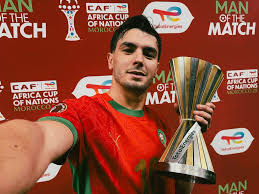
Brahim Díaz’s decision to represent Morocco is proving increasingly significant, with the Real Madrid midfielder emerging as one of the standout players of the 2025 Africa Cup of Nations and helping the Atlas Lions reach the final unbeaten.
The 25-year-old has been instrumental throughout the tournament, scoring five goals in six matches, and has yet to lose a game since making his international debut for Morocco in 2024.
His impact has reignited debate in Spain about the national team’s failure to secure his commitment at senior level, with leading Spanish sports newspaper AS describing his international record as evidence that Morocco’s gamble has paid off.
Unbeaten record strengthens Morocco’s faith
Since switching allegiance, Brahim Díaz has recorded 18 wins and three draws in 21 international appearances, scoring 13 goals in the process.
AS noted that Díaz opted for an environment where he could be a central figure rather than a peripheral option, contrasting his status with Morocco to his earlier experiences in Spain’s youth teams.
The report added that Spain’s federation and head coach Luis de la Fuente were unable to offer Díaz the clarity and continuity he found under Morocco coach Walid Regragui.
Growing popularity at home
Díaz’s influence extends beyond the pitch. In Morocco, his rise has captured the public imagination, with fans increasingly wearing his number 10 shirt alongside the already iconic number 2 worn by captain Achraf Hakimi.
Local media describe him as one of the new faces of Moroccan football, particularly among younger supporters inspired by his creativity, confidence and decisive contributions.
Trusted in decisive moments
Regragui’s faith in Díaz was evident during the dramatic semi-final win over Nigeria, where the midfielder remained on the pitch deep into extra time despite visible fatigue.
Although he did not score, Morocco eventually progressed via penalties, securing a place in Sunday’s final against Senegal — their first AFCON final appearance since 2004.
Eyes on history — and the future
Morocco now stand one win away from a first continental title in nearly 50 years, with Díaz and Hakimi expected to play key roles once again.
Spanish media suggest Díaz’s choice reflects a long-term vision: the opportunity to compete for major honours, lead a national side, and peak during major tournaments — with the AFCON final followed by the upcoming World Cup.
For Morocco, the decision already looks vindicated. For Spain, questions remain.
Popular News



-

AFCON 2025: Fixtures, Results, Scores and Standings
Jan 18, 2026 -

South African giants Orlando Pirates set to lose influential forward Monnapule Saleng
Mar 19, 2025 -

Full schedule for 2025 Africa Cup of Nations in Morocco confirmed
Feb 12, 2025 -

Leadership and long-term vision key to rescuing Zamalek and inspiring Egyptian football – Hany Abou Rida
Nov 5, 2025
-

CAF postpones 2026 Women’s Africa Cup of Nations amid growing uncertainty
Feb 27, 2026 -

Achraf Dari denied contract exit as Al Ahly SC settle dues
Feb 28, 2026 -

Hannibal Mejbri’s double assist not enough as Burnley fall to late Brentford winner
Feb 28, 2026 -

Wesley Sneijder receives over 4,000 death threats after defending Vinicius Junior
Feb 26, 2026