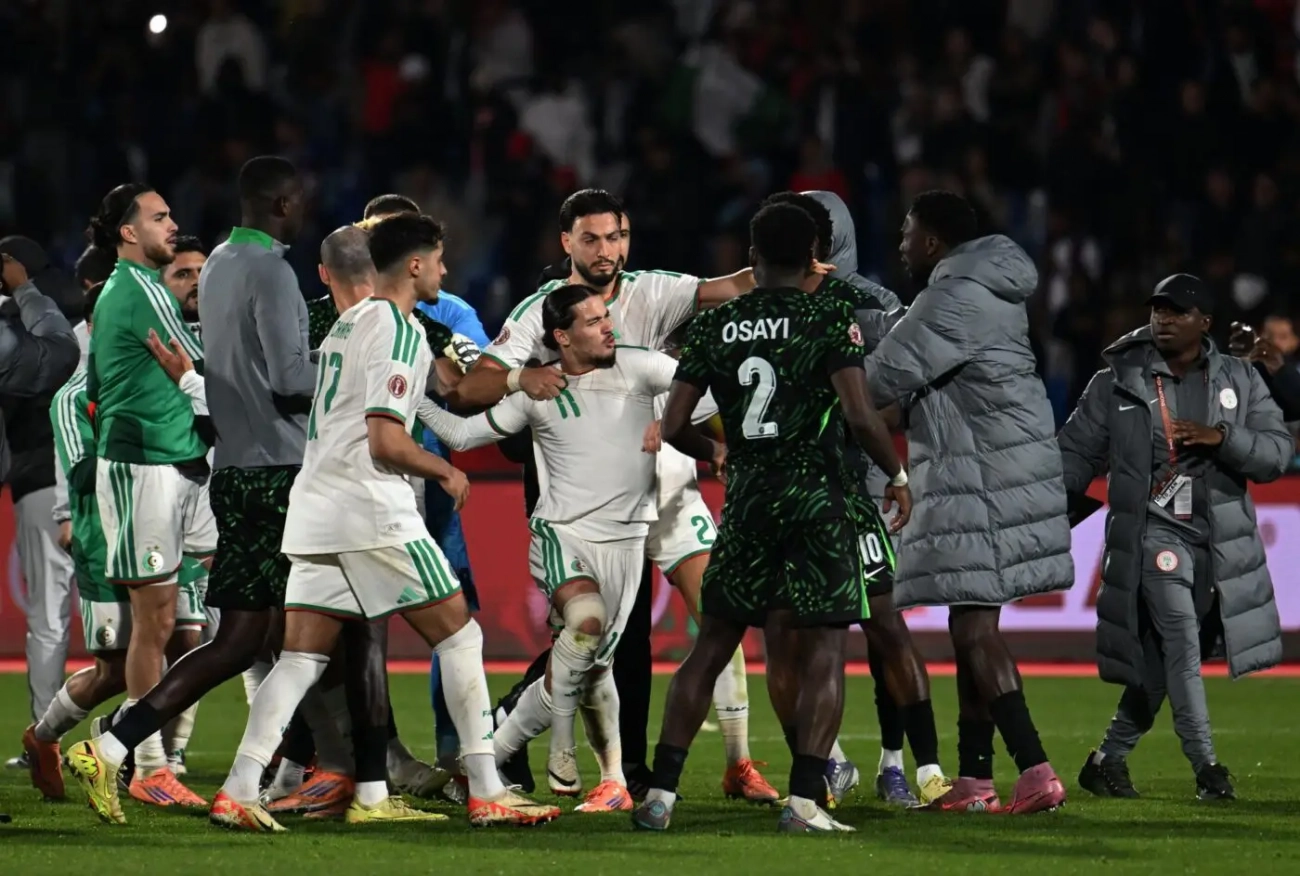
Algeria continued to voice strong objections to the refereeing of its AFCON 2025 quarter-final defeat against Nigeria, even as the Super Eagles secured a convincing 2–0 victory in Marrakech.
The Fennecs exited the tournament after a performance that fell well short of expectations.
Nigeria controlled the match from start to finish, dominating midfield battles, neutralising Algeria’s attacking options, and applying constant pressure across the pitch.
Algeria struggled to build momentum, failed to mount a meaningful response, and rarely threatened a Nigerian side that appeared sharper, more organised, and physically superior.
Despite that clear sporting gap, the match reignited debates over officiating at the Africa Cup of Nations in Morocco.
The quarter-final unfolded against an unusual backdrop after Somali referee Omar Abdulkadir Artan, initially appointed to oversee the game, was removed by the Confederation of African Football for wearing footwear deemed non-compliant.
Senegalese referee Issa Sy stepped in at short notice to lead the officiating team.
Following the final whistle, attention shifted away from the result itself and toward several refereeing decisions that angered Algerian officials.
According to multiple Algerian media outlets, including TSA Algeria, the Algerian Football Federation submitted formal complaints to both CAF and FIFA, criticising Issa Sy’s handling of the encounter.
The federation raised concerns over what it described as unbalanced decisions, a perceived lack of dialogue with Algerian players, and the officials’ attitude after the match.
Central to the protest stood a first-half incident involving a cross from Farès Chaïbi that appeared to strike a Nigerian defender’s arm inside the penalty area. Algerian players appealed for a spot-kick, but the referee waved play on.
A closer examination of the sequence, however, weakened the protest.
The ball made contact with the defender’s thigh before brushing his hand, a situation that, under current laws of the game, does not constitute a handball offence.
That interpretation left little room for debate from a regulatory standpoint.
Nonetheless, Algeria maintained its position, framing the complaint as part of a broader concern over refereeing consistency at the tournament.
Several AFCON matches in Morocco have sparked similar discussions, with teams questioning decisions even in games where results reflected the balance of play.
Within Algeria, reactions remained mixed. While frustration dominated initial responses, many observers acknowledged that refereeing alone could not explain the defeat.
Nigeria imposed its authority early, managed the tempo, and converted key moments, while Algeria lacked creativity, cohesion, and intensity.
As the tournament progressed, the episode highlighted a recurring tension at AFCON 2025: the fine line between legitimate criticism of officiating and the acceptance of sporting reality after elimination.