AFCON 2025: Algeria and Nigeria left fuming as Issa Sy’s decisions dominate quarter-final fallout
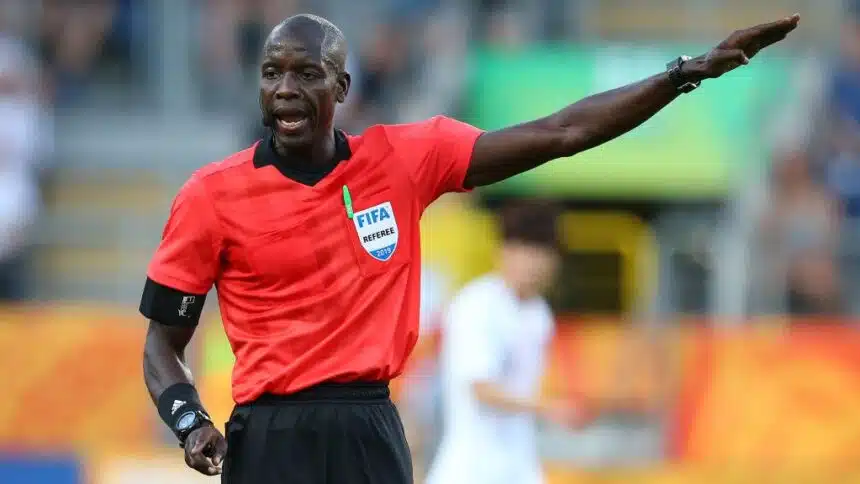
Issa Sy’s handling of the Africa Cup of Nations quarter-final between Algeria and Nigeria has become one of the most debated refereeing performances of the 2025 tournament, with both teams questioning decisions that shaped the outcome of Saturday’s contest.
The Senegalese official found himself at the centre of the storm after a match in which disciplinary sanctions came thick and fast.
By the final whistle, Sy had brandished eight yellow cards – more than double his usual average of 3.62 per game – a statistic that immediately drew scrutiny.
Of those cautions, five were shown to Algerian players, fuelling the perception within the Fennecs camp that they were being penalised at almost every critical moment.
For much of the evening, Algeria appeared to feel they were being forced into restraint rather than rhythm.
Almost every robust challenge or protest was followed by the referee’s notebook, creating an atmosphere of tension that visibly disrupted their flow.
The tone of the match, set early, left players hesitant and supporters bewildered as bookings accumulated.
But the most contentious moment came on the Nigerian side, in a situation that would later prove decisive beyond the final scoreline.
Wilfred Ndidi, the Super Eagles’ captain and midfield anchor, was already walking a disciplinary tightrope.
Having been booked earlier in the tournament, he knew that another caution would result in a one-match suspension, automatically ruling him out of the next round.
Late in the second half, Ndidi was involved in a challenge that left him in discomfort.
Moments later, as Nigeria prepared to make a substitution in the 68th minute, Sy produced a yellow card that would echo long after the match had ended.
The reason given was time-wasting – a decision that puzzled many observers, particularly as Nigeria were in control of the game with more than 20 minutes still to play.
That caution meant Ndidi would miss Nigeria’s forthcoming semi-final against Morocco, regardless of the extent of the injury that forced him from the pitch.
For Algerian fans and Nigerian supporters alike, the incident reinforced a sense that the evening had been overshadowed by officiating rather than football.
While Nigeria celebrated progression, the price of that success was the loss of one of their most influential players for the next stage of the tournament.
The fallout has not been limited to the two teams involved.
Across social media and football talk shows, debate has raged over whether Sy’s approach crossed the line from strict enforcement into something more troubling.
The sheer volume of yellow cards, the uneven distribution between the sides, and the timing of Ndidi’s booking have combined to create a narrative of suspicion that has proven difficult to contain.
What should have been remembered primarily as a high-stakes quarter-final has instead become synonymous with controversy, raising uncomfortable questions about refereeing standards at the business end of Africa’s flagship competition.
As the tournament moves into its decisive phase, the spotlight will remain firmly on the officials, with many now demanding greater consistency and clarity in key decisions.
For Algeria, the night ended in frustration.
For Nigeria, qualification came at a heavy cost. And for Issa Sy, the quarter-final may well be remembered less for the result than for the storm that followed his whistle.
Popular News



-

AFCON 2025: Fixtures, Results, Scores and Standings
Jan 18, 2026 -

Leadership and long-term vision key to rescuing Zamalek and inspiring Egyptian football – Hany Abou Rida
Nov 5, 2025 -

South African giants Orlando Pirates set to lose influential forward Monnapule Saleng
Mar 19, 2025 -

Full schedule for 2025 Africa Cup of Nations in Morocco confirmed
Feb 12, 2025

-

LIVE UPDATES: D.R Congo 1-0 Jamaica – 2026 FIFA World Cup Playoffs
Mar 31, 2026 -
Cameroon defeat China 2-0 in FIFA Series clash
Mar 31, 2026 -

Morocco vs. Ecuador: Match details, key talking points and where to watch
Mar 27, 2026 -

Africa’s 2026 World Cup Teams: Fixtures and Results for March friendly games
Apr 1, 2026