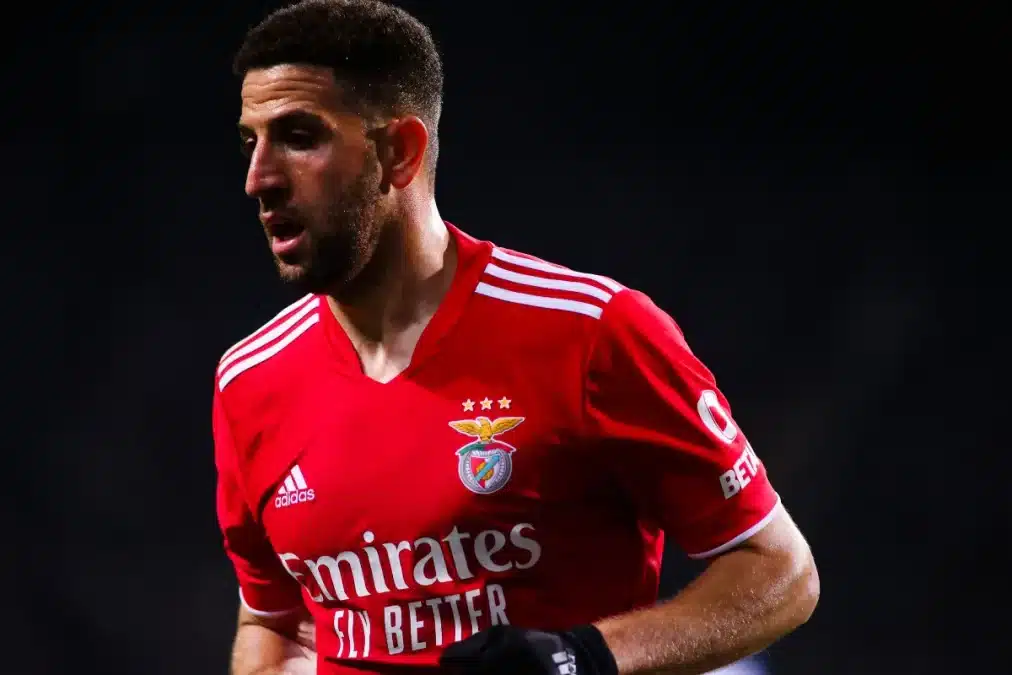
Adel Taarabt has retired from professional football at the age of 37, bringing to an end a 20-year career that featured Tottenham, AC Milan and Benfica but never fully matched the talent he displayed.
The Morocco international announced his decision on Tuesday after a playing career that began at Lens and later took him to clubs including Sharjah. He played for several prestigious institutions but rarely established himself at the highest level for a sustained period.
Taarabt will nevertheless be remembered for his extraordinary close control, unpredictable dribbling, nutmegs and moments of invention that few players could replicate. His retirement has revived the sense that football saw only flashes of a player capable of achieving much more.
At Tottenham, manager Martin Jol described him as “a magician” and believed no other player in England possessed comparable ability on the ball. Luka Modric, then a Spurs team-mate and future Ballon d’Or winner, reportedly nicknamed Taarabt “Zizou”.
Neil Warnock later summed up the Moroccan in three words: “talented, exciting and frustrating”.
It was at Queens Park Rangers where Taarabt most convincingly fulfilled the first two parts of that description. He was named the Championship’s player of the year in 2011 after inspiring QPR to promotion to the Premier League.
The team was built around his creativity and he was given the freedom to dictate matches through his imagination and individual skill. Yet the expected breakthrough at the top level never fully materialised.
Taarabt later admitted that he had moved to Tottenham too young and that the London environment offered him too many distractions. Questions over his defensive contribution, his weight, his late-night lifestyle, his mood swings and his inconsistency gradually became as prominent as the spectacular moments he produced.
There were brief revivals at Fulham and, particularly, AC Milan. By the time he joined Benfica, however, he had arrived carrying eight kilograms of excess weight. It took almost four years before he finally made his first-team breakthrough at the Portuguese club.
International career leaves similar frustration
Taarabt’s record with Morocco also underlines the feeling that his potential was never fully realised. He won 30 caps and scored four goals, a modest return for a player of his natural ability.
His relationship with the Atlas Lions was seriously damaged in 2011 when he left a training camp after discovering he would not start. The connection had to be repaired several months later, and he returned to the national team after writing a letter of apology.
The wider circumstances surrounding Moroccan football did not always work in his favour. The peak of Taarabt’s career came during a period of instability for the national side, well before the organised and ambitious generation that emerged in the late 2010s.
Even after his final appearances for Morocco, Taarabt remained closely associated with the national team and continued to comment regularly on the progress of the Atlas Lions.
At Benfica, he eventually found a degree of late redemption. Bruno Lage reshaped him into a more complete midfielder, capable of running and defending, suggesting that the gifted individualist had finally accepted the demands of modern football.
“It’s not the fault of others, it’s my fault,” Taarabt once said when reflecting on his career.
He will not rank alongside Morocco’s greatest players in terms of achievement. But among the country’s most naturally gifted footballers, Taarabt retains a special place. That contrast between extraordinary ability and limited fulfilment is what makes his career both fascinating and frustrating.
Naim Beneddra has followed football since childhood and has worked in the sport for more than 20 years. He writes and analyses matches, while continuing to tell the stories of the people who shape the game. A passionate supporter of the Fennecs, he also follows Algerian football closely.
-
 CAF Champions League: Full schedule for Saturday, 17 October Oct 17, 2026
 -
Elyaz Zidane refuses to rush decision on Algeria international future Oct 17, 2026
-
Kanalelo: Marumo Gallants move offers coaching environment suited to his methods Oct 17, 2026
-
Bafana Bafana to host Benni McCarthy’s Kenya in Johannesburg AFCON qualifier Oct 17, 2026



-
AFCON 2025: Fixtures, Results, Scores and Standings Jan 18, 2026
-
Match hero Taiwo Awoniyi reflects on team effort after Chelsea triumph May 5, 2026
-
Leadership and long-term vision key to rescuing Zamalek and inspiring Egyptian football – Hany Abou Rida Nov 5, 2025
-
South African giants Orlando Pirates set to lose influential forward Monnapule Saleng Mar 19, 2025




-
Real Betis v Barcelona: kick-off time, TV details and match preview Oct 16, 2026
-
Roma v Real Madrid: home side tipped to score first in Champions League clash Oct 12, 2026
-
Atletico Madrid v Manchester United: probable line-ups for Champions League clash Oct 12, 2026
-
Celta Vigo v Juventus: Probable line-ups for Europa League encounter Oct 14, 2026