Bayern Munich’s identity under threat as Jamal Musiala pay dispute exposes growing rift with hierarchy
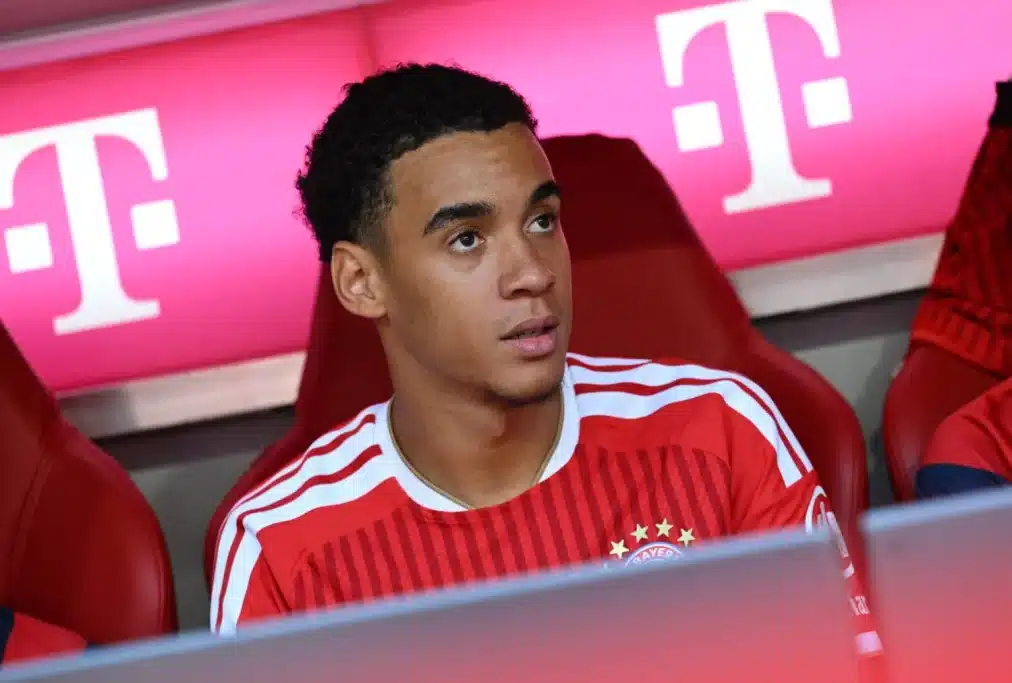
Bayern Munich’s carefully guarded identity is facing a major test as the club’s handling of Jamal Musiala’s health struggles threatens to deepen divisions between the hierarchy and the dressing room.
The German giants travel to Hamburg on Saturday amid growing uncertainty over their direction, with the controversy surrounding Musiala overshadowing their immediate sporting challenges.
Bayern have endured a difficult period, with an injury crisis depleting their attacking options, including Ballon d’Or winner Harry Kane. They also sit two points behind Borussia Dortmund in the Bundesliga title race after losing their position as the last unbeaten team across Europe’s top five leagues.
However, it is the club’s treatment of Musiala that has sparked the biggest concern, exposing an apparent disconnect between Bayern’s traditional values and the decisions of their leadership.
The 23-year-old midfielder is recovering from a neurological condition that causes absence seizures, but comments from senior club figures suggesting he should accept a pay cut have triggered widespread criticism.
Vice-captain Joshua Kimmich has become the most prominent voice within the current squad to challenge the club’s approach, describing the situation as unacceptable and inconsistent with Bayern’s principles.
Speaking after Wednesday’s 2-1 defeat to Lille, Kimmich questioned how the matter had been communicated publicly.
“It’s completely unacceptable and is not Bayern-like,” he said, insisting that the club had moved away from its traditional sense of togetherness.
‘Mia san mia’ identity takes a hit
Bayern’s reputation has long been built around more than trophies and financial strength.
Despite their status among Europe’s wealthiest clubs, the Bavarian outfit have consistently highlighted their regional roots, member ownership and close relationship with supporters.
Their famous ‘Mia san mia’ motto, meaning ‘we are who we are’, represents that identity and the belief that everyone at the club stands together through difficult periods.
Aleksandar Pavlovic, who progressed through Bayern’s youth system, previously explained what the philosophy meant to him.
“For me, ‘Mia san mia’ means being a family, standing together in good times and bad,” he said in 2025.
“That’s what we live by here from a young age, that we always stick together.”
The controversy involving Musiala has therefore raised questions about whether the club’s leadership is still operating according to those principles.
The midfielder is a popular figure among supporters and within the dressing room, making the public discussion about his financial agreement particularly sensitive.
Rummenigge’s comments ignite controversy
The dispute intensified following Musiala’s return to action after two months out with an unrelated muscle injury.
The midfielder received a warm reception from the 75,000 supporters at the Allianz Arena, but the celebrations were followed by comments from club powerbroker Karl-Heinz Rummenigge.
Rummenigge questioned whether Musiala would regain his previous level following his health problems and suggested his current contract could become difficult to justify financially.
“If he doesn’t return to being the Jamal of old, then we need to have a conversation… because, frankly, the current financial figures would no longer be justifiable,” he said.
The remarks sparked an immediate backlash, particularly because Musiala had signed a contract extension in February 2025, only to begin treatment for symptoms of his neurological condition two months later.
Bayern’s announcement of record turnover approaching one billion euros at their annual general meeting further intensified the criticism.
International players’ union FIFPRO also weighed in, arguing that the club’s actions were inconsistent with the values it publicly promotes.
Former Bayern chief executive and goalkeeper Oliver Kahn was equally critical of the decision to address Musiala’s contract situation through the media.
“To put the player under pressure now and appeal to his decency through the public sphere, urging him to forgo part of his salary, is simply absurd,” Kahn said.
Kimmich speaks for the dressing room
While criticism has come from several quarters, Kimmich’s intervention carries particular significance because of his position within the squad.
The midfielder, who wore the captain’s armband in the absence of injured Manuel Neuer, became the first current Bayern player to publicly challenge the hierarchy’s handling of the situation.
He acknowledged that the club could have legitimate financial concerns about Musiala’s recovery but insisted that the manner in which those concerns were communicated was wrong.
“It is understandable that the club might be concerned because of the illness. What I don’t understand is the way this is being communicated publicly,” Kimmich said.
“It must not happen that a player is made to bear the brunt of it.”
His comments offer a rare glimpse into the growing tension between Bayern’s leadership and its playing group.
With the Bundesliga title race still finely poised and their Champions League ambitions requiring renewed focus, Bayern must now contend with a controversy that extends beyond results.
Their response could prove significant in determining whether the club can restore unity and protect the identity that has defined it for generations.
-
 Bayern Munich’s identity under threat as Jamal Musiala pay dispute exposes growing rift with hierarchy Nov 27, 2026
-
Cameroon star Choupo-Moting leaves New York Red Bulls amid Bayern Munich links Nov 27, 2026
-
Franco-Congolese defender Saël Kumbedi on the radar of Premier League clubs Nov 27, 2026
-
Morocco government respects CAS decision to award Senegal 2025 AFCON title Nov 27, 2026


-
AFCON 2025: Fixtures, Results, Scores and Standings Jan 18, 2026
-
Match hero Taiwo Awoniyi reflects on team effort after Chelsea triumph May 5, 2026
-
Leadership and long-term vision key to rescuing Zamalek and inspiring Egyptian football – Hany Abou Rida Nov 5, 2025
-
South African giants Orlando Pirates set to lose influential forward Monnapule Saleng Mar 19, 2025




-
Nice face formidable PSG as leaders chase eighth straight Ligue 1 win Nov 20, 2026
-
Liverpool v Manchester United: kick-off time, TV details and match preview Nov 20, 2026
-
Barcelona v Villarreal: Probable line-ups for Sunday’s La Liga clash Nov 21, 2026
-
African football leaders back Gianni Infantino with standing ovation for FIFA’s upcoming election Nov 21, 2026