AFCON final row: Morocco’s legal challenge must not divide African football

The controversy surrounding the 2025 Africa Cup of Nations (AFCON) final between Morocco and Senegal has entered a new legal phase following the Court of Arbitration for Sport (CAS) decision to overturn the Confederation of African Football (CAF) Appeal Board’s ruling and restore Senegal as champions.
The Royal Moroccan Football Federation (FRMF) has announced its intention to challenge the award before the Swiss Federal Supreme Court, extending a dispute that has moved beyond the football pitch and raised questions about the interpretation of regulations, the authority of referees and the integrity of sports arbitration.
Yet, beyond the legal arguments and the disappointment surrounding the outcome, a more fundamental question deserves consideration: how long should African football remain preoccupied with a final whose result has already passed through several layers of institutional adjudication?
The legal controversy: Different interpretations of the same regulations
At the centre of the dispute is the conduct of the Senegalese team during the final played in Rabat on 18 January 2026.
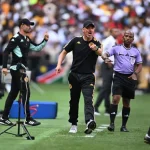
Following the referee’s decision to award Morocco a penalty, Senegal’s players temporarily left the field before returning to complete the match, which Senegal eventually won 1-0 after extra time.
The FRMF subsequently challenged the result before CAF, arguing that Senegal’s withdrawal breached Articles 82 and 84 of the AFCON Regulations, which address withdrawal, refusal to play and the sporting consequences of such conduct.
On 17 March 2026, CAF’s Appeal Board accepted the Moroccan federation’s argument, declared Senegal to have forfeited the final and awarded Morocco a 3-0 victory.
Senegal appealed to CAS. On 24 November 2026, the Lausanne-based tribunal unanimously overturned the Appeal Board’s decision and reinstated the original ruling of CAF’s Disciplinary Board, confirming Senegal as champions.
The central disagreement concerned the interpretation of the forfeiture provisions and the legal significance of the referee’s decision to resume the match.
CAS considered that the temporary departure from the field, followed by the players’ return and the referee’s authorisation to continue, did not justify the retrospective application of the forfeiture provisions. The match had resumed, both teams had completed it, and a sporting result had been established.
This reasoning reflects an established principle in international sports jurisprudence: the authority of the referee and decisions taken during a match should generally be respected by competent judicial and arbitral bodies. The so-called field of play doctrine protects sporting decisions from retrospective interference, except in exceptional circumstances involving arbitrariness, bad faith, corruption or a demonstrable error of law.
CAS also distinguished the sporting validity of the match from the disciplinary responsibility arising from the conduct of Senegal’s delegation.
The fact that the match remained valid did not mean that leaving the pitch was acceptable behaviour or that disciplinary sanctions were unwarranted.
This distinction is important. Preserving a sporting result does not amount to endorsing every action that preceded it.
The Swiss Federal Supreme Court: A limited but legitimate recourse
The FRMF’s decision to approach the Swiss Federal Supreme Court must be understood within the specific legal framework governing international arbitration.
CAS is an independent arbitral institution headquartered in Lausanne. Its awards are subject to the supervisory jurisdiction of the Swiss Federal Supreme Court under Article 190 of the Swiss Federal Act on Private International Law.
The law establishes the finality of international arbitral awards while allowing challenges on narrowly defined grounds. These include the improper constitution of the tribunal, lack of jurisdiction, procedural excesses, violations of the right to be heard or equal treatment, and incompatibility with public policy.
The Swiss Federal Supreme Court is not a further football appeals body. It cannot simply reconsider the match, substitute its interpretation of CAF regulations for that of CAS, or award the African title to Morocco.
Its task is to determine whether the arbitral award was delivered in accordance with the fundamental requirements of international arbitration law.
This distinction defines both the legitimacy and the limitations of Morocco’s recourse.
One particularly sensitive aspect concerns allegations raised by the FRMF regarding possible contact between the president of the Senegalese Football Federation and one of the CAS arbitrators, Professor Ulrich Haas, shortly before the award was delivered.
The allegations have been denied, and no improper communication has been judicially established.
Nevertheless, the issue touches upon a fundamental principle: the independence and impartiality of arbitrators are indispensable conditions of legitimate international arbitration.
If the FRMF can produce credible evidence of undisclosed and improper communications affecting the proceedings, the matter could potentially engage Swiss legal provisions concerning the proper constitution of the tribunal or the parties’ procedural rights.
But an allegation, however serious, cannot substitute for evidence. The legal consequences must be assessed objectively by the competent court.
The Swiss proceedings should therefore be allowed to run their course, without prejudging their outcome or confusing judicial scrutiny with another attempt to contest the sporting result.
The institutional responsibility of African football
The controversy has also exposed weaknesses in the regulatory and institutional framework governing African football.
The relationship between the Laws of the Game, the authority of referees and CAF’s competition regulations must be sufficiently clear to prevent situations in which identical conduct can generate radically different interpretations at different institutional levels.
The question is not whether disciplinary rules should be applied rigorously. They should. Nor is it whether referees should enjoy the authority necessary to manage a match. They must.
The real challenge is to reconcile these two requirements.
Competition regulations must clearly establish when temporary abandonment becomes a legally consequential withdrawal, what conditions permit the resumption of a match, and whether subsequent resumption can affect the application of forfeiture provisions.
Such clarification would strengthen legal certainty, protect the authority of match officials and reduce the possibility of similar controversies in future competitions.
CAF has an institutional responsibility to draw the appropriate lessons. Its credibility cannot depend exclusively on the outcome of individual disputes; it must also rest on the consistency, clarity and predictability of its regulations.
Preserving the wider African football interest
For Morocco and Senegal, the issue should now be approached with a broader perspective.
The two countries maintain important historical, political, economic and sporting relations. Their football achievements should not become a source of lasting institutional antagonism or popular division.
Morocco’s organisation of the competition, its investment in sporting infrastructure and its ambition to contribute to the development of African football deserve recognition independently of the legal outcome of the final.
Equally, Senegal’s sporting achievement and its reinstated continental title must be acknowledged within the framework of the final decision delivered by CAS, unless that award is set aside by the competent Swiss court.
There is no contradiction between defending one’s legal position and recognising the legitimacy of an institutional process. Nor should a legal disagreement be allowed to overshadow the broader interests shared by African football.
The FRMF is entitled to exhaust the legal remedy available under Swiss arbitration law. But that remedy must be understood for what it is: a limited judicial review of the arbitral award, not an invitation to reopen the entire sporting controversy.
Closing the chapter and strengthening the institution
The most constructive outcome of this episode would be to bring it to a definitive conclusion.
If the Swiss Federal Supreme Court rejects the FRMF’s challenge, the matter should be considered closed, and Senegal’s title should no longer be contested. If the court sets aside the CAS award on a recognised legal ground, the consequences should be determined through the appropriate arbitral procedures, without turning the process into an indefinite succession of appeals.
In either case, the principle should remain the same: the authority of institutions must be respected, legal remedies must be exhausted within their established limits, and sporting controversies must ultimately reach a final point.
African football has more consequential challenges ahead: developing competitive leagues, investing in youth academies, improving governance, strengthening financial sustainability and consolidating its position within the international sporting economy.
These priorities deserve considerably more attention than a dispute whose institutional resolution is now in the hands of the competent legal authorities.
The real measure of sporting maturity is not the ability to win every dispute, but the ability to accept institutional decisions, learn from procedural shortcomings and move forward.
Morocco has the right to seek judicial scrutiny. Senegal has the right to have its sporting achievement recognised. CAF has the responsibility to learn from the regulatory shortcomings exposed by this episode. And African football has every reason to move beyond it.
The Swiss proceedings should be the final legal chapter, not the beginning of another controversy.
Once the competent judicial process has run its course, this episode should be closed once and for all. African football has a future to build, and that future deserves to be larger than the dispute over a trophy.
-
 AFCON final row: Morocco’s legal challenge must not divide African football Nov 25, 2026
-
Egypt, Uganda and Mozambique secure places in U17 World Cup knockout stage Nov 25, 2026
-
Amrabat condemns Senegal-Morocco ruling as ‘simply unacceptable’ Nov 25, 2026
-
Kaizer Chiefs face Chippa United test as head-to-head record raises alarm ahead of tricky Premiership trip Nov 25, 2026



-
AFCON 2025: Fixtures, Results, Scores and Standings Jan 18, 2026
-
Match hero Taiwo Awoniyi reflects on team effort after Chelsea triumph May 5, 2026
-
Leadership and long-term vision key to rescuing Zamalek and inspiring Egyptian football – Hany Abou Rida Nov 5, 2025
-
South African giants Orlando Pirates set to lose influential forward Monnapule Saleng Mar 19, 2025




-
U17 World Cup 2026: Full schedule for Morocco and where to watch Nov 19, 2026
-
Nice v Paris Saint-Germain: injury-hit champions face confident hosts in Ligue 1 Nov 19, 2026
-
Nice face formidable PSG as leaders chase eighth straight Ligue 1 win Nov 20, 2026
-
Chelsea v Leeds: Blues backed to edge tight Premier League contest at Stamford Bridge Nov 20, 2026