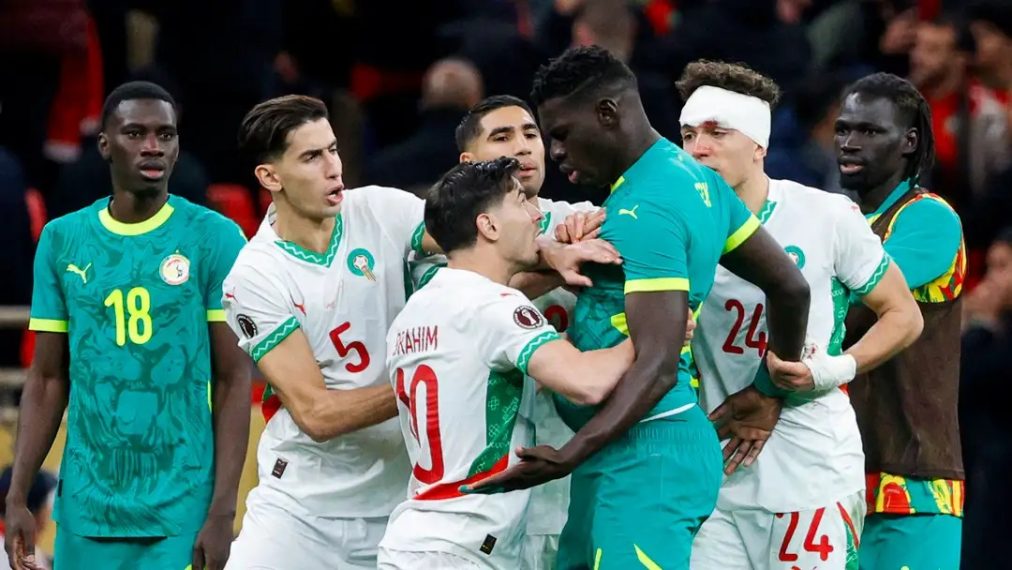
Swiss sports lawyer Lucien Valloni says Morocco will face a difficult legal battle if it challenges the Court of Arbitration for Sport (CAS) decision that restored Senegal’s 1-0 victory in the 2025 Africa Cup of Nations final.
CAS announced on Tuesday that it had upheld an appeal by the Senegalese Football Federation against a decision by the Confederation of African Football (CAF) Appeals Committee in March, which had declared Morocco the winner of the final.
The ruling reinstated an earlier decision by the CAF Disciplinary Committee, confirming Senegal’s 1-0 win in the match played in Rabat in January.
The Moroccan Football Federation subsequently rejected the CAS judgment and announced that it intended to take the case to the Swiss Federal Supreme Court.
‘A firmly established principle’
Valloni, a Swiss lawyer specialising in sports law, said CAS had relied on the principle of “decisions made on the field”, which limits the scope for courts to review refereeing decisions.
“The Court of Arbitration for Sport decided to apply the principle of ‘decisions made on the field’,” Valloni told Kooora on Wednesday.
“It is a firmly established principle intended to prevent every decision taken by a match official from being subjected to judicial review by the courts. The ruling is therefore consistent with clear legal precedents in similar cases.”
Morocco has the right to appeal to the Swiss Federal Supreme Court and could then take the matter to the European Court of Human Rights, Valloni said.
However, he warned that the next stage would be challenging because the grounds on which an appeal can be accepted by the Swiss Federal Supreme Court are “extremely limited”.
According to Valloni, the only unresolved issue is whether the European Court of Human Rights would be willing to examine the case in greater depth than the Swiss Federal Supreme Court, based on the right to a fair trial.
“The difficulty with the principle of ‘decisions made on the field’ is that it does not allow refereeing decisions to undergo genuine judicial review,” Valloni said.
“But that is the essence and the primary purpose of the principle: to prevent every refereeing decision from becoming a court case, which could leave the identity of the winner in doubt even after the match has ended.”
Valloni’s legal background
Valloni specialises in commercial disputes and international arbitration and is regarded as one of Switzerland’s leading sports lawyers. He has extensive experience in cases before CAS and the judicial bodies of international sports federations.
He also has particular expertise in challenging arbitration awards before the Swiss Federal Supreme Court and the European Court of Human Rights, having previously secured successful outcomes in prominent sports cases before both courts.
Valloni established his own law firm in 2021 after spending 24 years as a partner at FRORIEP. He has been a lecturer at Sorbonne University Abu Dhabi since 2015 and is vice-president and a board member of the International Association of Football Players (AIF), which represents more than 30,000 professional players worldwide.
-
 PSG target Morocco and Real Betis winger Abdessamad Ezzalzouli Nov 25, 2026
-
Orlando Pirates receive encouraging update on Thapelo Mbokodi injury Nov 25, 2026
-
Mamelodi Sundowns-bound Jhegson Mendez named Ecuador’s 2026 Player of the Season Nov 25, 2026
-
Jordan Torunarigha edges closer to Hamburger SV return after positive injury recovery Nov 25, 2026




-
AFCON 2025: Fixtures, Results, Scores and Standings Jan 18, 2026
-
Match hero Taiwo Awoniyi reflects on team effort after Chelsea triumph May 5, 2026
-
Leadership and long-term vision key to rescuing Zamalek and inspiring Egyptian football – Hany Abou Rida Nov 5, 2025
-
South African giants Orlando Pirates set to lose influential forward Monnapule Saleng Mar 19, 2025




-
U17 World Cup 2026: Full schedule for Morocco and where to watch Nov 19, 2026
-
Nice v Paris Saint-Germain: injury-hit champions face confident hosts in Ligue 1 Nov 19, 2026
-
Nice face formidable PSG as leaders chase eighth straight Ligue 1 win Nov 20, 2026
-
Chelsea v Leeds: Blues backed to edge tight Premier League contest at Stamford Bridge Nov 20, 2026