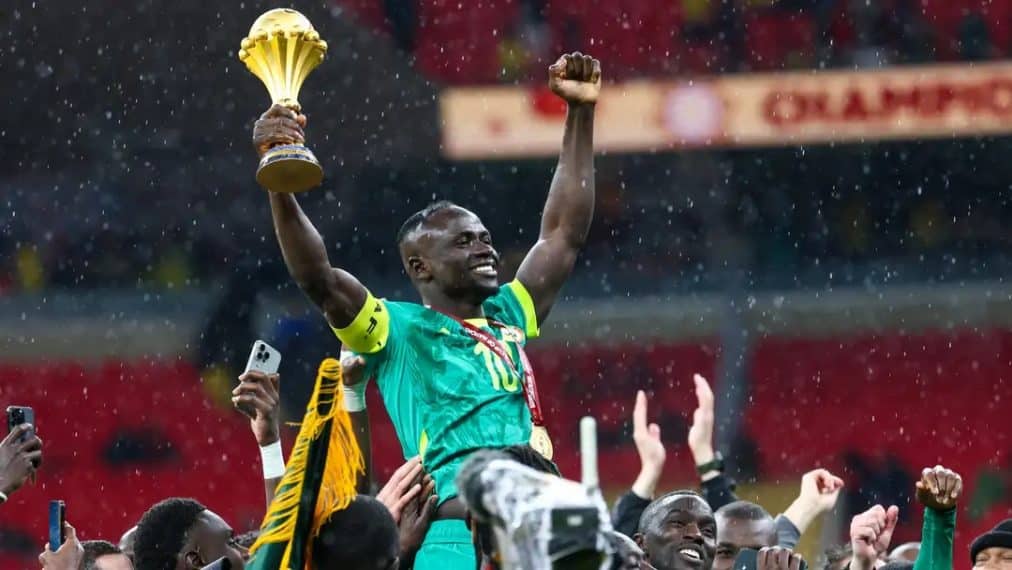
Swiss lawyer Serge Vittoz has outlined the legal arguments that helped Senegal retain the Africa Cup of Nations title after its dispute with Morocco was decided by the Court of Arbitration for Sport (CAS).
Vittoz, who represented the Senegalese Football Federation, said the defence was built primarily around Article 5 of the Laws of the Game. Speaking to Senegalese website Senego, he explained why he had been confident of Senegal’s position before the ruling and discussed Morocco’s arguments, as well as the possibility of an appeal to the Swiss Federal Court.
Article 5 gives the referee full authority over the match and the decisions made during proceedings on the pitch. Vittoz said the central issue was that the referee had decided to restart the final and bring it to an end.
In the Senegalese legal team’s view, those decisions fell within the referee’s authority to manage the game. They could not simply be overturned because one of the teams objected to events during the match.
That interpretation was used to challenge Morocco’s reliance on the regulations governing the Africa Cup of Nations, which it argued entitled it to be awarded the result.
Vittoz said Senegal’s confidence increased after the hearing on 8 October. The ruling, he added, brought considerable relief to the Senegalese Football Federation following a complicated legal battle.
Morocco’s interpretation of Articles 82 and 84
Morocco’s case was based on a literal reading of Articles 82 and 84 of the Africa Cup of Nations regulations. The provisions cover matches that do not begin or are not completed, including circumstances in which one team permanently leaves the field.
Vittoz argued that those articles could not be applied in the way Morocco had suggested because the referee had ordered the match to resume and then allowed it to finish.
The dispute therefore centred on how the incident should be classified. The question was whether the final came within the situations covered by Articles 82 and 84, or whether the referee’s decisions remained protected by the authority granted under Article 5.
Vittoz also distinguished the case from the 2016 match between South Africa and Senegal, which was replayed after Ghanaian referee Joseph Lamptey was found to have manipulated the result and was subsequently banned for life.
That case involved proven refereeing corruption, he said, providing exceptional grounds for changing the outcome. No comparable evidence existed in the Morocco-Senegal dispute.
He also separated the match result from the disciplinary sanctions imposed by the Confederation of African Football. Pape Thiaw was suspended for five matches, while Ismaila Sarr and Iliman Ndiaye each received one-match bans. The Senegalese Football Federation was also fined.
“But this has nothing to do with determining whether the match reached its conclusion or not,” Vittoz said.
Brahim Diaz penalty and possible appeal
Vittoz acknowledged that Senegal could have lost the final on the pitch if Brahim Diaz had scored the penalty awarded to Morocco. However, he stressed that the sporting possibilities during the game were separate from the legal question examined by CAS.
He said a strict interpretation of Articles 82 and 84 could have changed the outcome of the case before the tribunal.
Morocco’s only route to challenge the CAS decision is the Swiss Federal Court, according to Vittoz. He described the chances of success as very limited because the court does not reassess the sporting facts or rehear the case. Its review is confined to specific legal and procedural grounds concerning the validity of the ruling.
Simply disagreeing with CAS’s interpretation of the regulations would therefore not be enough to overturn the decision.
-
 PSG target Morocco and Real Betis winger Abdessamad Ezzalzouli Nov 25, 2026
-
Orlando Pirates receive encouraging update on Thapelo Mbokodi injury Nov 25, 2026
-
Mamelodi Sundowns-bound Jhegson Mendez named Ecuador’s 2026 Player of the Season Nov 25, 2026
-
Jordan Torunarigha edges closer to Hamburger SV return after positive injury recovery Nov 25, 2026




-
AFCON 2025: Fixtures, Results, Scores and Standings Jan 18, 2026
-
Match hero Taiwo Awoniyi reflects on team effort after Chelsea triumph May 5, 2026
-
Leadership and long-term vision key to rescuing Zamalek and inspiring Egyptian football – Hany Abou Rida Nov 5, 2025
-
South African giants Orlando Pirates set to lose influential forward Monnapule Saleng Mar 19, 2025




-
U17 World Cup 2026: Full schedule for Morocco and where to watch Nov 19, 2026
-
Nice v Paris Saint-Germain: injury-hit champions face confident hosts in Ligue 1 Nov 19, 2026
-
Nice face formidable PSG as leaders chase eighth straight Ligue 1 win Nov 20, 2026
-
Chelsea v Leeds: Blues backed to edge tight Premier League contest at Stamford Bridge Nov 20, 2026