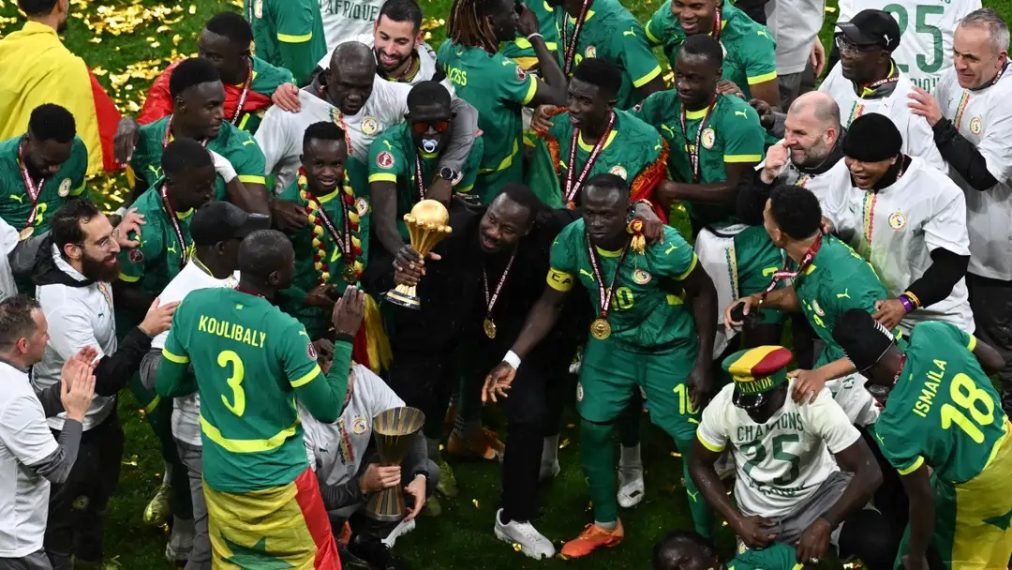
The Court of Arbitration for Sport (CAS) has overturned the decision to strip Senegal of the 2025 Africa Cup of Nations title and award the trophy to Morocco, prompting French journalist Benoit Perrochais to launch a strong criticism of the institutions responsible for running African football.
Speaking on France 24, Perrochais described the CAS judgment as a significant setback for the Confederation of African Football (CAF). The Lausanne-based tribunal did not uphold the decision made by CAF’s Appeal Committee after the final between Senegal and Morocco.
The dispute centred on the authority of the referee during the match. CAS found that the referee had exclusive responsibility for assessing how the game was progressing and deciding whether it had ended permanently or could be restarted.
The tribunal noted that Congolese referee Jean-Jacques Ndala had not declared the match over after Senegal’s players left the pitch in protest at the penalty awarded to Morocco. Instead, he allowed the game to continue. As a result, Senegal could not be considered to have forfeited the final in the way interpreted by CAF’s Appeal Committee.
“The African institutions are insulting African football, which has shown continuous progress over the past 10 years,” Perrochais said.
He added that while the case had produced a winner and a loser, the biggest loser was African football’s governing structure, particularly CAF, because of the way the dispute had concluded before CAS.
Perrochais also questioned how much confidence could now be placed in CAF after the organisation lost the case. In his view, a ruling that cancels a previous Appeal Committee decision raises serious concerns about the credibility of CAF’s decisions and its management of continental competitions.
His criticism extended beyond the Africa Cup of Nations final. He referred to CAF’s earlier announcement that the tournament would be staged every four years rather than every two, before the organisation later abandoned that plan. Perrochais said the reversal was another example of decisions that had raised questions about the way African football was being administered.
The Royal Moroccan Football Federation said it would challenge the CAS decision through every available legal avenue. In an official statement, it expressed surprise and condemnation at the judgment.
The Moroccan federation said the ruling had failed to take account of its submission that German arbitrator Ulrich Haas had been in contact with the president of the Senegalese Football Federation 48 hours before the decision was issued.
It also argued that the judgment had not properly considered FIFA and IFAB regulations concerning players leaving the pitch without the referee’s permission, and the responsibilities arising from such an incident.
-
 Achraf Hakimi focused on football despite upcoming trial over rape allegation Nov 25, 2026
-
Ncikazi frustrated by late goals as Orlando Pirates defeat Golden Arrows Nov 25, 2026
-
Orlando Pirates boss Abdeslam Ouaddou sets sights on CAF Champions League triumph Nov 25, 2026
-
Ayyoub Bouaddi and Rayan Cherki rescue Manchester City in thrilling draw against Napoli Nov 25, 2026


-
AFCON 2025: Fixtures, Results, Scores and Standings Jan 18, 2026
-
Match hero Taiwo Awoniyi reflects on team effort after Chelsea triumph May 5, 2026
-
Leadership and long-term vision key to rescuing Zamalek and inspiring Egyptian football – Hany Abou Rida Nov 5, 2025
-
South African giants Orlando Pirates set to lose influential forward Monnapule Saleng Mar 19, 2025




-
U17 World Cup 2026: Full schedule for Morocco and where to watch Nov 19, 2026
-
Nice v Paris Saint-Germain: injury-hit champions face confident hosts in Ligue 1 Nov 19, 2026
-
Nice face formidable PSG as leaders chase eighth straight Ligue 1 win Nov 20, 2026
-
Chelsea v Leeds: Blues backed to edge tight Premier League contest at Stamford Bridge Nov 20, 2026