Why CAS ruled for Senegal: The legal reasons behind the AFCON 2025 verdict
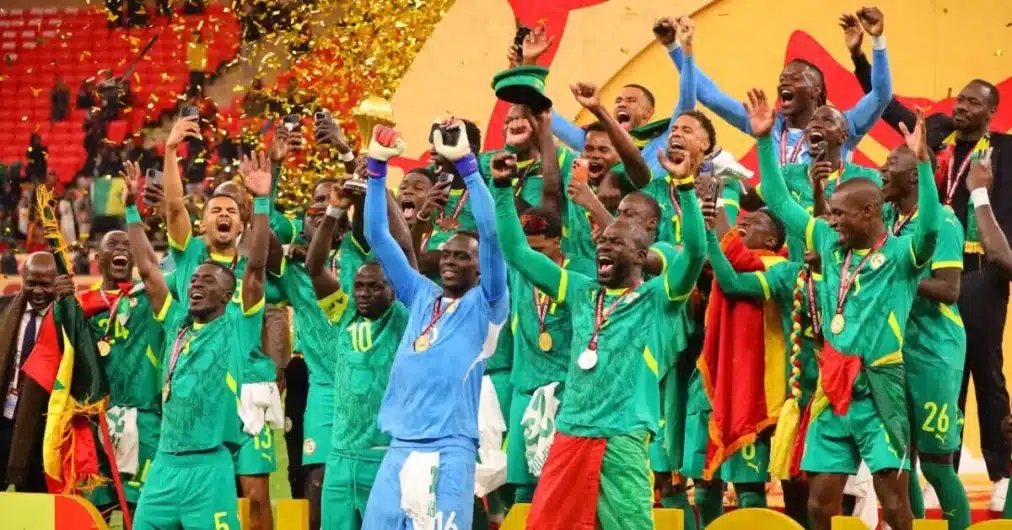
The Court of Arbitration for Sport (CAS) has restored Senegal as 2025 Africa Cup of Nations champions after unanimously overturning the Confederation of African Football’s (CAF) decision to strip the Teranga Lions of their title and award Morocco a 3-0 victory.
The ruling, delivered on Tuesday, 24 November 2026, brings an end to a controversial dispute that began during the final in Rabat on 18 January.
However, the decision was not simply a judgement on which team deserved to win the match. It centred on the interpretation of football regulations, the authority of the referee and whether Senegal’s temporary departure from the pitch was sufficient legal grounds to declare the team had forfeited the final.
CAS ultimately concluded that CAF’s decision to overturn the result was not justified under the applicable regulations.
The decisive issue was the distinction between a disciplinary offence committed during a match and the legal conditions required to overturn the result of a match that had subsequently been completed.
1. The referee’s authority was central to the decision
One of the most important arguments accepted by CAS concerned the authority of match referee Jean-Jacques Ndala.
During the final, Senegal’s players left the pitch following the award of a late penalty to Morocco. The decision came shortly after a Senegal goal had been disallowed.
Head coach Pape Thiaw instructed his players to leave the field in protest, resulting in an interruption of approximately 14–17 minutes.
However, Senegal eventually returned following the intervention of captain Sadio Mané, and the referee allowed the match to resume.
Morocco’s Brahim Diaz subsequently missed the penalty, before Pape Gueye scored the winning goal in extra time to give Senegal a 1-0 victory.
CAS considered the referee’s decision to restart the match particularly important.
Under the Laws of the Game, the referee has authority over the conduct of a match and makes decisions on matters connected with play.
The court concluded that Ndala’s decision to allow the contest to continue fell within his authority and was protected by football’s established field of play principle.
This principle generally prevents sporting authorities from overturning decisions made by referees on the field unless there are exceptional grounds, such as an error of law.
CAS found no such error in the referee’s decision to resume the final.
Reuters+2
2. Why Articles 82 and 84 of CAF regulations did not apply
The biggest legal disagreement concerned Articles 82 and 84 of the AFCON competition regulations.
These were the provisions Morocco relied on when challenging Senegal’s conduct during the final.
Article 82 addresses situations where a team withdraws from a competition, fails to report for a match, refuses to play or leaves the field before the regular end of a match without the referee’s authorisation.
Such conduct can result in the team being considered the loser and eliminated from the competition.
Article 84 provides for the consequences of forfeiture, including the recording of a 3-0 defeat, subject to the applicable scoreline provision.
Morocco argued that Senegal’s players had left the pitch without the referee’s permission and therefore violated Article 82.
The Moroccan federation maintained that the subsequent return of the Senegalese players could not erase the offence already committed.
CAF’s Appeal Board accepted that interpretation on 17 March 2026, overturned the earlier disciplinary decision and awarded Morocco a 3-0 victory.
CAS, however, rejected the application of those provisions to the circumstances of the final.
The decisive distinction was that the referee had not permanently abandoned the match. Instead, he allowed both teams to return and continue playing.
The game was completed, and a winner was determined on the pitch.
CAS therefore found that the regulations concerning a match permanently abandoned by a team could not be used to retrospectively replace the result of the completed contest.
This was a significant rejection of the legal foundation upon which CAF’s Appeal Board had based its decision.
3. The field-of-play doctrine and the protection of sporting results
Another important consideration was the principle of stability of sporting results.
In football, the referee’s decisions during a match are generally treated as final.
This principle exists to prevent governing bodies and disciplinary authorities from routinely revisiting sporting decisions after matches have been completed.
Senegal’s legal position was that once the referee allowed the final to continue, the subsequent result had to stand unless there was a recognised legal basis for overturning it.
CAS agreed with the central argument.
The panel distinguished between the referee’s management of the match and the disciplinary consequences of misconduct by players or officials.
In other words, Senegal’s walk-off could attract disciplinary punishment, but that did not automatically mean the result of the completed match had to be changed.
The court’s reasoning reinforced the importance of respecting decisions made by match officials within their authority.
It also sent an important message about the limits of football’s disciplinary bodies when attempting to overturn results after the final whistle.
4. The evidence considered by CAS
The dispute was not about whether Senegal’s players had left the pitch. That incident was established and was central to the proceedings.
Rather, the question was what legal consequences should follow from their actions.
The relevant evidence and circumstances included:
- The referee’s match report: The official account of the incident, including the players’ departure and the interruption of play.
- The duration of the interruption: Senegal’s players remained away from the field for approximately 14–17 minutes.
- The return to the pitch: The Senegalese players eventually returned and the referee restarted the contest.
- The penalty incident: Brahim Diaz failed to convert the spot-kick after play resumed.
- The final result: Pape Gueye scored in extra time, giving Senegal a 1-0 victory.
- The decisions of CAF’s judicial bodies: The initial disciplinary ruling and the subsequent Appeal Board decision were also central to the legal challenge.
The significance of this evidence was that the match had not ended when Senegal’s players temporarily left the field.
The referee subsequently restarted the game, and both teams continued until the final whistle.
CAS consequently treated the completed match and the referee’s decision to resume play as fundamental to determining whether CAF had correctly applied its forfeiture regulations.
5. Why CAF’s Appeal Board decision was overturned
CAF’s Appeal Board had taken a strict interpretation of Article 82.
It considered Senegal’s departure from the field sufficient to constitute an infringement, irrespective of the fact that the players subsequently returned.
That decision was based on Morocco’s argument that the offence had already been committed once the players left without the referee’s authorisation.
However, CAS reached a different conclusion.
The international arbitration panel found that the referee’s decision to restart the match was within his authority and that the provisions invoked by Morocco did not justify treating the completed final as a permanently abandoned contest.
The disagreement therefore came down to the legal interpretation of the regulations and the significance attached to the referee’s decision.
By unanimously upholding Senegal’s appeal, CAS overturned the CAF Appeal Board’s decision and confirmed the original sporting result.
Senegal’s 1-0 victory after extra time was therefore restored.
Reuters+2
6. Did CAS excuse Senegal’s walk-off?
No.
This is an important distinction in understanding the verdict.
CAS’s decision to restore Senegal’s title does not mean the court considered the players’ conduct acceptable.
Senegal’s actions during the final attracted separate disciplinary consequences from CAF.
The Senegalese Football Federation, head coach Pape Thiaw and players involved in the incident faced sanctions.
The CAF disciplinary process also dealt with misconduct involving Morocco, including incidents involving ball boys, interference around the VAR review area and the use of lasers.
Those disciplinary matters were separate from the question of whether Senegal had legally forfeited the final.
The CAS ruling therefore did not give Senegal a blanket exemption from responsibility for what happened.
Rather, it established that disciplinary punishment and the retrospective cancellation of a completed match are two different legal matters.
7. What the verdict means for African football
The ruling represents an important development in the interpretation and application of football regulations in African competitions.
First, it reinforces the authority of referees to manage matches and determine whether play should continue or be abandoned.
Second, it highlights the need for governing bodies to distinguish between disciplinary offences and circumstances that legally justify changing a match result.
Third, it raises questions about how CAF’s judicial bodies interpret competition regulations, particularly when dealing with controversial incidents in high-profile matches.
For CAF, the judgement represents a significant setback because its Appeal Board’s decision to award Morocco a 3-0 victory has been overturned by the sport’s highest arbitration tribunal.
For Senegal, it restores the title won on the pitch in January and brings an end to months of uncertainty surrounding the tournament’s outcome.
Morocco, meanwhile, loses the administrative victory it secured through CAF’s appeals process.
The CAS award can only be challenged before Switzerland’s Federal Supreme Court on limited legal and procedural grounds, rather than through another ordinary appeal on the sporting merits.
The central legal takeaway
The most important point from the CAS verdict is that Senegal’s walk-off and the legal validity of the final result were treated as separate issues.
The players’ departure could attract disciplinary sanctions, but CAS found that the referee’s decision to restart the match was within his authority.
Because the final resumed and was completed, the forfeiture provisions relied upon by Morocco could not be used to replace the result with a 3-0 victory.
Senegal therefore retains its 1-0 extra-time victory and has been officially restored as the 2025 AFCON champion.
Editorial note: The explanation above reflects the reported findings of the 24 November CAS ruling and the published CAF regulations. The complete reasoned CAS award should be consulted before attributing additional arguments, specific evidential findings or detailed legal passages to the three arbitrators. The available reporting establishes the unanimous outcome and its central legal reasoning, but does not reproduce the entire award.
What the CAS verdict means for CAF, Patrice Motsepe and the credibility of African football
Assess the implications for CAF’s disciplinary processes, Appeal Board, governance and public confidence. Examine whether the award validates or challenges CAF’s handling of the final.
-
 Why CAS ruled for Senegal: The legal reasons behind the AFCON 2025 verdict Nov 24, 2026
-
Senegal reinstated as 2025 Africa Cup of Nations champions after CAS ruling Nov 24, 2026
-
Algeria close in on mystery coach to replace Brahim Hemdani Nov 24, 2026
-
River Plate make approach for Al-Hilal goalkeeper Yassine Bounou Nov 24, 2026


-
AFCON 2025: Fixtures, Results, Scores and Standings Jan 18, 2026
-
Match hero Taiwo Awoniyi reflects on team effort after Chelsea triumph May 5, 2026
-
Leadership and long-term vision key to rescuing Zamalek and inspiring Egyptian football – Hany Abou Rida Nov 5, 2025
-
South African giants Orlando Pirates set to lose influential forward Monnapule Saleng Mar 19, 2025




-
AFCON 2027 qualifiers matchday 3 & 4: All fixtures and results Nov 17, 2026
-
U17 World Cup 2026: Full schedule for Morocco and where to watch Nov 19, 2026
-
AFCON 2027 Qualifiers: South Africa bounce back with win over Kenya Nov 17, 2026
-
AFCON 2027 qualifiers: Morocco edge Niger in 1-0 victory to secure qualification Nov 17, 2026