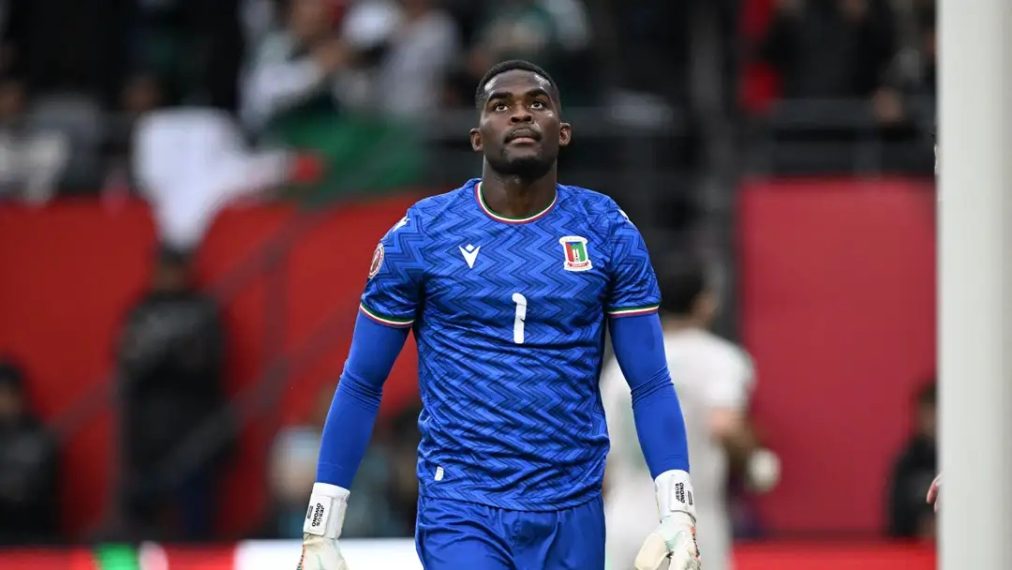
Andorra goalkeeper Jesus Owono has resumed individual physical training as he continues psychological treatment following the death of Tenerife forward Jesus de Miguel.
According to Spanish newspaper Marca, Owono began light physical work at the club’s facilities last week and continued with another individual session on Monday. His first public appearance since the incident came during Friday’s match against Leganes.
The goalkeeper is serving a 12-match suspension and still has considerable work to complete before he can rejoin full team training. He took part in physical exercises after his team-mates had finished their collective session at the training ground, but has not yet worked specifically as a goalkeeper or put on his gloves.
Owono was accompanied by his colleagues at Campo Municipal de Andorra, where players have continued to support him since the first day of the tragedy. Several of them visit him almost daily, ensuring he has not been left alone.
Andorra have not announced a possible return date for the Equatorial Guinea international. Any decision on when he can resume playing or take part in team training will depend on his psychological condition and progress.
Owono remains under the care of specialist mental health professionals as he works to recover from the effects of the incident and regain his balance before returning to football.
Collision led to death of Tenerife forward
The incident occurred on 2 November 2026 during the closing stages of Tenerife’s Spanish Segunda Division match against Andorra at the Heliodoro Rodriguez Lopez stadium.
De Miguel was chasing a long ball in an attempt to begin an attack when Owono came a considerable distance from his goal to clear it. The goalkeeper jumped with his leg raised and his knee struck the Tenerife forward in the chest as they challenged for possession.
De Miguel fell unconscious, prompting panic among players from both sides and urgent calls for medical assistance. Medical teams treated him on the pitch for more than 10 minutes before he was taken by ambulance to the Nuestra Senora de la Candelaria University Hospital in Santa Cruz de Tenerife.
Initial medical reports said the collision had caused cardiorespiratory arrest. Medics managed to restore his pulse while he was being transported, after which he was admitted to intensive care. His condition was initially described as stable, although he remained unconscious.
Tenerife later reported a deterioration in De Miguel’s neurological condition during the early hours of 3 November. The club subsequently confirmed that he had died at 08:00, aged 30, after efforts to save his life proved unsuccessful.
-
 Miguel Cardoso admits Sundowns are not at their best after Carling Knockout exit Nov 24, 2026
-
Michael Olise set to miss Bayern Munich’s Champions League clash against Lille Nov 24, 2026
-
Jeremy Doku excited to reunite with Kevin De Bruyne as Manchester City prepare for Napoli clash Nov 24, 2026
-
PSG enter race to hijack Arsenal’s move for RB Leipzig star Antonio Nusa Nov 24, 2026



-
AFCON 2025: Fixtures, Results, Scores and Standings Jan 18, 2026
-
Match hero Taiwo Awoniyi reflects on team effort after Chelsea triumph May 5, 2026
-
Leadership and long-term vision key to rescuing Zamalek and inspiring Egyptian football – Hany Abou Rida Nov 5, 2025
-
South African giants Orlando Pirates set to lose influential forward Monnapule Saleng Mar 19, 2025




-
AFCON 2027 qualifiers matchday 3 & 4: All fixtures and results Nov 17, 2026
-
U17 World Cup 2026: Full schedule for Morocco and where to watch Nov 19, 2026
-
AFCON 2027 Qualifiers: South Africa bounce back with win over Kenya Nov 17, 2026
-
AFCON 2027 qualifiers: Morocco edge Niger in 1-0 victory to secure qualification Nov 17, 2026