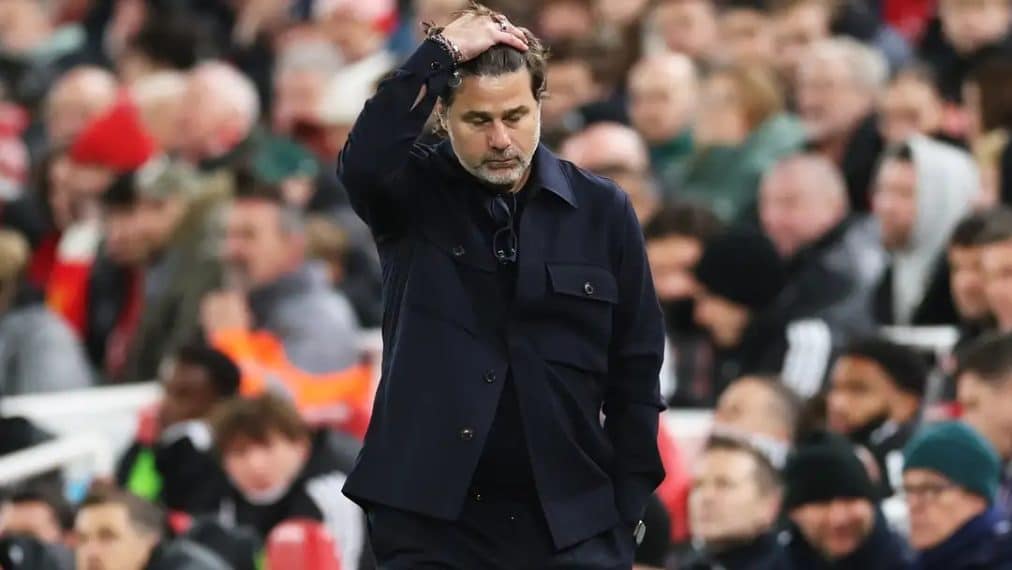
Liverpool supporters aimed a familiar warning at Manchester United manager Mauricio Pochettino during Sunday’s Premier League meeting, chanting: “You’re getting sacked in the morning.”
The chant was heard before the final whistle, with Liverpool leading 2-0 at half-time. Supporters used their team’s commanding position to mock the Argentine and question his future in charge of Manchester United, despite his having only recently taken over.
Liverpool went on to complete a 4-0 victory, giving Pochettino the worst possible start to his time as Manchester United manager and leaving him with a demanding task to revive the club’s fortunes.
The taunt is one of the best-known chants in English football. Fans use it to ridicule managers and increase the pressure on them, particularly when their teams are struggling for results or facing defeat.
It carried added significance during this fixture because of the longstanding sporting and supporters’ rivalry between Liverpool and Manchester United. Meetings between the two clubs regularly provide an opportunity for fans to exchange taunts and remind their opponents of difficult moments and poor results.
The chant is not associated with one particular club. It has become part of the wider culture of English football and can be heard at grounds across the country whenever supporters want to express anger towards a manager or make fun of his position.
For Manchester United, the match came at the beginning of a new period under Pochettino. The manager faces expectations from the club’s supporters to improve results and return the team to the fight for honours.
Liverpool’s fans, however, were quick to use the first major opportunity to send him a message from the stands. Their chant underlined the mood of the match as Liverpool took control and Manchester United struggled to respond.
The 4-0 result made the challenge facing Pochettino even greater as he begins his attempt to restore Manchester United to prominence. The defeat provided Liverpool supporters with the chance to turn an established terrace line into a pointed message aimed directly at their traditional rivals’ new manager.
-
 DR Congo striker Samuel Essende sets new Swiss League record after latest goal Nov 22, 2026
-
Lamine Yamal sets unwanted La Liga record after third penalty miss Nov 22, 2026
-
DR Congo star Noah Sadiki reaches 50-appearance milestone at Sunderland Nov 22, 2026
-
Cardoso says Chiefs goalkeeper Petersen deserved Carling Knockout award Nov 22, 2026


-
AFCON 2025: Fixtures, Results, Scores and Standings Jan 18, 2026
-
Match hero Taiwo Awoniyi reflects on team effort after Chelsea triumph May 5, 2026
-
Leadership and long-term vision key to rescuing Zamalek and inspiring Egyptian football – Hany Abou Rida Nov 5, 2025
-
South African giants Orlando Pirates set to lose influential forward Monnapule Saleng Mar 19, 2025




-
AFCON 2027 qualifiers matchday 3 & 4: All fixtures and results Nov 17, 2026
-
Cote d’Ivoire close in on AFCON 2027 qualification against Gambia Nov 16, 2026
-
AFCON 2027 Qualifiers: South Africa bounce back with win over Kenya Nov 17, 2026
-
Orlando Pirates fixtures reshuffled after Champions League group-stage qualification Nov 16, 2026