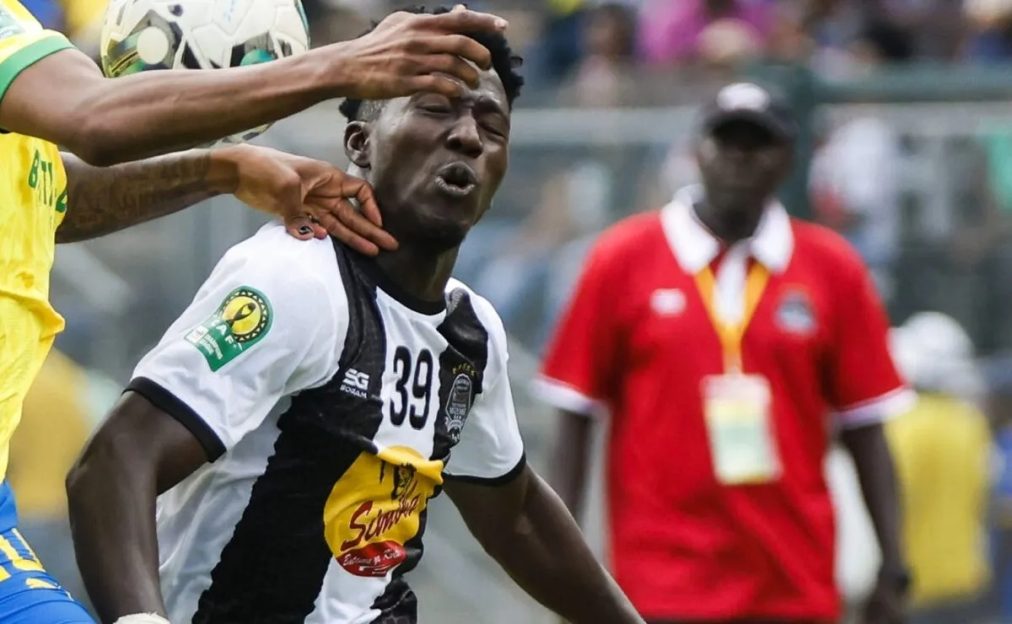
Fily Traore has agreed to represent Libya, but the striker’s eligibility to play for the Mediterranean Knights remains uncertain under FIFA regulations.
The 25-year-old former TP Mazembe forward has accepted an approach from Libya head coach Youssef Dabo, according to winwin, as the national team attempts to strengthen its attacking options.
The Libyan Football Federation has prepared Traore’s naturalisation file and is now waiting for FIFA’s approval. However, securing a Libyan passport would not automatically allow the player to appear in international matches.
Traore joined Al-Swehly, a club based in Misrata, in October 2024 and quickly established himself as one of the leading forwards in the Libyan championship.
He had already demonstrated his scoring ability with TP Mazembe, finishing as the Democratic Republic of the Congo’s top scorer with 25 goals during the 2023-24 season. In Libya, he continued that form and helped Al-Swehly win the first national title in the club’s history in 2026.
His performances attracted interest from several prominent African clubs in the summer of 2025. Africafoot reported that Zamalek offered 600,000 euros for the striker, while TP Mazembe valued him at two million euros. Raja Casablanca and CR Belouizdad were also reported to have shown interest.
Traore represented Mali at under-23 level in 2024, including during preparations for the Paris Olympics, but has not established himself in the senior national team. Libya is hoping that situation will make a change of allegiance possible.
FIFA eligibility rules raise questions
FIFA regulations normally require a player who obtained a new nationality after moving to a country aged over 18 to have lived there for five years before becoming eligible to represent its national team.
The main exception is where the player has a recognised family connection, such as a parent or grandparent born in the country.
Traore was born in Bamako, and no family link to Libya has been publicly established. His time in the country currently amounts to only two years, meaning the basis for his potential eligibility is unclear.
The proposed switch comes amid a wider increase in naturalisation efforts across African football. Madagascar has become known for recruiting players without obvious family connections to the country, while Uganda significantly expanded its pool of eligible players before the 2027 Africa Cup of Nations by targeting footballers with links through grandparents born on its territory.
The circumstances differ from case to case, but the policies have prompted questions over the limits of accelerated naturalisation.
For Libya, which is seeking to establish a stronger presence in African football, Traore would offer an obvious sporting benefit. FIFA must now determine whether the federation’s application meets the relevant regulations. Based on the information currently available, approval of the player’s file is not guaranteed.
-
 Former Mali U23 striker Fily Traore agrees to switch international allegiance to Libya Nov 20, 2026
-
Senegal and Morocco await Court of Arbitration for Sport ruling by 30 November Nov 20, 2026
-
Guinea anger at ‘unfair’ Africa Cup of Nations 2027 qualifying format Nov 20, 2026
-
Algeria’s Petkovic gamble questioned after Togo humiliation Nov 20, 2026


-
AFCON 2025: Fixtures, Results, Scores and Standings Jan 18, 2026
-
Match hero Taiwo Awoniyi reflects on team effort after Chelsea triumph May 5, 2026
-
Leadership and long-term vision key to rescuing Zamalek and inspiring Egyptian football – Hany Abou Rida Nov 5, 2025
-
South African giants Orlando Pirates set to lose influential forward Monnapule Saleng Mar 19, 2025




-
AFCON 2027 Qualifiers: Check out full group standings Nov 15, 2026
-
AFCON 2027 qualifiers matchday 3 & 4: All fixtures and results Nov 17, 2026
-
AFCON 2027 Qualifiers: Ethiopia edge Mozambique to claim first Group J victory Nov 13, 2026
-
Nigeria 3-1 Tanzania: Tolu Arokodare double seals 2027 Africa Cup of Nations qualifying win Nov 13, 2026